

Choose Your Ideal Espresso Machine: Expert Guide and Reviews for Informed Purchasing
By Public Relations, 1st-line Equipment, LLC
Selecting the right espresso machine can be a daunting task, especially with the myriad of options available on the market today. This guide aims to simplify your decision-making process by providing essential insights into the features, types, and brands of espresso machines. Whether you’re a novice or a seasoned barista, understanding the nuances of espresso machines will empower you to make an informed choice that suits your brewing style and budget. In this article, we will explore key features to consider, buying considerations, and recommendations for the best espresso machines. Additionally, we will delve into the various types of machines, their functionalities, and the essential accessories that can enhance your espresso experience.
Key Features to Consider:
When choosing an espresso machine, several key features can significantly impact your brewing experience. Understanding these features will help you select a machine that aligns with your preferences and needs.
- Machine Type Options: Espresso machines come in various types, including manual, semi-automatic, and super-automatic. Each type offers different levels of control and ease of use.
- Brewing Technology: Look for machines that utilize advanced brewing technologies, such as PID temperature control, which ensures consistent brewing temperatures for optimal extraction.
- User-Friendly Features: Features like programmable settings and built-in steam wands can enhance your brewing experience and make it easier to create café-quality drinks.
These features are crucial in determining the overall performance and user satisfaction of your espresso machine.
Buying Considerations:
Before making a purchase, consider the following factors to ensure you choose the right espresso machine.
- Budget Considerations: Determine your budget, as espresso machines can range from affordable to high-end models. Investing in a quality machine can lead to better coffee and longevity.
- Long-Term Maintenance: Consider the maintenance requirements of the machine. Some models may require more frequent cleaning than others.
- Personal Brewing Style: Reflect on your brewing style and preferences. If you enjoy experimenting with different techniques, a semi-automatic machine may be ideal, while a super-automatic machine is better for convenience.
For those looking to purchase an espresso machine, 1st-line Equipment, LLC offers a variety of options that cater to different budgets and preferences, ensuring you find the perfect fit for your coffee needs.

Recommendations:
When it comes to selecting the best espresso machines, here are some top recommendations based on user needs and preferences.
- Best Machines for Beginners: The Rancilio Silvia is an excellent choice for newcomers, offering easy to use controls, a more hands-on brewing experience, and consistent performance at an affordable price.
- Convenience-Focused Options: The Jura E8 is a super-automatic machine that simplifies the brewing process, making it perfect for those who prioritize convenience without sacrificing quality. It includes a built-in grinder and is designed to grind, tamp and brew at the touch of a button.
- Enthusiast-Level Machines: For serious coffee enthusiasts, the Torre Peppina dual boiler espresso machine with flow control provides exceptional control and quality. It’s multifunction color touchscreen display allows programming your desired preinfusion time, full control over brewing parameters and managing maintenance schedules. The flow control allows give the user the ability to adjust the shot on the fly, and the Peppina has the ability to adjust steam capabilities. The Torre Peppina allows the user to easily experiment during the brewing experience.
These recommendations cater to a range of skill levels and preferences, ensuring that everyone can find a suitable machine.
What Are the Main Types of Espresso Machines and Their Features?
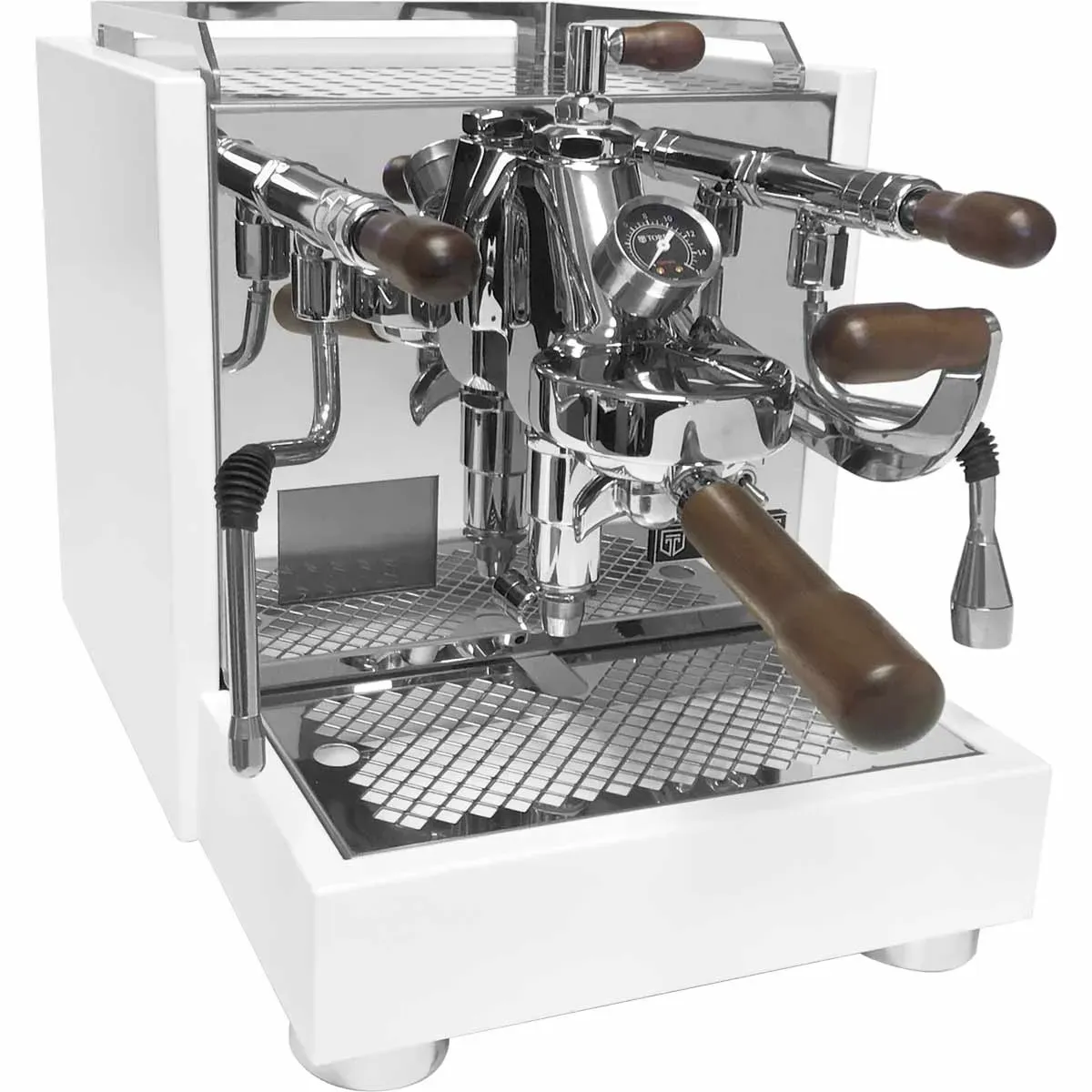
Espresso machines can be categorized into three main types, each with unique features and functionalities.
- Manual Espresso Machines: These machines require the user to control every aspect of the brewing process, from grinding the coffee to tamping and extracting. They offer the most control but require practice and skill.
- Semi-Automatic Espresso Machines: These machines automate some processes, such as water pressure, while allowing users to control the grind and tamping. They strike a balance between control and convenience.
- Super-Automatic Espresso Machines: These machines handle everything from grinding to brewing with the push of a button. They are ideal for those who want a quick and easy espresso experience without much effort.
Understanding these types will help you choose a machine that aligns with your skill level and desired involvement in the brewing process.
How Do Manual, Semi-Automatic, and Automatic Machines Differ?
The differences between manual, semi-automatic, and super-automatic machines lie in their functionalities and user involvement.
- Functionality Differences: Manual machines require complete user control, while semi-automatic machines automate water pressure but still require user input for grinding and tamping. Super-automatic machines handle all aspects of brewing.
- Advantages of Each Type: Manual machines offer the most control and potential for creativity, semi-automatic machines provide a balance of control and convenience, and super-automatic machines are perfect for quick, hassle-free brewing.
- User Experience Considerations: Beginners may find super-automatic machines easier to use, while experienced baristas may prefer the control offered by manual or semi-automatic machines.
These distinctions are essential in determining which machine will best suit your needs and preferences.
Which Machine Type Suits Different User Skill Levels?
Choosing the right espresso machine often depends on the user’s skill level and experience with coffee brewing.
- Beginner-Friendly Options: Super-automatic machines are ideal for beginners, as they simplify the brewing process and require minimal knowledge of espresso-making techniques.
- Intermediate User Recommendations: Semi-automatic machines are suitable for those with some experience, allowing for more control while still being user-friendly.
- Advanced User Machines: Manual machines cater to experienced baristas who enjoy the art of espresso-making and want complete control over the brewing process.
By matching machine types to skill levels, users can select a machine that enhances their coffee-making journey.
Which Are the Top Espresso Machine Brands and Models?

Several brands stand out in the espresso machine market, known for their quality and performance. The Rancilio Silvia single boiler, Jura E8 super-automatic, Elektra Microcasa Semiautomatica HX heat exchanger, Torre Peppina dual boiler, and ACS Vostok Lever espresso machines are a sampling of some standout espresso machines from trusted manufacturers ACS, Elektra, Jura, Rancilio, and Torre.
Other brands that are recognized for their reliability and user satisfaction, making them excellent choices to consider, are Bezzera, Nurri, Rocket, and VBM.
What Essential Accessories Enhance Your Espresso Experience?
To elevate your espresso experience, consider investing in essential accessories that complement your machine.
- Grinders and Tampers: A quality burr grinder ensures consistent grind size, while a good tamper helps achieve optimal extraction.
- Cleaning Kits: Regular maintenance is crucial for machine longevity. Cleaning kits help keep your machine in top condition.
- Milk Pitchers: For those who enjoy lattes and cappuccinos, a milk pitcher is an essential tool for creating creamy, textured milk.
These accessories can significantly enhance your espresso-making process and overall enjoyment.
How Should You Maintain and Troubleshoot Your Espresso Machine?
Proper maintenance and troubleshooting are vital for ensuring your espresso machine operates efficiently and lasts longer.
- Regular Cleaning Practices: Clean your machine daily, including the portafilter and steam wand, to prevent coffee residue buildup.
- Common Issues and Solutions: Address common problems such as inconsistent extraction or water leaks promptly to avoid further damage.
- Maintenance Schedules: Establish a routine maintenance schedule, including water softening, to keep your machine in optimal condition.
By following these maintenance tips, you can ensure your espresso machine remains functional and produces great coffee.
What Are Best Practices for Cleaning and Regular Maintenance?
Maintaining your espresso machine involves several best practices to ensure its longevity and performance.
- Daily Cleaning Routines: Wipe down the machine and clean the portafilter after each use to prevent buildup.
- Softened Water: Use softened water to minimize the likelihood of water corrosion damage and limescale to your espresso machine and reduce your need to descale.
- Component Inspections: Regularly check components such as the grouphead gaskets, steam wand and water tank for any signs of wear or damage.
- Descaling: If issues occur, descale your machine, to remove mineral buildup.
Implementing these practices will help maintain your machine’s performance and extend its lifespan.
How to Identify and Resolve Common Machine Issues?
Identifying and resolving common issues with your espresso machine can save you time and frustration.
- Inconsistent Extraction Solutions: If your espresso is under-extracted or over-extracted, check your grind size and tamping pressure.
- Water Leak Fixes: Inspect seals and gaskets for wear if you notice leaks, and replace them as necessary.
- Steam Wand Maintenance: Regularly clean the steam wand to prevent milk residue buildup, which can affect performance.
By addressing these common issues, you can keep your espresso machine running smoothly.
What Are Effective Brewing Techniques?
Mastering effective brewing techniques is essential for producing high-quality espresso.
- Dosing and Grind Size: Use the right coffee-to-water ratio and grind size for optimal extraction.
- Tamping Techniques: Apply even pressure when tamping to ensure uniform extraction and prevent channeling.
- Milk Frothing Methods: Learn proper frothing techniques to create microfoam for lattes and cappuccinos.
These techniques will enhance your espresso-making skills and improve the quality of your beverages.
How to Choose the Best Espresso Machine?
Finding a quality espresso machine within your budget is possible with careful consideration of features and performance.
- Key Features to Prioritize: Look for machines with good build quality, reliable brewing technology, and user-friendly features.
- Value and Performance Comparisons: Compare models within your budget to find the best balance of features and performance.
- Choose a Quality Brand: Consider higher quality brands, like the ones listed previously in this article. Although machines from quality brands may cost more initially, these manufacturers produce a higher quality machine with premium components that are built to last. Budget machines typically do not last nearly as long as higher quality machines and have cheaper components that cannot be repaired. Instead of repairing a budget espresso machine, you will need to purchase a brand new machine, which can negate any savings.
By focusing on these aspects, you can find a high-quality espresso machine that fits your budget and brewing needs. 1st-line Equipment, LLC has a large selection of high-quality espresso machines for that accomodate most budgets.
