

Water treatment is preventative maintenance! Garbage in, garbage out! The water not only needs to be treated to protect an espresso machine from damaging limescale deposits, but to also extract more desirable flavor profiles. Reverse osmosis and distilled water are also not good for two reasons: first, they can be corrosive with the metal inside an espresso machine and cause oxidation in certain instances; and, second, these two water types do not have enough minerals to extract the oils from the grind, leaving a flat tasting flavor profile.
Water softening is different than filtering water. Water filters remove bad taste and odors, chlorine, and sediment. If the filter does not have a limescale inhibitor built in, the water should be softened with a softener.
If you are unsure what you need, please inquire using the Contact Us link at the top of this page. To learn more, please choose the category below based on your current setup.


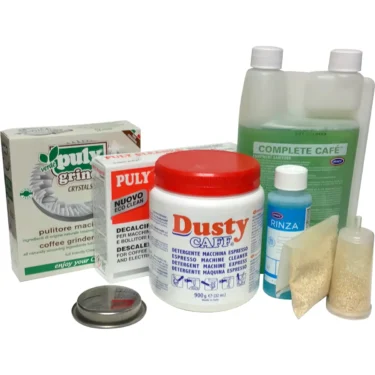


Frequently Asked Questions About Coffee & Espresso Machine Water Treatment
Why is water treatment the single most critical factor in espresso machine longevity and shot flavor?
Water constitutes 98% of an espresso shot and over 98.5% of brewed coffee. Its chemical composition directly governs machine reliability and flavor extraction:
- Limescale Prevention: Over 85% of espresso machine service failures are caused by mineral scale (calcium carbonate and magnesium buildup). Scale insulates heating elements (causing premature burnout), blocks narrow 0.5mm–0.8mm gicleurs, restricts thermosyphon loops, and prevents solenoid valves from sealing.
- Corrosion Protection: Acidic water or elevated chloride concentrations corrode and pit internal copper boilers, brass group fittings, and stainless steel heating elements.
- Flavor Optimization: Balanced mineral content (specifically magnesium and calcium) binds to aromatic coffee flavor compounds during extraction. Water that is too hard mutes acidity and produces chalky, flat espresso, while water that is too soft or acidic yields sour, sharp, and astringent notes.
What are the ideal water parameters for brewing espresso and protecting warranties?
To maximize extraction sweetness while protecting internal boilers from scale and corrosion, aim for the following targets:
- Total Hardness: 35–85 ppm (~2–5 GPG / Grains Per Gallon)
- Total Alkalinity: 40–70 ppm
- Total Dissolved Solids (TDS): 90–150 ppm
- pH Level: Neutral, between 6.8 and 7.4
- Chlorine & Chloramines: 0 ppm (must be fully filtered out with activated carbon)
- Chlorides: < 30 ppm (crucial to prevent stress-corrosion cracking in copper and stainless steel boilers)
In-Tank Softening Pouches vs. Direct-Plumbed Filtration Systems: Which do you need?
Filtration selection depends on whether your machine uses a reservoir or a direct water line:
- In-Tank Reservoir Softeners (e.g., BWT Bestsave, Oscar 90 Pouches, In-Tank Resin Cartridges): Placed directly inside the water tank of reservoir-fed machines. They use passive ion-exchange resin to bind calcium and magnesium ions as water rests in the reservoir. Perfect for home baristas with non-plumbed setups.
- Direct-Plumbed Inline Filtration Systems (e.g., BWT bestmax PREMIUM, Everpure Claris, 3M Aqua-Pure): Installed directly on cold water supply lines for plumbed machines. They provide multi-stage protection: sediment pre-filtration, activated carbon block chlorine absorption, and precision ion-exchange decarbonization with adjustable bypass blending.
Can you use pure Reverse Osmosis (RO) or distilled water in an espresso machine?
No—never use pure RO, distilled, or zero-TDS deionized water alone in an espresso machine.
- Autofill Probe & Sensor Failure (Dry Fire): Espresso machines rely on the electrical conductivity of dissolved minerals to detect boiler water levels. Pure RO or distilled water cannot conduct current; the boiler probe fails to detect water, causing the pump to run continuously or the heating element to dry fire and burn out.
- Aggressive Metal Leaching & Corrosion: Demineralized water is chemically aggressive and naturally acidic. It leaches minerals directly from brass groupheads and copper boilers, causing severe pitting and structural weakness.
- The Proper Solution: Always pair reverse osmosis systems with a remineralization cartridge or blending valve to reintroduce balanced calcium and magnesium (targeting 90–150 ppm TDS) before water enters the machine.
Liquid Drop Titration Test Kits vs. Digital TDS Meters: Why TDS alone is not enough?
Measuring water quality requires the right diagnostic tools:
- Digital TDS Meters: Measure total electrical conductivity, estimating the total concentration of all dissolved solids (including sodium, minerals, salts, and organics). A TDS meter cannot distinguish between harmless sodium and scale-forming calcium/magnesium.
- Liquid Drop Titration Test Kits (e.g., GH/KH Test Kits, BWT Drop Kits): Use chemical reagents to measure exact General Hardness (GH - calcium & magnesium) and Carbonate Hardness (KH - buffering alkalinity) in ppm or degrees. Liquid titration is the only definitive way to verify if your water will cause limescale buildup inside your machine.
Sodium-Based Ion-Exchange vs. Magnesium Mineralization Filtration: What is the difference?
Both methods prevent scale, but they impact coffee flavor differently:
- Standard Sodium-Based Ion-Exchange: Replaces calcium and magnesium ions with sodium ions. This prevents limescale formation but contributes nothing to extraction dynamics, sometimes leaving a flat sensory cup.
- BWT Magnesium Mineralization Technology (e.g., BWT bestmax PREMIUM): Exchanges scale-forming calcium ions for valuable magnesium ($Mg^{2+}$) ions. Magnesium has a higher charge density that actively binds to delicate coffee flavor compounds and sweet fruit acids during extraction, maximizing sweetness, body, and flavor clarity in specialty coffees.
What is the recommended replacement schedule for in-tank filters and inline cartridges?
Maintaining a proactive replacement schedule ensures continuous scale protection:
- In-Tank Softening Pouches (e.g., Oscar 90, BWT Bestsave): Replace every 2 to 3 months (or every 50–100 liters of water throughput). If allowed to dry out between refills, the resin beads lose effectiveness.
- Direct-Plumbed Inline Cartridges (e.g., BWT bestmax, Everpure Claris): Replace every 12 months (or sooner if the rated gallon/liter capacity is reached based on water hardness). Carbon media must be changed annually to prevent bacterial growth and maintain chlorine adsorption.
Why choose 1st-line Equipment for your espresso water treatment solutions?
Since 1997, 1st-line Equipment has served as an authorized direct distributor and technical service facility for leading water filtration and espresso equipment manufacturers. Every order includes:
- Authorized Master Distributor: Fresh, factory-sealed inventory of leading filtration brands, including BWT water+more, Everpure, DVA, and Oscar.
- Factory-Trained Water Quality Specialists: Direct technical guidance on evaluating municipal water chemistry and matching the right filter to your specific espresso machine architecture and warranty requirements.
- Complete Product Selection: In-tank pouches, plumbed filter heads, commercial multi-stage cartridges, RO remineralizers, and precision chemical test kits.
- Fast US Shipping from New Jersey: Dispatched quickly from our Freehold, NJ facility with fresh filtration media.
- EspressoPoints Rewards: Earn reward points on every filter cartridge, softening pouch, and test kit to redeem on future coffee equipment.