

Electrical Safety Disclaimer: The information provided in this article is for general educational and informational purposes only and should not be considered professional electrical advice. Electrical circuit design, wiring, circuit breaker selection, surge protection, and installation should always be performed or approved by a licensed electrician or other appropriately qualified professional in accordance with applicable local, state, and national electrical codes. Improper electrical installations can result in electric shock, fire, equipment damage, serious injury, or death. Always follow the equipment manufacturer’s specifications and consult a licensed professional to verify that your electrical system meets the requirements of your appliances and intended application.
Understanding electrical power requirements is essential when installing or operating appliances, espresso machines, commercial equipment, and other electrical devices. Choosing the correct wire gauge, amperage rating, circuit breaker, and surge protection helps support safe operation, prevent electrical overloads, and protect sensitive equipment. Whether you are setting up a home appliance or planning a commercial installation, understanding the relationship between amps, volts, watts, and wire gauge is an important part of electrical safety.
Understanding Amps, Volts, and Watts
Electrical power is measured in watts (W), while electrical current is measured in amperes, commonly called amps (A). Voltage (V) represents the electrical potential that drives current through a circuit.
The basic electrical power formula is:
Watts = Amps × Volts
This formula helps determine how much electrical power a device consumes. For example, a 1,500-watt appliance operating at 120 volts draws approximately 12.5 amps.
15 amps × 120 volts = 1,800 watts
20 amps × 120 volts = 2,400 watts
30 amps × 120 volts = 3,600 watts
These figures represent theoretical power at the stated voltage, not necessarily the amount of power that should be continuously drawn from a circuit. For many standard residential circuits, continuous loads must be limited to 80% of the circuit rating unless the equipment and installation are specifically designed otherwise. This commonly means 12 amps total on a 15-amp circuit and 16 amps total on a 20-amp circuit.
Understanding the relationship between amps, volts, and watts helps determine whether an electrical circuit can accommodate the equipment being installed. Always check the manufacturer’s electrical specifications and the applicable electrical code. The age of the electrical system must also be evaluated to determine if replacement is necessary.
Wire Gauge and Amperage: 14, 12, and 10 AWG
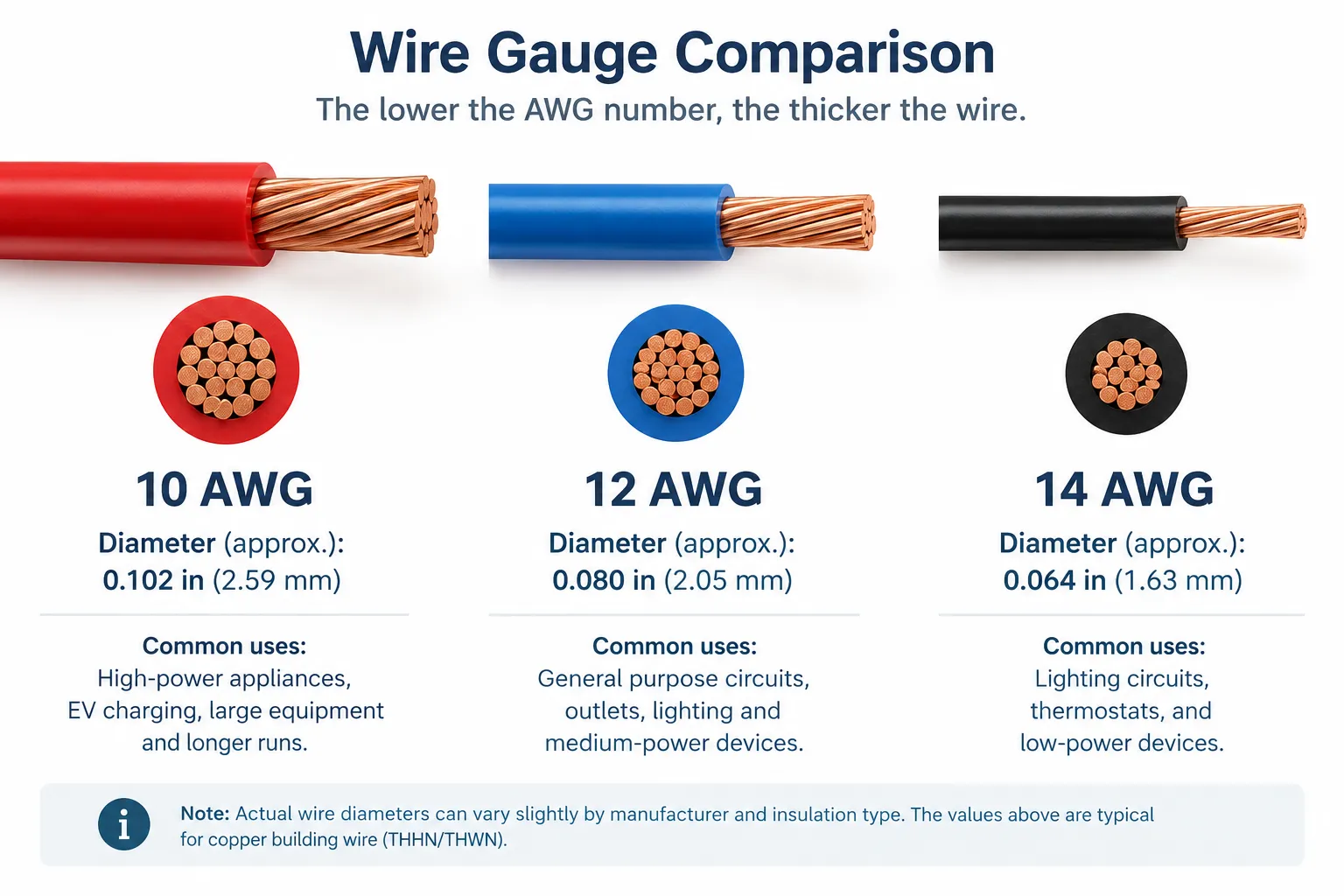
Wire gauge determines the thickness of an electrical conductor and affects how much current it can safely carry. In the American Wire Gauge (AWG) system, a smaller gauge number indicates a thicker wire. Thicker conductors generally have lower electrical resistance and can carry more current under comparable conditions.
Common copper wire sizes include:
These are common pairings, not universal ratings. The allowable current depends on factors such as conductor material, insulation temperature rating, terminal ratings, installation method, ambient temperature, and the number of current-carrying conductors. Local electrical codes and equipment instructions must also be followed.
A 20-amp circuit generally requires appropriately rated 12 AWG copper conductors or another conductor size permitted by the applicable code. A 30-amp circuit commonly uses 10 AWG copper conductors, although certain installations may require larger wiring. Installing a larger circuit breaker without verifying that the wiring and connected equipment are rated for the increased current can create a serious fire hazard.
The Importance of Circuit Breakers and Amp Ratings
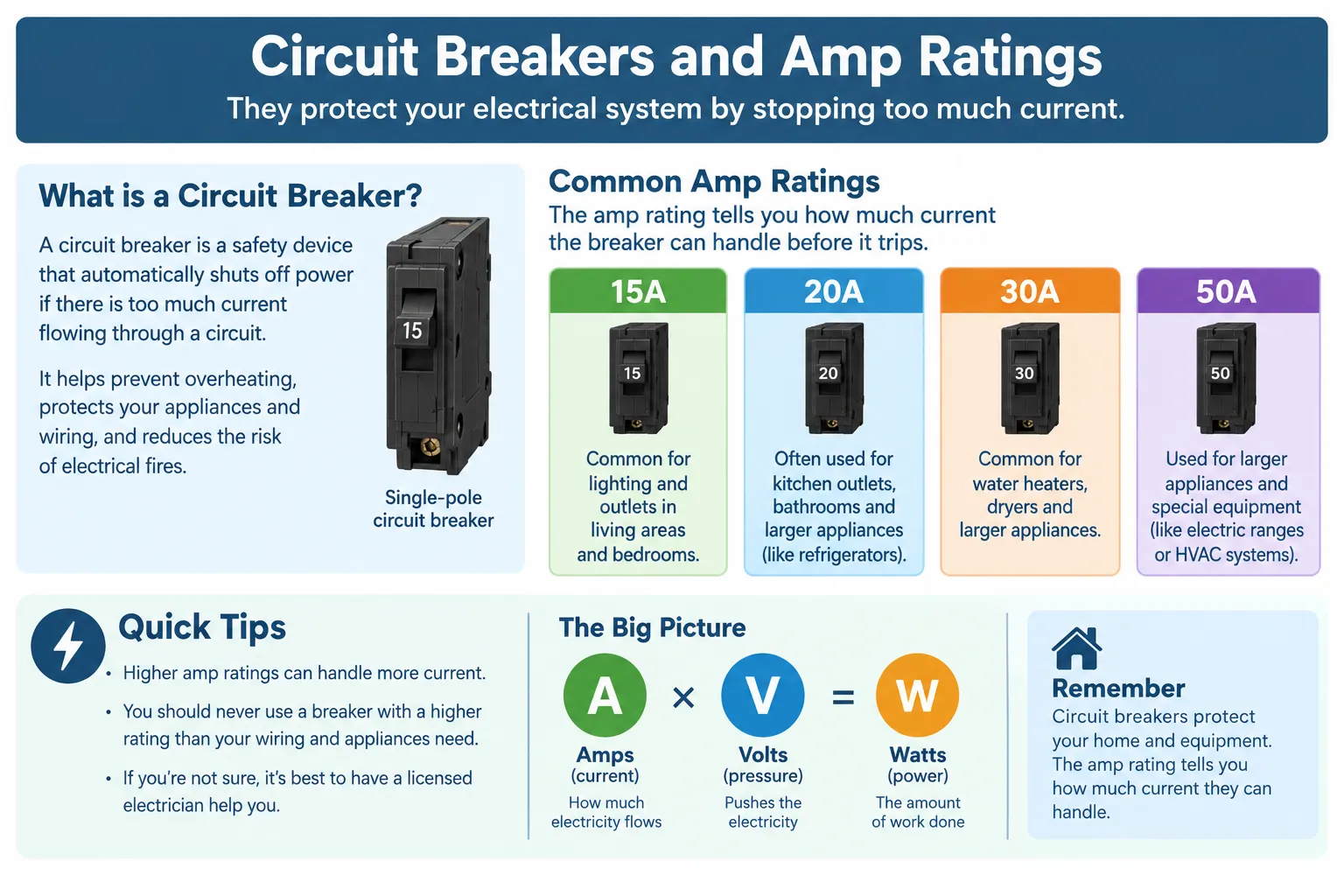
A circuit breaker is a safety device designed to interrupt electrical current when an overload or short circuit occurs. Each breaker has a specified amperage rating, such as 15, 20, or 30 amps, which must be coordinated with the wiring and equipment it protects.
When too many appliances operate on the same circuit, the total electrical demand may exceed the circuit’s capacity. A properly selected breaker helps prevent conductors from overheating under these conditions.
Repeated breaker trips should never be ignored. They may indicate an overloaded circuit, a faulty appliance, damaged wiring, or another electrical problem. Replacing a breaker with one that has a higher amp rating is not a safe solution unless the entire circuit is verified and modified as necessary by a qualified electrician.
High-demand equipment, including commercial espresso machines, grinders, heaters, and other appliances, may require a dedicated circuit. Always verify the voltage, amperage, phase, and plug or hardwiring requirements before installation.
Why Surge Protection Matters
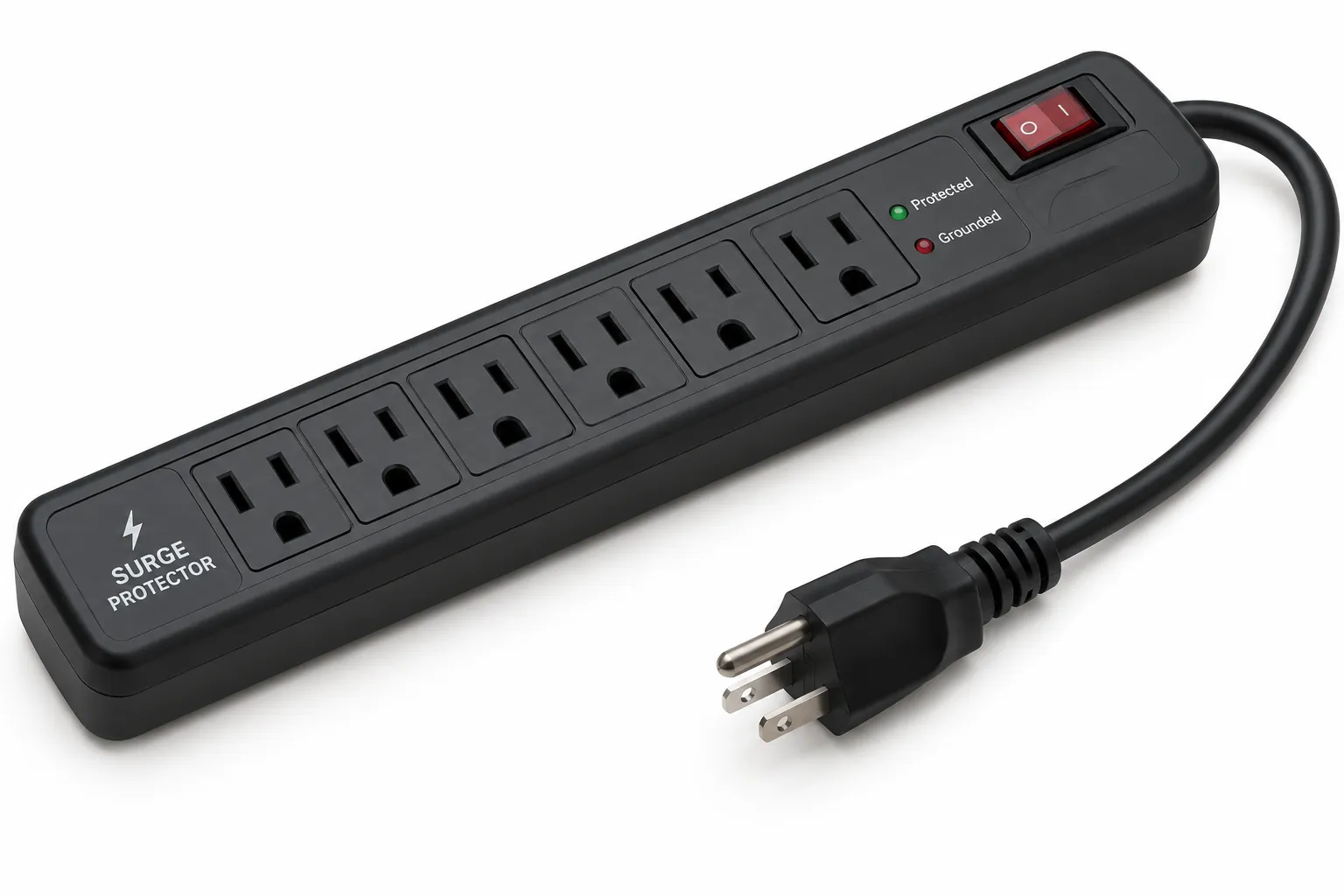
Surge protection helps protect electronic components from brief increases in voltage caused by events such as utility switching, nearby lightning activity, or changes in the electrical supply. Sensitive electronics found in modern appliances, digital controls, displays, and programmable equipment can be vulnerable to these voltage spikes.
A surge protective device (SPD) limits transient overvoltage by diverting or suppressing surge energy. Depending on the application, protection may be installed at the electrical panel or near individual devices. Whole-house or facility-level surge protection can be combined with appropriately rated point-of-use protection for additional coverage.
Surge protectors do not replace circuit breakers. Circuit breakers primarily protect against overcurrent conditions, while surge protective devices address brief voltage surges. Neither device eliminates every electrical hazard, so correct grounding, bonding, wiring, and installation remain essential.
Choosing the Correct Electrical Setup
Before connecting any appliance, confirm its rated voltage, maximum current draw, wattage, and manufacturer-specified circuit requirements. Use the formula Watts = Amps × Volts to estimate power demand, select wiring and overcurrent protection appropriate for the installation, and consider surge protection for sensitive electronics.
Properly matching wire gauge, circuit breaker ratings, and electrical loads supports reliable equipment performance and reduces the risk of overheating, equipment damage, and electrical fires. For high-power appliances or commercial installations, consult a qualified electrician to verify that the electrical supply meets all applicable safety codes and manufacturer requirements.
