

By 1st-line Equipment, LLC Editorial Team
E61 group heads use heat-exchange boiler design for temperature stability, requiring proper thermosiphon circulation and brass construction for thermal mass. 1st-line Equipment, LLC, based in Freehold, NJ , supplies heat exchange espresso machines, replacement parts/diagrams, and repair services supporting E61 group head maintenance and design specifications.
E61 group heads usually use thermosiphon circulation to draw hot water from the boiler, stabilizing brew temperature without electronic controls. Invented over 60 years ago, this all-metal design remains standard on prosumer machines. Buyers evaluating E61 systems should weigh thermal mass, warm-up time, and part compatibility across brands before purchasing.
Key Takeaways
E61 group head design, introduced by Faema in 1961, revolutionized espresso brewing with superior temperature stability.
The E61 group head directly influences coffee extraction quality by controlling water pressure and flow dynamics.
E61-equipped machines remain favored by home baristas and professionals for their legendary reliability and durability.
1st-line Equipment, LLC stocks E61 espresso machines alongside maintenance products and technical support services.
What Is an E61 Group Head?
Metal, weighty, and unmistakable in profile, the E61 group head is the brewing component that distributes hot water evenly across the coffee grounds during extraction. Skip this design and shot quality suffers: uneven wetting of the puck leads to channeling, sour or bitter pulls, and inconsistent crema. Café-quality extraction depends on even water dispersal, and the E61 was engineered specifically to solve that problem.
The E61 espresso machine group head takes its name from history, not marketing. The Italian company Faema introduced the design in 1961, and the model number became the permanent identifier for every group built on the same principle since. More than six decades later, machines still carry that name forward.
Why does the E61 group head look so distinctive?
Anyone who has browsed prosumer machines has spotted it immediately: a heavy, protruding fixture jutting from the front of the machine, often paired with a visible lever arm. That silhouette makes the E61 style group head one of the most recognizable components in the entire espresso category. Enthusiasts often identify a machine’s group head before they check the spec sheet, simply by the shape.
For buyers exploring prosumer setups, 1st-line Equipment stocks machines across several traditional Italian formats built around this engineering approach:
Dual boiler machines, offering independent brew and steam temperature control
Heat exchange machines, drawing steam-boiler heat through a brew circuit
Manual machines, favoring hands-on pressure control
Each category reflects the same lineage that made the original 1961 design a benchmark. Understanding the group head itself is the first step toward choosing the right machine format.
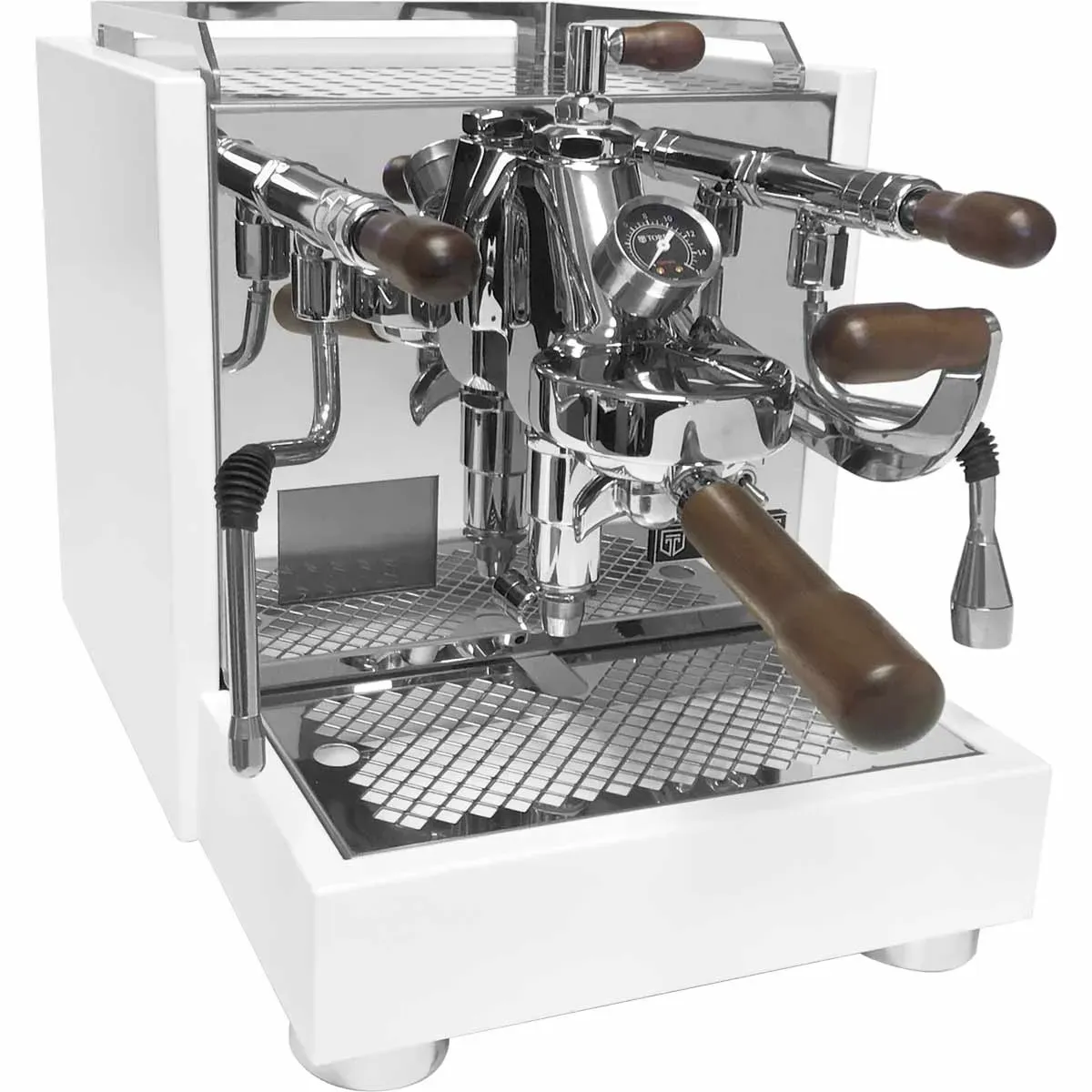
The Torre Peppina EVO Premium Dual Boiler Espresso Machine, shown in white, features an E61 grouphead.
How Does an E61 Group Head Work?
Thermosyphon circulation drives brewing temperature control in every E61 group head. Hot water flows continuously through the E61 group head design, drawn from the boiler and pushed back through a closed loop by natural convection. This constant movement keeps the metal mass at brew temperature before a shot even starts, setting the E61 thermosyphon apart from simpler heat-retention methods.
That circulation explains why E61 espresso machine owners report stable output. Baristas pulling back-to-back shots see minimal temperature drift, cup after cup, because the group never fully cools between extractions. This E61 thermal stability separates the design from machines relying solely on boiler insulation.
Modern dual boiler machines refine this E61 mechanical group head further. The Torre Mariuccia Dual Boiler with Flow Control espresso machine pairs a PID display with a shot timer, temperature indicator, and water alert, giving operators direct visibility into brew conditions while the thermosyphon works. A Brew Group Pressure Gauge adds another layer, delivering real-time feedback on extraction pressure so baristas can track performance shot to shot.
Preinfusion technology complements the thermosyphon’s steady heat. Variable Soft Preinfusion gently moistens the coffee puck at low pressure before full extraction begins, echoing the gentler flow control associated with the E61 style group head.
What makes the E61 thermosyphon different from standard heating?
Standard heating systems warm a group head only when a shot pulls, leaving room for swings between drinks. The E61 thermosyphon instead maintains circulation continuously, holding brew temperature steady without a manual warm-up cycle. However, long idling can cause the group to overheat.
Does monitoring equipment improve E61 group head performance?
Digital displays, shot timers, and pressure gauges do not change the thermosyphon’s physics. They let baristas confirm circulation and pressure stay within target range, catching maintenance needs before extraction quality suffers.
Which Espresso Machines Use an E61 Group Head?
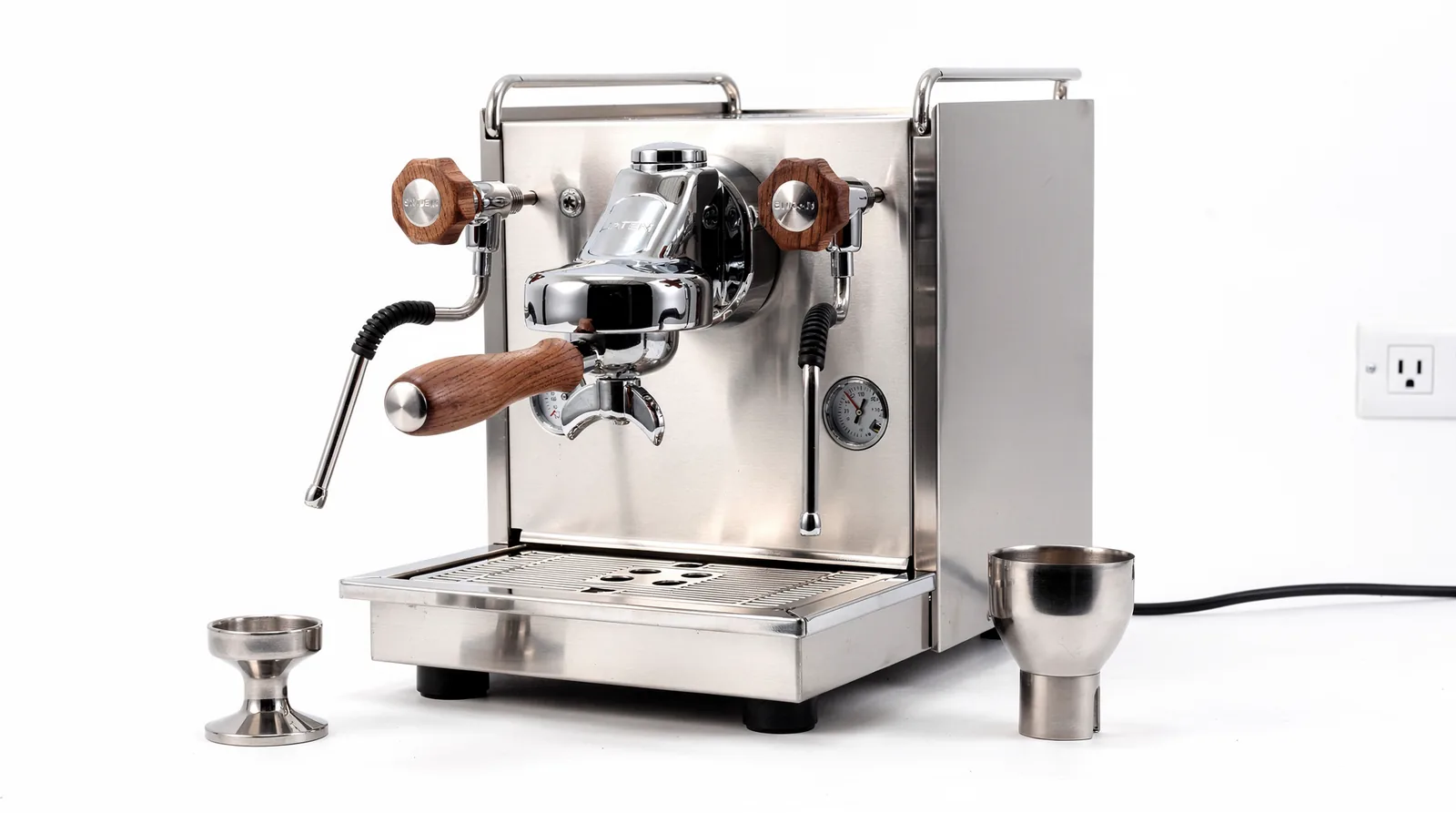
Faema built the original E61 espresso machine in 1961, and that release reshaped espresso machine design for good. Since then, dozens of manufacturers have adopted the same brew-head architecture, prizing its balance of mechanical simplicity and thermal consistency.
E61 espresso machine brands cluster heavily around Italian manufacturing traditions. Italian-made machines carrying E61-style groups earn their reputation through traditional craftsmanship and dependable mechanical performance, a distinction that separates them from mass-market electric machines built primarily for convenience. Manufacturers in this category tend to favor artisanal assembly and close attention to every component, from the boiler welds to the group casting itself.
Which brands make E61 group head machines?
Several established Italian producers manufacture machines built around the E61 design. Many operate within established dealer and distribution networks in the United States. 1st-line Equipment’s wholesale program, for example, supports qualified dealers carrying brands such as Torre, VBM, Rocket Espresso, and Bezzera — several of which build E61-equipped lineups. These names represent the broader field of manufacturers that continue producing this style of group head for prosumer and commercial use.
Is an E61 machine always a high-end choice?
Not automatically, though the group’s engineering heritage tends to correlate with serious build quality. Buyers should weigh the following before choosing an E61-based machine:
Boiler configuration — single boiler, heat exchange, or dual boiler designs all pair with E61 groups differently.
Manufacturing origin — Italian craftsmanship often signals hand-finished components.
Dealer support — availability of compatible components and service matters long after purchase.
Prosumer buyers researching E61 options benefit from working with a supplier offering consistent brand identification across every listed model. Group-head terminology varies between manufacturers even when the underlying engineering stays nearly identical.
Are All E61 Group Heads the Same?
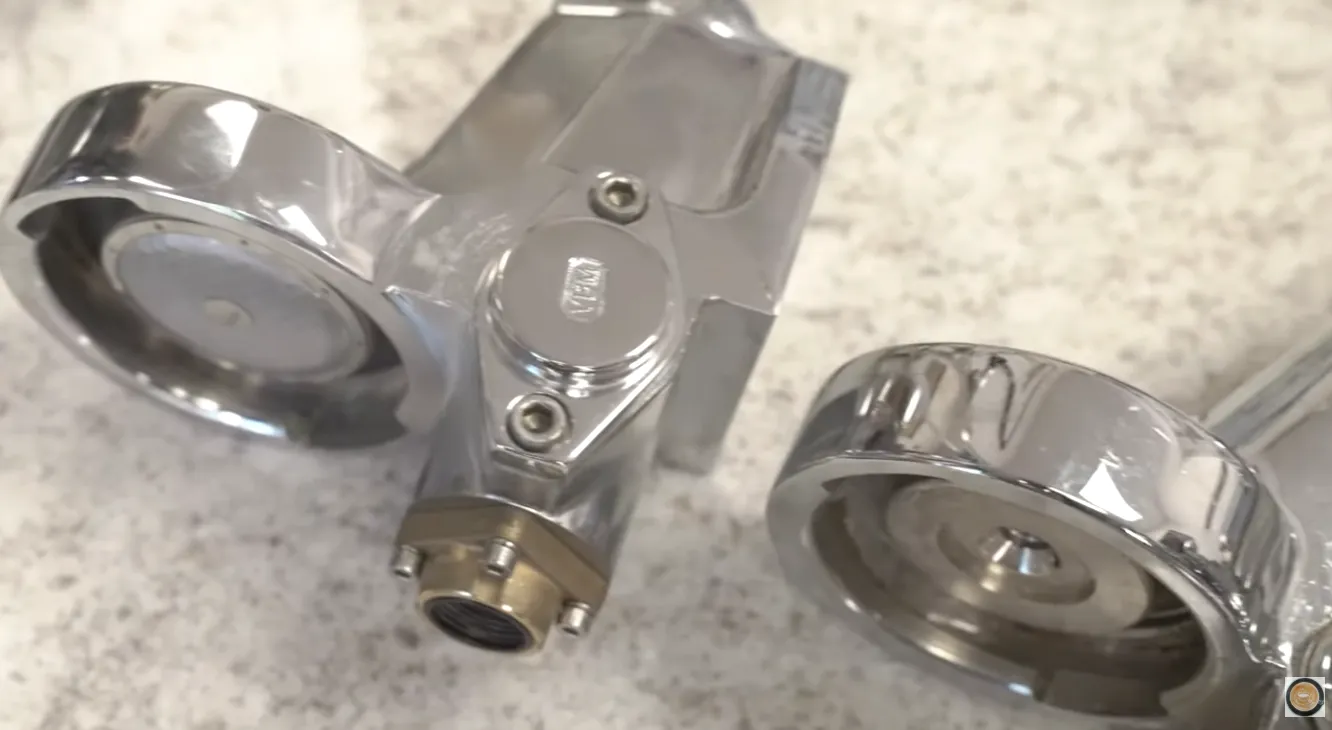
No, group heads built on the E61 group head design are not interchangeable across every brand. Group heads vary in ways that materially affect E61 thermal stability, water flow, and extraction control, so two machines carrying the E61 label can still brew differently.
Faema introduced the original design in 1961, but decades of licensing and imitation produced meaningful variation. Some manufacturers use a true E61 mechanical group head with the classic lever-actuated valve and E61 thermosyphon circulation. Others build an E61 style group head that borrows the visible bell shape without replicating the internal thermal engineering.
Buyers should expect differences in these areas:
Gasket thickness and diameter
Shower screen diameter and mounting hardware
Preinfusion chamber volume
Boiler-to-group thermosyphon plumbing and gicleur restrictors
What Size Gasket Does an E61 Group Head Use?
Gasket dimensions depend on the specific manufacturer and model year. E61 group head gasket size is not fully standardized across every brand. Owners should confirm measurements (8mm or 8.5mm vs other) against their machine’s documentation before ordering a replacement E61 group head gasket or E61 shower screen.
What Is the Difference Between E61 and Saturated Group Heads?
The E61 vs saturated group comparison centers on how each design manages heat transfer, with saturated groups drawing heat directly from a surrounding boiler jacket. Machines like the Torre Peppina EVO Premium Dual Boiler Espresso Machine with Flow Control illustrate how E61-adjacent engineering gets layered with added electronics, including a PID digital display and settings menu.
Consistent brand identification matters when sourcing an E61 espresso machine group head component. Visually similar assemblies rarely share identical specifications. 1st-line Equipment offers online technical support, repair services, and diagrams to help owners match the correct gasket, along with cleaning agents, tools, and water treatment products that extend component life.
What Is the Difference Between E61 and Saturated Groups?
Thermosyphon circulation separates the E61 vs saturated group designs, with the E61 relying on continuous natural water flow and the saturated group drawing heat directly from an attached dedicated boiler chamber. Selecting between them shapes extraction quality. The group head governs pressure and temperature stability directly. Ranks among the most important components to weigh before buying a machine. Neither design is inherently superior; each suits different maintenance habits and budgets.
How does group choice affect warm-up and consistency?
A saturated group heats faster because the brewing chamber sits inside the boiler itself, cutting down idle time between shots. The E61 style group head takes longer to stabilize. Holds temperature more evenly across long sessions, thanks to constant thermosyphon flow pulling hot water from the boiler.
Enthusiasts weighing either configuration can browse 1st-line Equipment’s sales, clearance and overstock listings, and refurbished equipment, all updated regularly and shipped throughout the United States to buyers ready to commit. Once a machine arrives, dialing in consistent shots matters as much as group design. Tampers and tamping stations, dosing tools, and accurate scales round out the setup, helping home baristas extract evenly regardless of which group head sits above the portafilter. The right accessories turn a well-chosen machine into a genuinely repeatable morning routine.
FAQ
What makes the E61 group head design so effective?
Thermosyphon circulation continuously draws hot water from the boiler through a closed loop, keeping the metal mass at brew temperature before extraction starts. This stabilizes brewing temperature without relying on electronic controls.
Why is the E61 group head so recognizable?
Its heavy, protruding metal fixture juts from the front of the machine, often paired with a visible lever arm. This distinctive silhouette lets enthusiasts identify the group head before checking the spec sheet.
Where can buyers find E61-style espresso machines?
1st-line Equipment stocks dual boiler, heat exchange, and manual machines built on this engineering approach, plus maintenance products and technical support services for upkeep.
Conclusion
In closing, the E61 group head represents a proven thermal stability solution that continues to define heat exchange espresso machine performance across home and professional settings. Understanding its mechanics—from the water circulation pathway to temperature management principles—equips operators to extract consistent results and maintain equipment effectively. Proper maintenance, informed technique, and access to quality parts and technical guidance ensure this classic design delivers the precision and reliability that discerning espresso enthusiasts demand.
