

Selecting the right commercial espresso grinder is a pivotal decision for high-volume cafés, impacting brew quality and operational efficiency. This guide tackles the essential features, choosing tips, and maintenance strategies vital for ensuring a consistent coffee experience. As the backbone of coffee preparation, a high-quality grinder not only enhances flavor extraction, but also copes with the demands of busy environments, boosting customer satisfaction. The following sections will cover key features, selection criteria, the best brands, maintenance tips, energy efficiency, and successful case studies that highlight effective grinder use in high-volume settings.
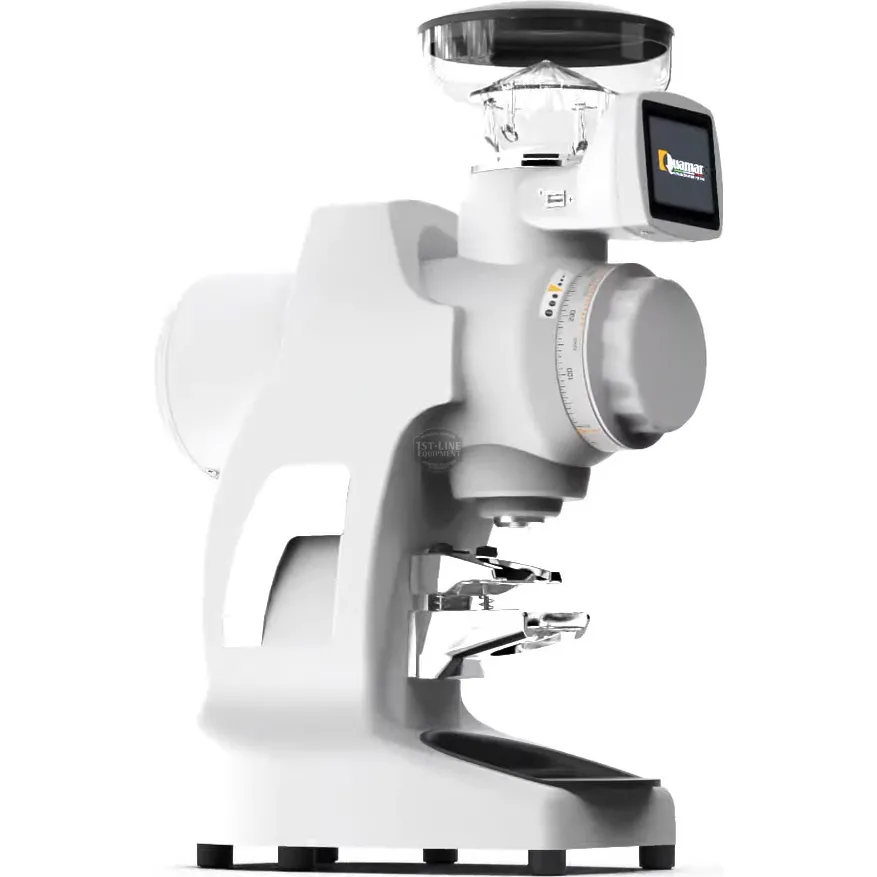
Quamar Sirio-Q Espresso Coffee Grinder in white
What Are the Key Features of Commercial Coffee Grinders for Busy Cafés?
When it comes to high-volume cafés, the selection of a commercial coffee grinder hinges on a few critical features that ensure efficiency and consistency. A durable grinder capable of withstanding heavy usage, while maintaining grind size consistency, is essential. It should also have sufficient capacity for volume output to keep up with peak hours, maximizing productivity and customer satisfaction.
How Do Burr Types Affect Grind Quality and Consistency?
The burr type in a grinder significantly influences the quality and consistency of the grind, factors that are crucial for espresso preparation. There are primarily two types of burrs: flat and conical. Flat burr grinders tend to offer a uniform particle size which enhances the extraction process, whereas conical burr grinders are often favored for their ability to produce a more consistent grind across various batch sizes. The choice between the two can affect not only taste but also operational efficiency, particularly in busy settings where quick service is paramount.
Which Grinder Features Support High Capacity and Throughput?
Key features that enhance the capacity and throughput of commercial grinders include larger hopper sizes for increased bean storage and robust motor capabilities with larger burrs for faster grinding. High-capacity grinders often include automation features that streamline the process, reducing wait times. Elements like programmable settings can provide consistency in grind size for different coffee types, further improving service speed and accuracy.
How to Choose the Best Grinder for a High-Volume Café?
Selecting the ideal grinder involves understanding the specific needs of your café. Knowledge of daily coffee demands and how they align with grinder specifications is essential for making an informed choice.
What Is the Difference Between Doser and Doserless Grinders?
Doser grinders dispense a specific amount of ground coffee into a dosing chamber, which can streamline service during busy hours. Doserless grinders, however, allow for fresh grounds to be collected directly into the portafilter, ensuring maximum freshness but requiring more time to dose accurately. The choice depends on the café’s workflow, with doser grinders often preferred for fast-paced environments while doserless options may appeal to establishments focusing on freshness and precision.
How to Match Grinder Specifications with Café Volume Requirements?
Matching grinder specifications with café volume requirements involves evaluating daily coffee demands and setting up performance expectations. Cafés with higher customer traffic should consider grinders with larger capacities and faster grind times to minimize downtime. Additionally, assessing features like grind size adjustment mechanisms ensures the grinder can accommodate diverse beverage needs, supporting a wider range of coffee styles.
What Are the Leading Commercial Espresso Grinder Brands and Models for Cafés?
The market features several leading commercial espresso grinder brands known for their reliability and efficiency. When evaluating various models, café owners should consider factors such as brand reputation, customer satisfaction ratings, and durability.
Which Models Offer the Best Value and Durability?
Some of the standout models in the commercial grinder space include offerings known for their robust construction and consistent performance. Grinders like the Quamar Sirio-Q and the Eureka Atom W75 are frequently recommended for their longevity and serviceability, making them worthy considerations for high-volume operations. The investment in a high-quality grinder pays off in terms of operational efficiency and exceptional coffee quality, essential for retaining customers.

Eureka Atom W75 Weight Based Espresso Coffee Grinder shown in Red, also available in other colors.
How Do Top Brands Compare on Warranty and Customer Support?
Evaluating warranty offers and customer support services is crucial when selecting a commercial grinder model. Leading brands typically provide generous warranty periods, which speaks to their confidence in product durability. Reliable customer support systems are essential for troubleshooting and maintenance, ensuring minimal downtime and maximizing operational efficiency.
How to Maintain Commercial Grinders to Ensure Longevity and Consistency?
Regular maintenance of commercial grinders is crucial for ensuring their longevity and consistent performance in high-volume cafés. This involves implementing best practices encompassing routine cleaning and inspection of components.
What Are the Recommended Maintenance Best Practices For High-Volume Coffee Shops?
-
Regular Cleaning: Clean the burrs and dosing chambers to prevent old coffee residues from affecting flavor.
-
Inspection: Routinely check burr alignment and sharpness; replace burrs when necessary.
-
Calibration: Periodically calibrate grind size to adapt to different coffee bean batches, different coffee bean blends and preparation methods.
Implementing these practices can significantly enhance operational efficiency and the quality of coffee served.
How Does Proper Maintenance Impact Grind Consistency and Café Efficiency?
Proper maintenance directly correlates with grind consistency and operational efficiency. Neglected grinders often lead to uneven grind results, affecting flavor extraction and ultimately customer satisfaction. Case studies indicate that cafés which prioritize grinder maintenance see marked improvements in service times as well as drink quality, making it essential for maximizing profits and maintaining a loyal customer base.
How Does Energy Efficiency Influence the Cost-Effectiveness of Commercial Grinders?
In an environment where operational costs constantly rise, the energy efficiency of commercial grinders becomes a significant consideration. Efficient grinders not only reduce energy consumption but also contribute to lower electricity bills over time.
What Are the Latest Innovations in Grinder Energy Consumption?
Recent advancements in grinder technology emphasize energy-saving features that decrease overall power usage. Grinders equipped with energy-efficient motors and components are designed to consume less electricity while maintaining high output levels. Innovations such as DC volt motors, automatic shut-off features, and programmable settings further enhance energy conservation strategies that positively influence operational costs.
How Can Energy Savings Reduce Operational Costs in Busy Cafés?
Energy savings can lead to substantial reductions in operational costs for bustling cafés. By adopting energy-efficient grinders, operators can experience lower utility bills, contributing to improved profit margins. Furthermore, the use of advanced technologies often necessitates less maintenance, further saving money over the long term.
Which Case Studies Demonstrate Effective Grinder Use in High-Volume Settings?
To understand the impact of proper grinder selection and maintenance, reviewing case studies can provide valuable insights into real-world applications.
What Volume Categories Are Best Served by Different Grinder Types?
Different grinder types are suited to specific volume categories in cafés. For example, doser grinders excel in locations with consistent, high throughput demands, while doserless varieties appeal to artisanal cafés prioritizing freshness. Understanding the ideal application for each grinder type helps café owners optimize their operations based on customer flow.
How Have Leading Cafés Improved Efficiency with Upgraded Grinders?
Numerous leading cafés have reported significant enhancements in efficiency and customer satisfaction following upgrades to high-quality grinders. By investing in models that align with their service style and volume needs, these establishments have effectively reduced wait times while improving drink quality, underscoring the crucial role of an effective espresso grinder in the coffee business.
Selecting the right commercial espresso grinder involves evaluating these critical features, assessing industry-leading brands, and implementing effective maintenance strategies. By taking a systematic approach to grinder selection, café owners can set the stage for operational success, ensuring a consistent and high-quality coffee experience for their patrons.
