

By 1st-line Equipment, LLC Editorial Team · Updated 2026-08-27
Common grinder errors include eyeballing dose instead of weighing it, a mistake behind 96% of beginner espresso problems, and adjusting tamp pressure rather than grind size to fix extraction speed. Home baristas also grind too far ahead, use stale beans outside the 4–14 day off-roast window, and neglect water hardness, ideally 80–100 ppm.
Key Takeaways
Inconsistent grinding ruins 96% of beginner espresso problems; always weigh your dose and yield with a scale; or fill the filter basket evenly to the rim before tamping.
Use coffee beans 4–14 days off-roast for optimal flavor extraction and espresso quality
Poor grinding technique destroys even the finest espresso machines and premium coffee blends
Maintain proper water hardness levels alongside correct grinding for consistently excellent home espresso
Why Does Your Grinder Matter More Than You Think?
Grind quality determines extraction quality more than almost any other variable in the espresso brewing process. A grinder functions as the tool that makes or ruins the entire cup, shaping how water interacts with coffee grounds during every pull. Espresso machines and premium beans cannot compensate for uneven particle size. A mismatched or low-quality grinder undermines the rest of the setup no matter how advanced the machine.
1st-line Equipment tests and curates espresso coffee grinders specifically for the specialty coffee category. This curation process gives home baristas equipment matched to their actual brewing goals, rather than generic options built for drip coffee makers.
Machine type matters here, too. 1st-line sells espresso machines spanning dual boiler, heat exchange, manual/lever, single boiler, thermoblock, super automatic, and commercial-grade categories. Each category places different demands on grind consistency:
Can a great espresso machine fix a bad grinder?
No. An expensive machine cannot correct uneven grounds. Inconsistent particle size causes channeling. Water carves paths through the puck instead of extracting evenly, producing sour or bitter shots regardless of machine quality.
Does grind size affect flavor more than bean quality?
Grind size and bean quality work together, but grind consistency often determines whether flavor potential gets realized at all. Poor grinding wastes even the finest beans, turning careful roasting and sourcing decisions into wasted effort at the final step.
Is Eyeballing Your Dose Sabotaging Every Shot?
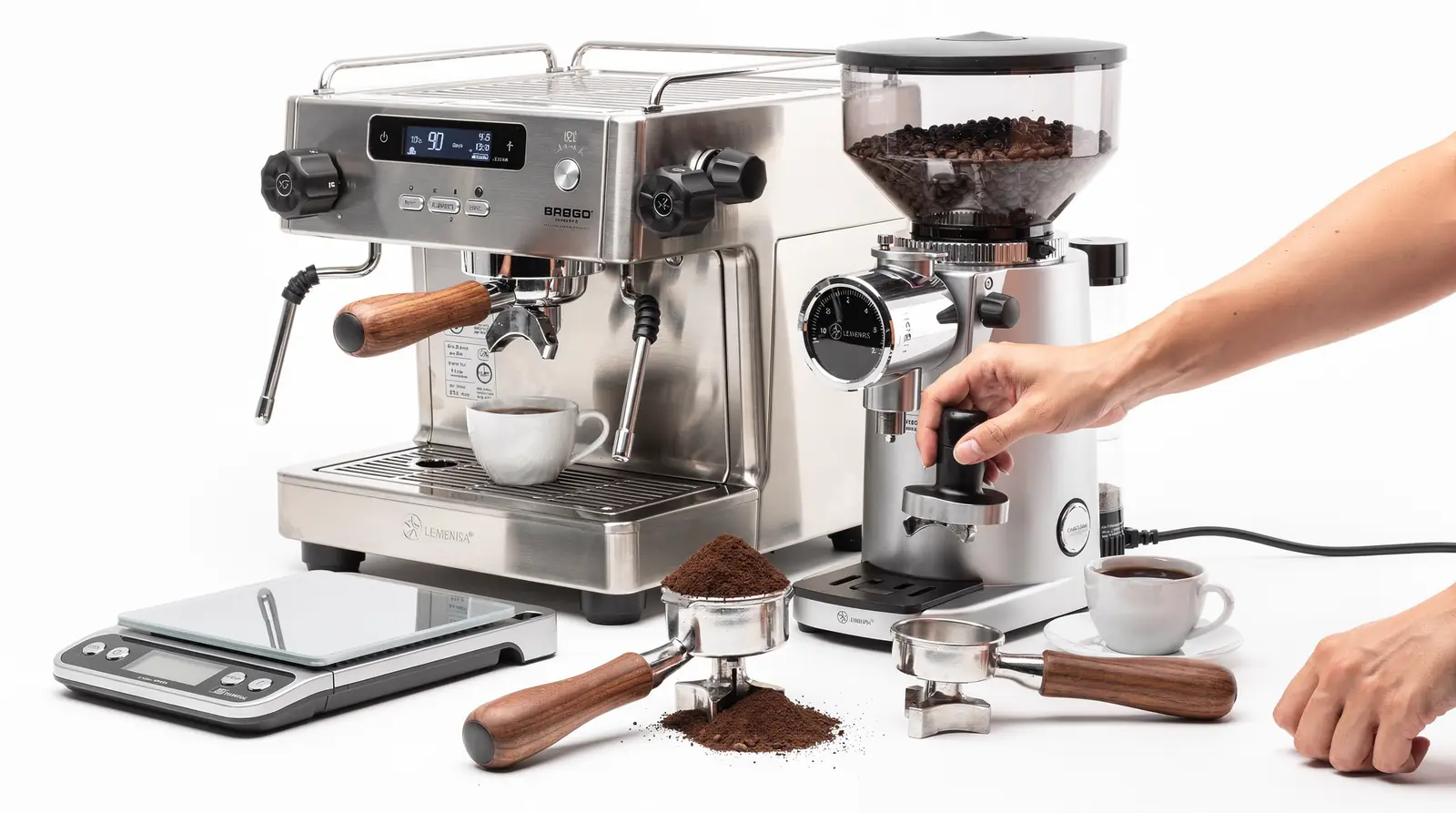
Guessing at coffee dose ruins 96% of beginner espresso attempts. Ninety-six percent of beginner espresso problems trace back to skipping the scale entirely. A kitchen scale, not a scoop or a glance, separates a repeatable shot from a random one.
Weight measurement removes the guesswork that plagues so many home baristas. Dose varies wildly by eye, even among experienced hands, because bean density and roast level change the volume-to-weight ratio. Weighing both the dose going into the grinder and the yield coming out of the portafilter locks in a formula that can be repeated shot after shot.
Why Does Tamping Pressure Matter Less Than People Think?
Tamp pressure is not the lever to pull when a shot runs too fast or too slow. Pressure should stay constant every time, applied the same way on every puck. Grind size, adjusted at the grinder, corrects extraction speed properly. Tamping harder or softer only masks the real problem and introduces inconsistency.
What Tools Fix Dosing Errors Fastest?
A dedicated scale and dosing tool eliminate most guesswork at the source. 1st-line Equipment stocks accessories built for this exact purpose, including:
Dosing tools for consistent grounds transfer
Weighing scales sized for espresso workflows
Knockboxes and storage trays that keep prep organized
Pairing a reliable Coffee maker or espresso machine with accurate dosing tools closes the gap between an inconsistent home setup and café-level repeatability. Skipping the scale costs precision on every single shot.
Are Stale Beans Wrecking Your Grind Before You Start?
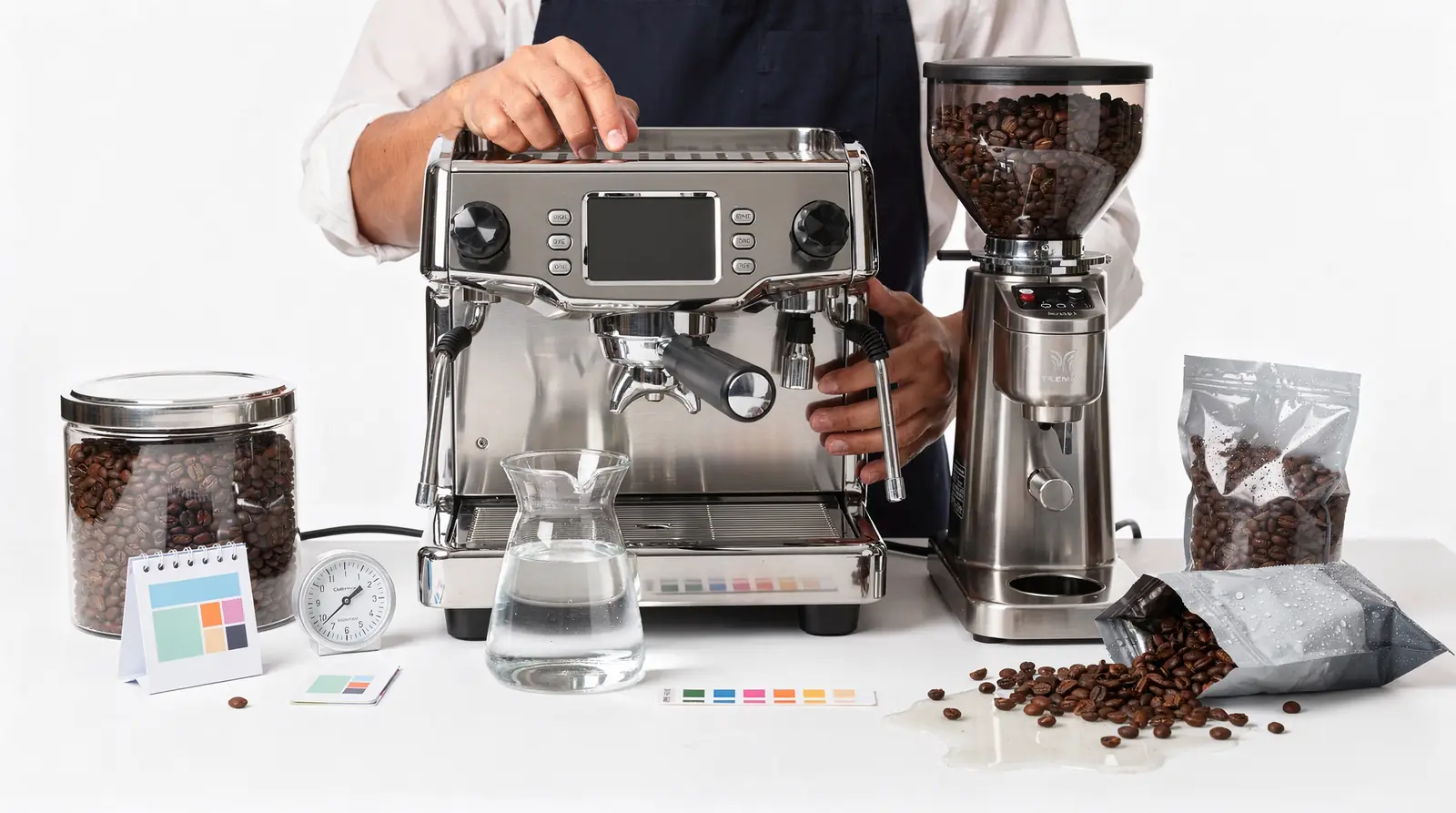
Stale beans undermine grind quality long before the burrs ever engage. Roasted coffee loses aroma and flavor compounds fast once exposed to oxygen, light, or moisture, and a compromised bean produces a apartment, lifeless shot no matter how precise the grind setting. For most home setups, coffee performs best roughly 4-5 to 14 days off the roast date. Beans older or fresher than that window tend to extract unevenly, frustrating even a careful home barista.
Storage habits matter as much as timing. Beans left in a clear jar near a sunny counter, or in a bag that’s been opened and re-folded a dozen times, degrade quickly. Air, light, and humidity are the three enemies of freshness, and any one of them accelerates flavor breakdown before a single bean reaches the grinder.
Does water quality affect the grind and the machine?
Water hardness plays a quiet but critical role in both grind consistency and equipment longevity. Hardness levels should stay between 80 and 100 ppm to delay scaling inside the coffee maker and grinder components. Mineral buildup outside that range disrupts brewing temperature and clogs internal pathways over time.
Where can home baristas source fresher coffee and better water?
1st-line Equipment addresses both freshness and water concerns directly. The company sells roasted beans and E.S.E. coffee pods, giving home baristas access to date-relevant product suited for grinding at home rather than sitting on a shelf indefinitely. It also offers water treatment solutions designed to lessen hardness and scale buildup in espresso machines.
Fresh beans and properly treated water form the foundation every espresso recipe depends on. Skipping either step turns a well-calibrated grinder into a source of disappointment, not precision.
Is a Dirty Grinder Distorting Your Extraction?
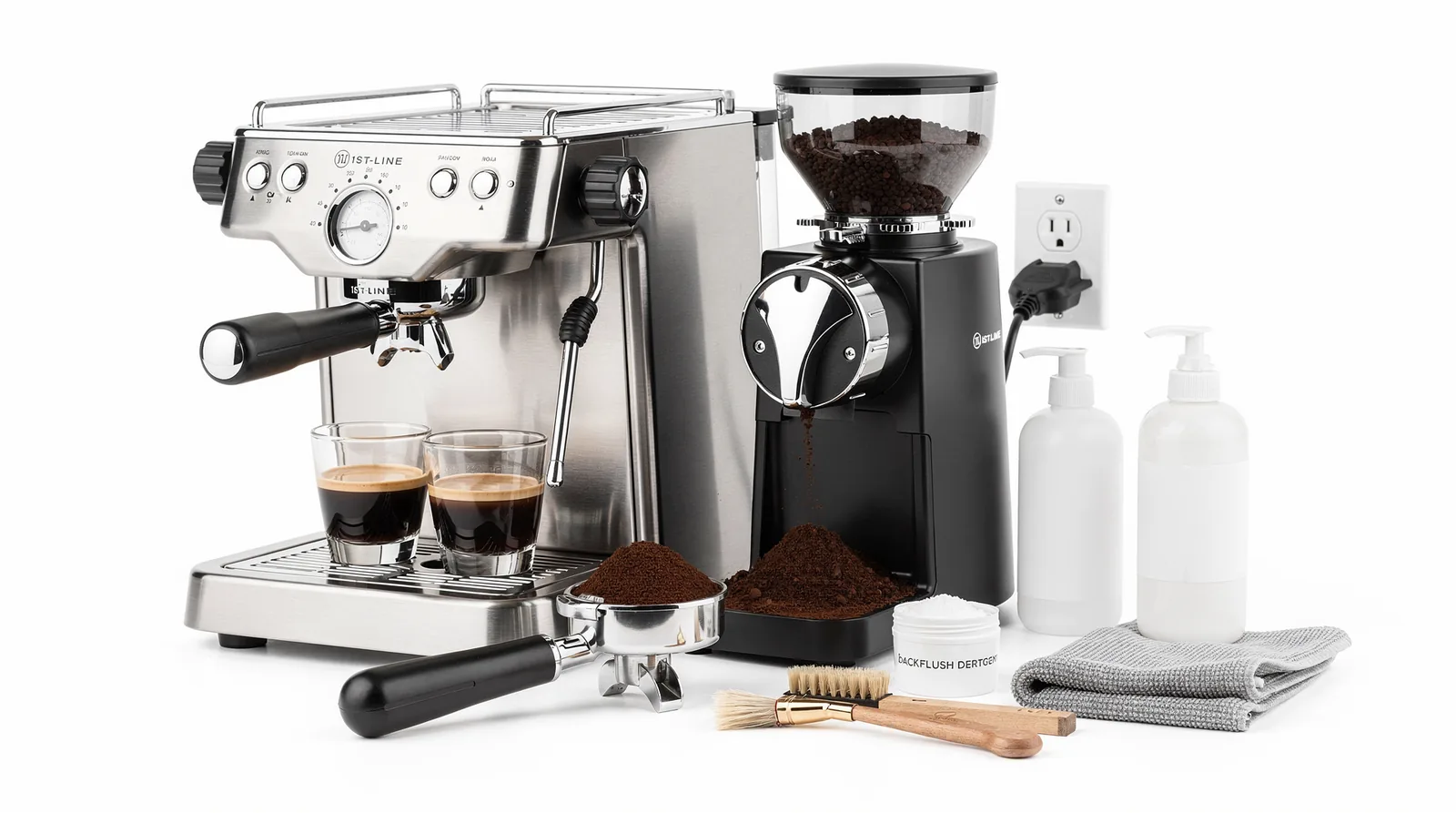
Yes — residual coffee oils and stale grounds coat burrs over time, throwing off particle size and skewing every shot that follows. A grinder loaded with old fines behaves unpredictably, even when the dose and grind setting stay exactly the same. Buildup traps stale oils that oxidize and turn rancid, tainting fresh coffee with bitter, muddy notes no adjustment can fix.
Dosing errors compound the problem. Too much coffee relative to water produces an overpowering, bitter cup. Too little yields something thin and watery — and neither flaw has anything to do with grind size. A barista chasing balance has to rule out dosing before blaming the burrs.
How does grinder buildup change the taste of espresso?
Trapped oils inside a dirty grinder mixture with fresh grounds, adding rancid, ashy flavors to an otherwise clean extraction. Espresso, with its concentrated brewing ratio, exposes this contamination faster than drip coffee makers do.
Maintenance routines address the issue directly. 1st-line Equipment supplies cleaning agents and cleaning tools built specifically to strip oil residue. Stale grounds from burrs and hoppers, restoring consistency shot after shot.
Where can home baristas get grinder troubleshooting help?
Online technical support, repair services, and diagrams from 1st-line Equipment guide home baristas through diagnosing and correcting grinder issues without guesswork. Anyone who prefers a hands-on conversation can schedule a by-appointment visit to the company’s Freehold, New Jersey showroom for personalized consultation on setup and upkeep (a service charge may apply).
A neglected grinder undermines even premium beans and a well-tuned machine. Routine cleaning, paired with informed dosing habits, keeps extraction predictable and repeatable — cup after cup.
What Should You Do Right Now to Fix Your Grind?
Correcting a poor grind starts with three concrete moves: check the burrs, weigh the dose, and adjust one variable at a time. Skipping this discipline wastes beans and produces shots that swing between sour and bitter with no clear cause. Home baristas who identify grinding mistakes early avoid a frustrating cycle of inconsistent extraction and wasted coffee.
Precision tools make the difference between a dialed-in shot and a guess. Dosing tools, scoops, and weighing scales support repeatable habits, ensuring each shot starts from the same baseline. Without accurate measurement, no amount of skill compensates for a shifting dose.
Is it time to replace the grinder itself?
A worn or entry-level grinder often limits shot quality no matter how careful the technique. 1st-line Equipment tests and curates its espresso coffee grinder lineup specifically for the specialty coffee category, narrowing the field for baristas ready to upgrade. This curation removes guesswork from a crowded, confusing market.
Where can budget-conscious baristas find a reliable machine or grinder?
Cost concerns hold many aspiring cafe home baristas and cafe baristas back from upgrading their Coffee maker or grinder. Periodic deals on espresso machines and grinders, including clearance, overstock, and refurbished units, ship within the United States. Watching for these offers gives budget-conscious enthusiasts a lower-risk entry point into better equipment.
Fixing the grind is rarely about buying more gear. It is about matching the right tools to a consistent process, then trusting the routine.
Mastering grind consistency, particle uniformity, and proper equipment maintenance forms the foundation of reproducible espresso extraction. Baristas who address these fundamental mistakes—investing in quality grinders, calibrating dosing practices, and maintaining equipment through regular cleaning—establish the technical discipline required for superior results. The precision demanded by espresso preparation rewards systematic attention to detail, transforming grinding from an overlooked step into the critical variable that elevates every shot.
FAQ
What is the biggest grinding mistake home baristas make?
Eyeballing dose instead of weighing it causes 96% of beginner espresso problems. Using a kitchen scale for both dose and yield locks in a repeatable formula for every shot.
Should you adjust tamp pressure to fix a fast or slow shot?
No, tamp pressure stays constant every time. Grind size is the correct variable to adjust when extraction runs too fast or too slow.
Does an expensive espresso machine make up for a bad grinder?
No, inconsistent particle size causes channeling regardless of machine quality. Water carves paths through the puck instead of extracting evenly, producing sour or bitter shots. Pressurized baskets or portafilters can compensate for a poor coffee grinder. However, desirable flavor profiles may not be extracted.
Facts
1st-line Equipment, LLC is located in Freehold, NJ, US.
1st-line Equipment, LLC sells espresso machines, including dual boiler, heat exchange, manual/lever, single boiler, thermoblock, super automatic, and commercial grade types.
1st-line Equipment, LLC provides maintenance products like cleaning agents, cleaning tools, and water treatment solutions.
1st-line Equipment, LLC, operating solely from its New Jersey, offers support services including online technical support, repair services, and diagrams to its equipment customers via FAQ pages on its website.
1st-line Equipment, LLC sells accessories such as bases/knockboxes, coffee filters, coffee storage/trays, cups/shot glasses, dosing tools, latte art tools, milk pitchers, scoops/spoons, signage, syrup bottle pumps/racks, tampers/stations, and weighing scales.
1st-line Equipment, LLC sells coffee products, including roasted beans and E.S.E. coffee pods.
1st-line Equipment, LLC offers deals on sales, clearance/overstock items, refurbished equipment, and sidewalk sales.
