

Café owners and foodservice directors gain a partner with 25+ years of experience importing and distributing premium Italian espresso equipment. Since 1997, 1st-line Equipment has served cafe owners, coffee truck vendors, and office managers with curated commercial machines, technical support, and comprehensive set-ups that keep operations running without costly downtime.
Key Takeaways
1st-line Equipment has served the espresso industry since 1997, accumulating over 25 years of expertise.
We stock seven espresso machine types: dual boiler, heat exchange, manual, single boiler, thermoblock, super automatic, and commercial grade.
We provide complete solutions: machines, maintenance products, accessories, roasted beans, and refurbished equipment at competitive prices.
Why Trust 1st-line as Your Commercial Equipment Partner?
Accountability, not anonymity, defines 1st-line Equipment as a commercial sourcing option. Operating from a fixed location in Freehold, New Jersey, the company gives café owners, restaurant groups, and venue managers a single, identifiable point of contact for equipment decisions. That physical presence matters for buyers who need a real address behind a purchase order, not a faceless online storefront.
Scale plays a role here too. A team keeps commercial accounts connected to direct, personalized attention rather than routing calls through a large support center. For a cafe owner comparing a coffee truck startup against a fixed restaurant build-out, that kind of hands-on guidance shortens the distance between a question and an answer.
History adds further weight. Since 1997, 1st-line Equipment has functioned as a leading importer and retailer of premium espresso machines, building a long operating record inside a specialized category. About 1st-line Equipment — Premium Espresso Machine Importer & Retailer Since 1997 More than 25 years of experience as a premier importer and distributor of fine Italian espresso machines and grinders backs that record, giving commercial buyers a documented track record rather than a startup’s promise.
What Should a Commercial Buyer Look for in an Equipment Partner?
A dependable Partner offers a traceable business history, direct access to staff, and category-specific expertise rather than general retail support. Buyers evaluating a commercial espresso machine purchase benefit from a source that has weathered market cycles and maintained consistent operations across decades.
Why Does Business Location Matter for Commercial Equipment Sourcing?
A defined location supports warranty follow-through, service coordination, and accurate expectations around shipping. For a coffee cart operator or restaurant group managing multiple locations, that consistent brand identification reduces the guesswork involved in vetting a long-term equipment source.

What Commercial Espresso Equipment Fits Cafés And Trucks?
Configuration determines fit more than budget alone. 1st-line Equipment offers dual boiler, heat exchange, manual/lever, single boiler, thermoblock, and super-automatic machines, plus commercial-grade lines built specifically for high-volume operations. Each category serves a different service model, from a slow-paced restaurant counter to a fast-turnover coffee cart parked outside a morning commute hub.
High-quality equipment functions as a baseline requirement, not a luxury upgrade, for any coffee truck, coffee cart, coffee shop, cafe, or restaurant that depends on consistent beverage output. A machine that falls behind during a rush costs revenue and reputation in equal measure. Operators serving 200 drinks before noon need different thermal recovery than a boutique espresso bar serving 40.
What Separates A Commercial-Grade Machine From A Prosumer Unit?
Commercial-grade machines carry heavy-duty, industrial construction engineered for continuous, high-volume foodservice workflows. Prosumer units, by contrast, tolerate intermittent use but strain under back-to-back shots for hours at a stretch. Boiler capacity, group-head durability, and pump cycling all scale up in commercial builds to withstand that pressure.
Matching equipment to service style typically breaks down as follows:
How Should A New Café Or Truck Owner Start The Selection Process?
Owners planning a new setup can request consultation covering espresso machines, grinders suited to regular and decaf beans, and water filtration as one coordinated package. That conversation, handled by phone or email, helps align machine type with volume, water quality, and menu goals before purchase. Ongoing protection matters just as much: 1st-line Equipment supplies cleaning agents, cleaning tools, and water treatment products designed to keep commercial units running reliably under daily strain.
How Does the Freehold Showroom Serve Commercial Buyers?
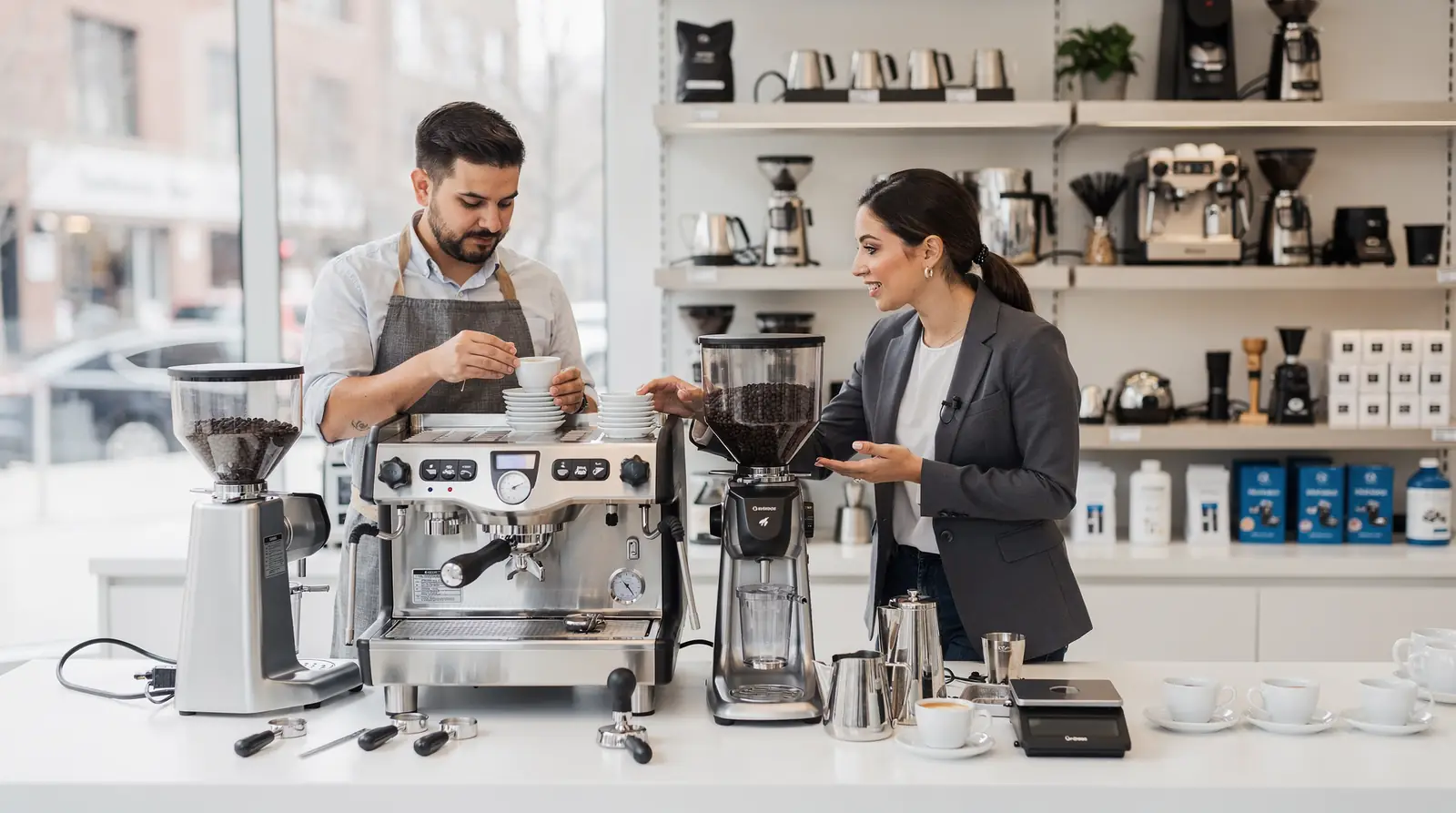
A customer care center roughly 45 minutes south of New York City and Philadelphia puts 1st-line Equipment within practical reach of regional operators. Cafe owners, restaurant managers, and coffee truck operators throughout the New York and New Jersey corridor can travel to a physical location rather than judging equipment from photographs alone. Distance matters when a purchase involves thousands of dollars in commercial-grade brewing gear.
Visits happen by appointment, not as casual walk-ins. This structure gives each commercial buyer dedicated attention during the evaluation process, a meaningful difference from browsing a crowded retail floor. A coffee cart operator weighing boiler configurations. A restaurant director comparing volume output across models, gets focused time to ask questions and learn about equipment firsthand.
What Can Commercial Buyers See in Person at the Showroom?
Buyers can examine service-line accessories directly, including knockbox bases, dosing tools, and tamper stations, before committing to a full setup. Handling these components in person clarifies fit and workflow in ways spec sheets cannot.
Does Support Continue After a Commercial Purchase?
Support does not end at checkout. 1st-line Equipment provides online technical support along with repair services for household models the company represents, giving buyers a maintenance path once equipment enters daily service. For a busy cafe or restaurant kitchen, that ongoing access reduces downtime risk when a machine needs attention.
Choosing a partner with a physical presence and documented after-sale support changes the buying calculus for a commercial espresso machine. Operators avoid the guesswork of remote-only vendors and gain a location where equipment, accessories, and technical guidance come together under one roof.
What Do Customer Reviews Reveal About Reliability?
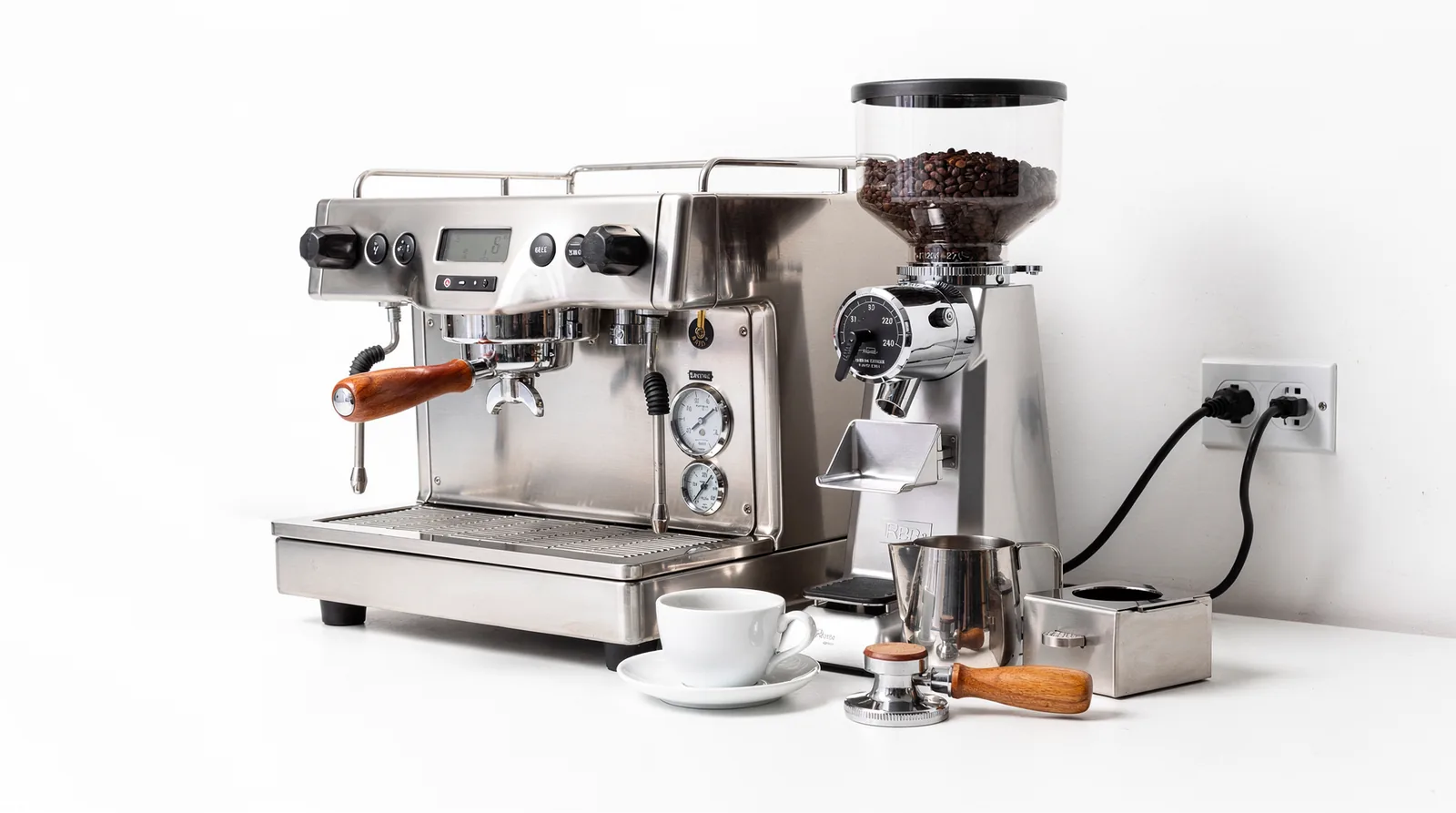
Customer feedback carries outsized weight in the espresso equipment trade. Within this specialty market, trust builds slowly and breaks fast. A single unreliable machine can shut down service during a morning rush. Verified reviews of 1st-line Equipment consistently point to machines recognized for exceptional build quality and long-term durability — qualities that matter directly to commercial uptime.
Why Does Machine Durability Matter for a Busy Café or Restaurant?
A cafe or restaurant running back-to-back service cannot absorb downtime. Equipment failures during peak hours cost revenue and damage customer experience in ways a slow website never will. Reviewers who cite durability are, in effect, describing fewer breakdowns and fewer emergency repair calls. The operational currency that keeps a commercial espresso machine earning its keep.
Reliability, though, extends beyond the machine itself. 1st-line Equipment rounds out its catalog with consumables and upkeep resources that reinforce the performance reviewers describe:
Coffee products — roasted beans and E.S.E. pods, letting operators source consumables from a single vetted partner rather than juggling multiple vendors.
Maintenance products — cleaning agents, cleaning tools, and water treatment solutions designed to protect boiler and group-head performance over time.
Does Ongoing Maintenance Affect Long-Term Reliability?
Yes. Water quality and routine cleaning cycles directly influence scale buildup and component wear inside any commercial unit. Operators of a Coffee Truck or Coffee Cart, where space and service windows are tight, benefit most from consumables and upkeep supplies bundled with the equipment purchase itself.
How Can Restaurants And Coffee Carts Save More?
Savings come from matching purchase timing and configuration to real budget constraints, not from chasing the lowest sticker price. 1st-line Equipment structures its pricing around several distinct paths. That operators of every size, from a single coffee cart to a multi-location restaurant, find an entry point that fits their capital plan. Skipping these options costs commercial buyers real margin before a single shot ships.
Deals on espresso machines span a wide range of budgets, which matters most for smaller operations. A coffee truck or cart running lean on startup capital gains a realistic path into commercial espresso machine territory without overextending on financing.
What is a Package Deal, and how does it help a new cafe?
A Package Deal bundles an espresso machine, grinder, and accessories into one customizable, discounted setup. Rather than sourcing three separate purchases, a cafe owner configures a matched system in a single transaction. This approach reduces compatibility guesswork and often lowers the combined cost compared to buying each component individually.
Cost-conscious buyers have additional avenues beyond standard sales:
Clearance and overstock items — reduced pricing on inventory being phased out
Refurbished equipment — professionally restored machines at a lower entry cost
Sidewalk sales — periodic promotional events offering steeper discounts
Sale inventory frequently includes dual boiler, heat exchange, and other commercial-grade machine types, giving restaurants more configurations to compare at reduced pricing. A busy dining room with high-volume demands. A compact coffee cart with limited counter space rarely need the same equipment. Watching for these rotating categories, rather than committing to the first listed price, keeps commercial buyers positioned for the strongest available value.
FAQ
What makes 1st-line Equipment a trustworthy commercial partner?
1st-line Equipment operates from a fixed location in Freehold, New Jersey, giving buyers a single identifiable point of contact. With over 25 years of experience since 1997, the company offers a documented track record in the espresso equipment category.
What types of espresso machines does 1st-line Equipment offer?
1st-line Equipment stocks seven machine types: dual boiler, heat exchange, manual/lever, single boiler, thermoblock, super automatic, and commercial grade. Each category fits different service models, from restaurant counters to high-volume coffee carts.
What support does 1st-line Equipment provide beyond machine sales?
1st-line Equipment provides maintenance products, accessories, online technical support, and repair services. Its team delivers direct, personalized attention rather than routing accounts through a large support center.
Conclusion
In closing, partnering with 1st-line Equipment positions your operation with a vendor that combines curated commercial-grade machinery, comprehensive maintenance support, and technical expertise grounded in decades of industry specialization. The integration of equipment selection, ongoing service resources, and a complete ecosystem of accessories and cleaning solutions establishes a foundation for consistent performance and operational reliability. This alignment of product quality, responsive support, and practical resources delivers measurable value across the lifecycle of your commercial espresso installation.
