Overview
Magister Stella Dual Boiler Espresso Machine
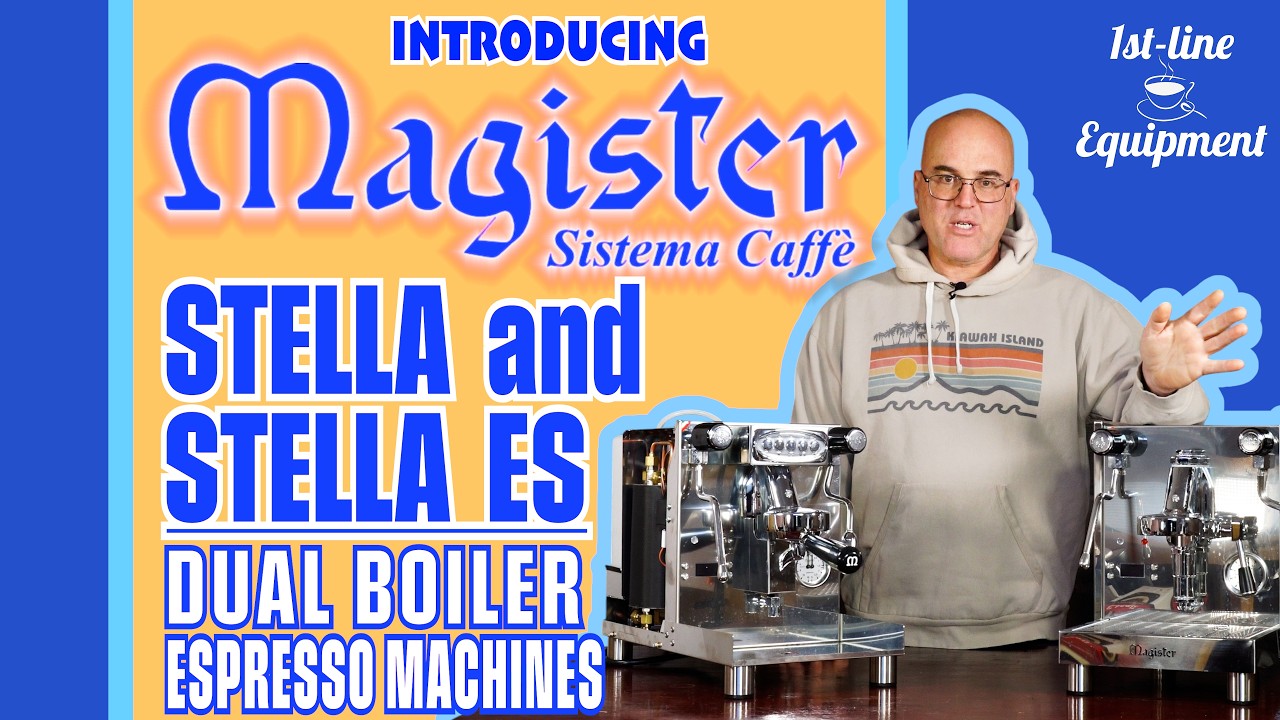
The company Magister is relatively new to the espresso industry, starting back in 1997. We started business with them in 2012, bringing in the Stilo line. These were HX machines serviceable in both the home and commercial environments. As our customers became more familiar with the Magister line, the interest in a dual boiler espresso machine started to grow. After years of R&D, they released the Stella line.
Their decision to use copper boilers is one we like. The overall performance in thermal conductivity and temperature stability is superior to stainless steel. Having a rotary vane pump instead of a vibration pump is always a plus, whether hooking your machine up to a water line or not. The less rattling, the more enjoyable pulling a shot is.
Videos


Features
Dual Boiler System:
- Copper, insulated: The boilers are made of copper, which retains heat better than stainless steel. Typically, copper boilers are more susceptible to limescale when compared to stainless steel boilers. Therefore, we highly recommend using a water softener. The manufacturer wraps the boiler with insulation for maximum heat retention.
- Pull a shot & steam milk at the same time: Steam is always readily available at the turn of a knob. Hence, there is no wait time going from coffee to steam mode.
- Auto-shutoff: A sensor detects the water level in the boiler. When below the threshold, the heating element shuts off to prevent it from burning out.
4-Key OLED Display:
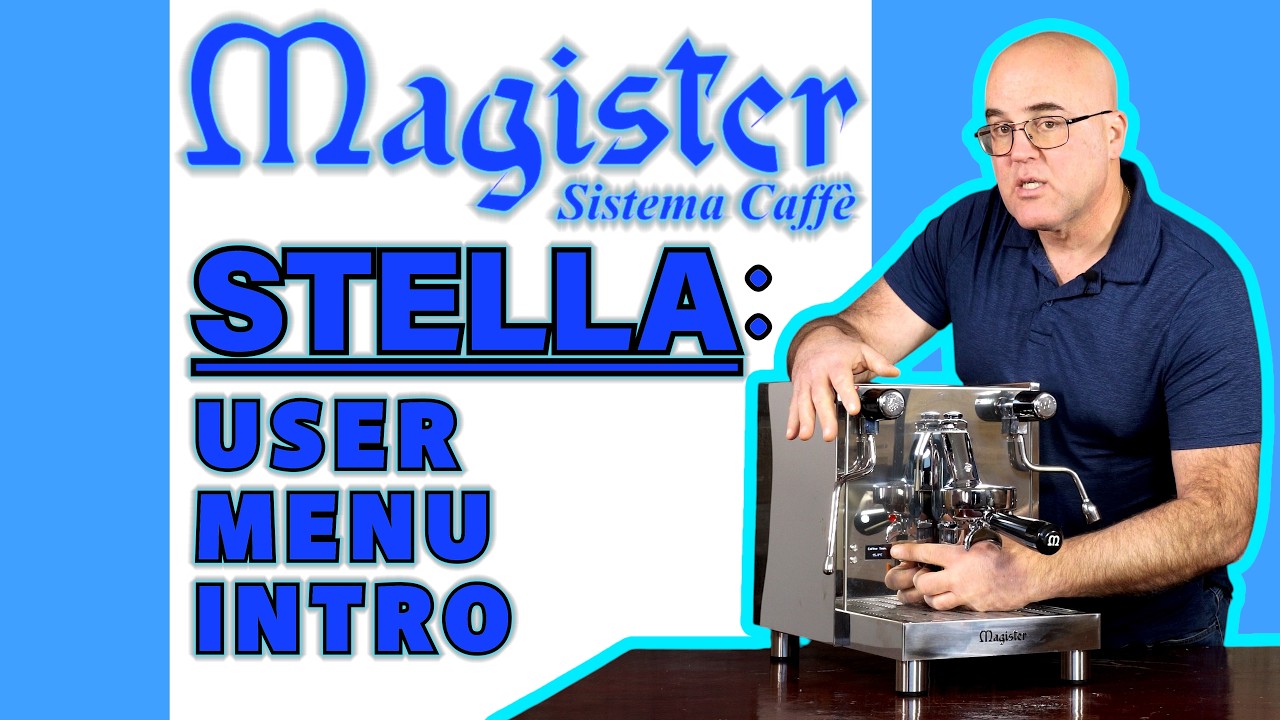
- Boiler temperature: Adjust the temperature of both the coffee and steam boilers when active and when in ECO mode.
- Boiler priority: Refers to which boiler refills first when the machine is used. Always use coffee priority to avoid damage to heating element in coffee boiler. If only using the machine for steam and no use of coffee boiler, then set to steam boiler in this scenario only.
- C --> F: Can switch between Celsius and Fahrenheit.
- Shot timer (Chrono function): Visible on display when pulling a shot.
- Counters: Give you a sense how much you use the machine.
- Maintenance schedule: Set for amount of liters of water to recharge water softener or replace water treatment filters for limescale causing agents.
- ECO mode: Machine will go into a low power level mode after a preset time (up to 30 min).
E61 Grouphead:
- Consistent heating: Hot water circulates from the boiler through the grouphead and back to keep the grouphead and your portafilter nice and hot. This keeps the grouphead at a constant, stable temperature compared to other groupheads that have a built-in heating element.
- Flow control capable: Due to the unique design of the grouphead sitting low on the front panel, most flow control kits will not work/fit as the flow paddles will hit the panel. However we do have a compatible flow control kit sold separately.
Dual Pressure Gauge:
- Left side measures bar pressure when pulling a shot of espresso.
- Right side measures steam pressure. Optimal pressure is around 1.6 bar.
Cool Touch Steam / Hot Water Wand:
- Rotary knobs: Allows you to control the power of steam / hot water dispensed.
Rotary Vane Pump:
- Quiet operation: Rotary pumps are necessary for direct connect capable machines since vibration pumps cannot handle the incoming water pressure. The main benefit that you will experience is that they are a lot quieter.
Switchable between water tank and direct water connection:
- Large water tank: The larger the tank, the less downtime in refilling.
- Water line connection: Easily switchable through the PID controls. Stainless steel hose & fitting are included.
Parts / Accessories Included:
- Portafilters: Single spout & dual spout. Both 58mm in diameter.
- Filter baskets: 1-cup, 2-cup, and blind for backflushing.
- Tamper: Simple 2-sided plastic.
- Scoop: Simple plastic one for ground coffee.
- Water line connection: Stainless steel braided hose & fitting.
Specifications
| Brand | Magister |
|---|---|
| Height (inches) | 15.25, approximate |
| Width (inches) | 11.75, approximate |
| Depth (inches) | 18.75, approximate |
| Weight (pounds) | 51 |
| Wattage (watts) | 20 amp required, 2020 watts stated on machine |
| Voltage (volts) | 110 – 120 |
| Coffee boiler capacity (liters) | 0.5 |
| Steam boiler capacity (liters) | 1.2 |
| Tank capacity (liters) | 3 |
| Approvals | CE |
- Coffee Boiler Priority Mode (110 Volts): Utilization of 640 watts
- Steam Boiler Priority Mode (110 Volts): Utilization of 1330 watts
- Boiler Priority NONE Mode (110 Volts): Disabled for 110 volt units
Notes
General Espresso Machine Notes/Warnings:
- Upon first use (tank/reservoir models): On the initial start-up (or after a long period of non-use), it is important to make sure the pump is removing water from the tank. When the machine is powered on, you will hear the pump running. After 5 seconds, squeeze the in-line hose in the tank (usually the longest hose, has a particle filter attached). if you hear a different sound, this means the pump is working correctly. If not, immediately power down the machine and contact us. For more information, visit this page General Manual Pump Priming.
- Electrical: To avoid electrical damage to this espresso machine which is not considered a manufacturer's defect, please acquire and install a single-outlet surge suppressor rated at 1080 joules or higher. Without the recommended surge suppressor, the espresso machine can be damaged at the power switch, the electronics, the heating element, the pressurstat, or the wiring inside. For more information, visit this page Power Protection.
- Water: To increase the useful life and not damage your espresso machine, please use softened water. Softened water is water without calcium and magnesium, but still has other minerals for espresso extraction. Do not use distilled, purified, or reverse osmosis water as these types of water create oxidation with the metals and cause the same damaging effects as limescale. For more information, visit this page Water Choice.
- Descaling: We do not recommend descaling unless there is an issue with the espresso machine. Too much descaling can eat away at the metals and gaskets inside an espresso machine. As a preventative measure, we recommend using softened water as explained in the bullet point above.
- Backflushing: This procedure of cleaning the grouphead will need to be performed from time to time. For more information, visit this page Espresso Machine Backflush – Why 50?
Blogs
Support
- Instruction Manual (REV.00)
Parts Diagram
- Parts Diagram (REV.04)
Reviews
FAQ
Submit Questions for FAQ
Please review the FAQ to confirm the question or topic was not previously covered.
Any followup questions for FAQ should be requested as a separate FAQ submission.
-
How is pre-infusion done on this machine? It's not programmable, it seems. It can be done with flow control, I guess, if you buy it with that device mounted on the group, but am I missing any other way of doing it?
-
Q How is pre-infusion done on this machine? It's not programmable, it seems. It can be done with fl...... Read more answer nowAsked on September 23, 2026 8:50 amA Sorry, the programming does not allow the operator to set pre-infusion into memory. The E61 grouphead already has a pre-infusion chamber. In addition, the flow control can also be used to manually control the pre-infusion.The model with the dosage programming has this feature. Otherwise, the lever action on the right side of the grouphead can be used for manual controlled pre-infusion.
How is the backflush done?
-
A
How to backflush:
- Insert the blind filter in the portafilter.
- Lock the portafilter into the grouphead.
- Start the coffee delivery for about 10 seconds, stop, disengage the portafilter, and toss the dirty water.
- Repeat these steps several times.
For more detailed instructions, see Backflushing Instructions for Rotary Pump Espresso Machines.
How often should maintenance be done?
-
A
Daily cleaning should be done at the end of each day of use.
Periodic cleaning/backflushing depends on usage. Weekly is a good practical recommendation.
What does Chapter 10 maintenance mean in practical terms?
-
Q What does Chapter 10 maintenance mean in practical terms? answer nowAsked on July 16, 2026 4:45 pmA
Daily maintenance means cleaning the machine body, portafilters, filters, drip tray, group shower, group gasket, and steam wand.
Periodic maintenance means washing the tank, cleaning the tank compartment, and performing a backflush with the blind filter.
What are the requirements for direct water connection?
-
A
Use cold potable water, maximum pressure 6 bar, with a shut-off valve. The connection is G 3/8" female.
What does the water-source setting do?
-
A
Water-source selects the water supply type:
- Tank / Serbatoio
- Mains /Rete
When it is set to Mains / Rete water, the tank-level sensor is disabled.
What is the factory password?
-
A
The factory password is 14241. Or, if no password is set, 00000.
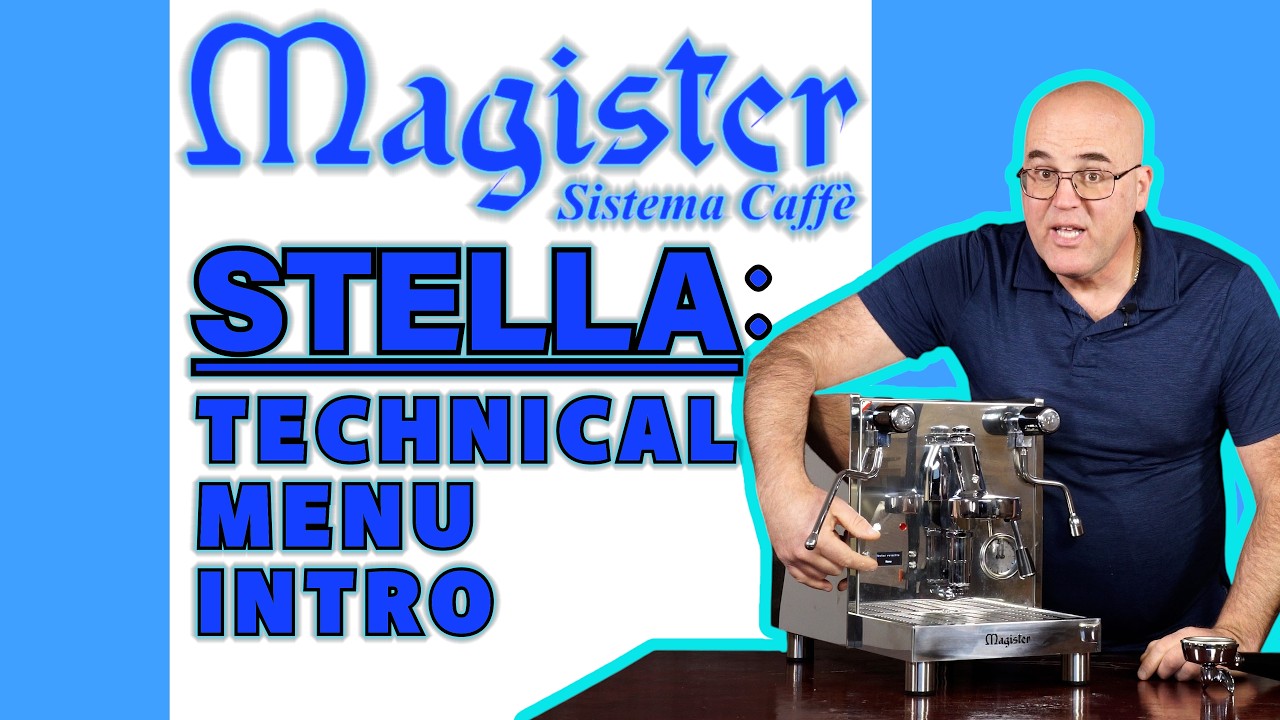
How should the technical menu be entered?
-
A
Starting from Idle-Off, press and hold ENTER for more than 10 seconds. If password protection is enabled, the password screen will appear. If password protection is disabled, the technical menu opens directly.
Is there a language menu?
-
A
Yes, the firmware shown in the video includes a language selection screen. The video shows English, Italian, and German.
Does the technical menu allow going back one step?
-
A
The menu navigation is mainly forward using ENTER. There is no dedicated "back" function described. To exit, hold ONOFF for about 2 seconds to return to the normal Idle-On screen. To revisit a previous item, enter the menu again and advance to the desired point.