If you own a Magister Stella, occasional maintenance and servicing are part of keeping it running at its best. Some components—like the grouphead and steam/hot water wands—are easily accessible from the exterior for routine cleaning and upkeep. Other internal components, such as the boiler and pump, require opening the machine to reach them. Below are step-by-step instructions to help you safely and easily remove the panels for internal access.

Notes: The instructions below is the Magister Stella. This should also work for the Magister Stella ES.

Before you begin: We always recommend powering off your machine and allowing it to cool completely before starting any service. Remove any loose components, including the portafilter, drip tray, and top lid. Unplug the machine and remove the water tank. Accessing certain internal components may require tilting or turning the machine. Taking these steps beforehand helps prevent potential burns, avoids scratches to the machine, and reduces the risk of water spilling from the tank.

First remove the water tank cover and top grill. Underneath the grill you will see 4 screws in each corner that you need to remove. These screws hold the side panels in place.
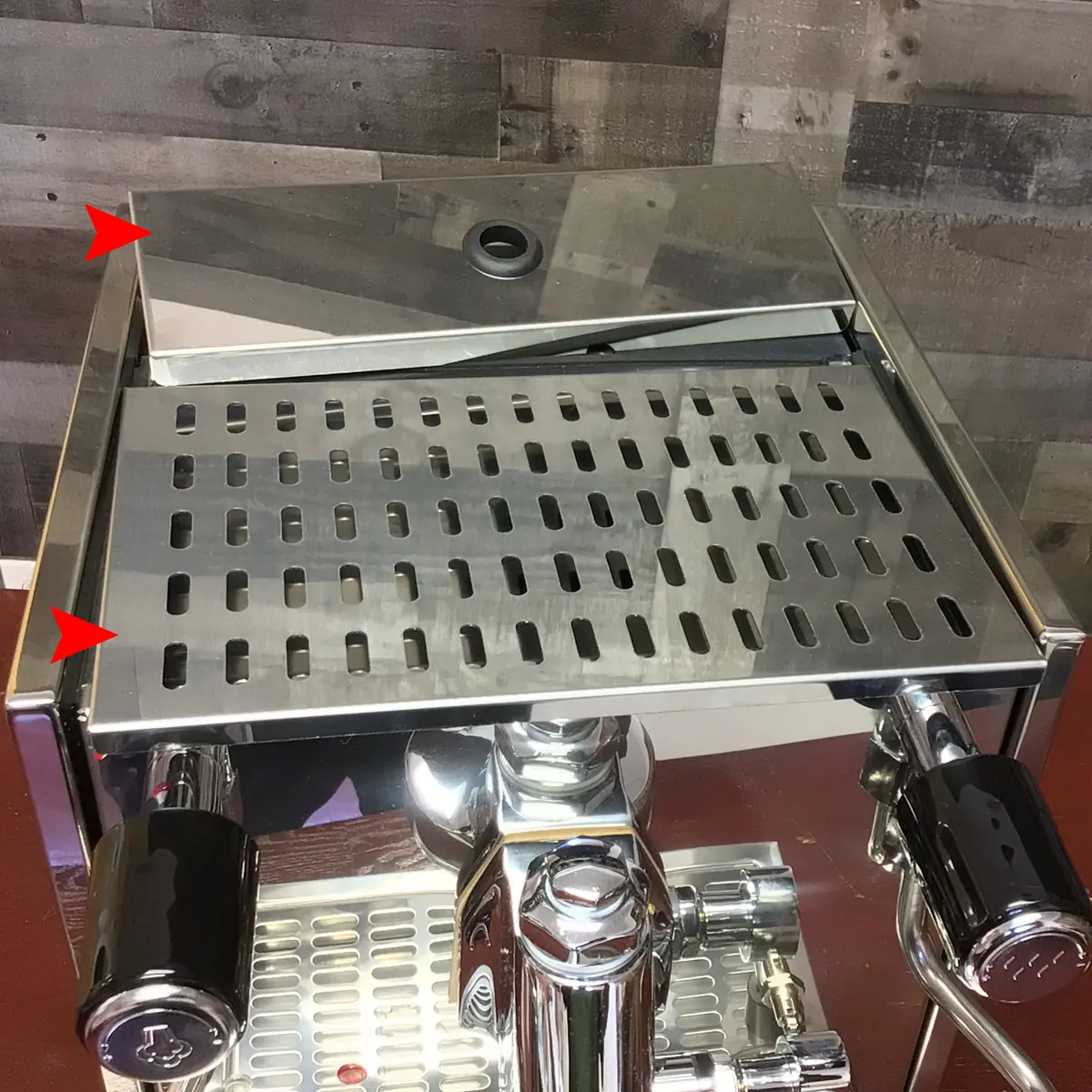
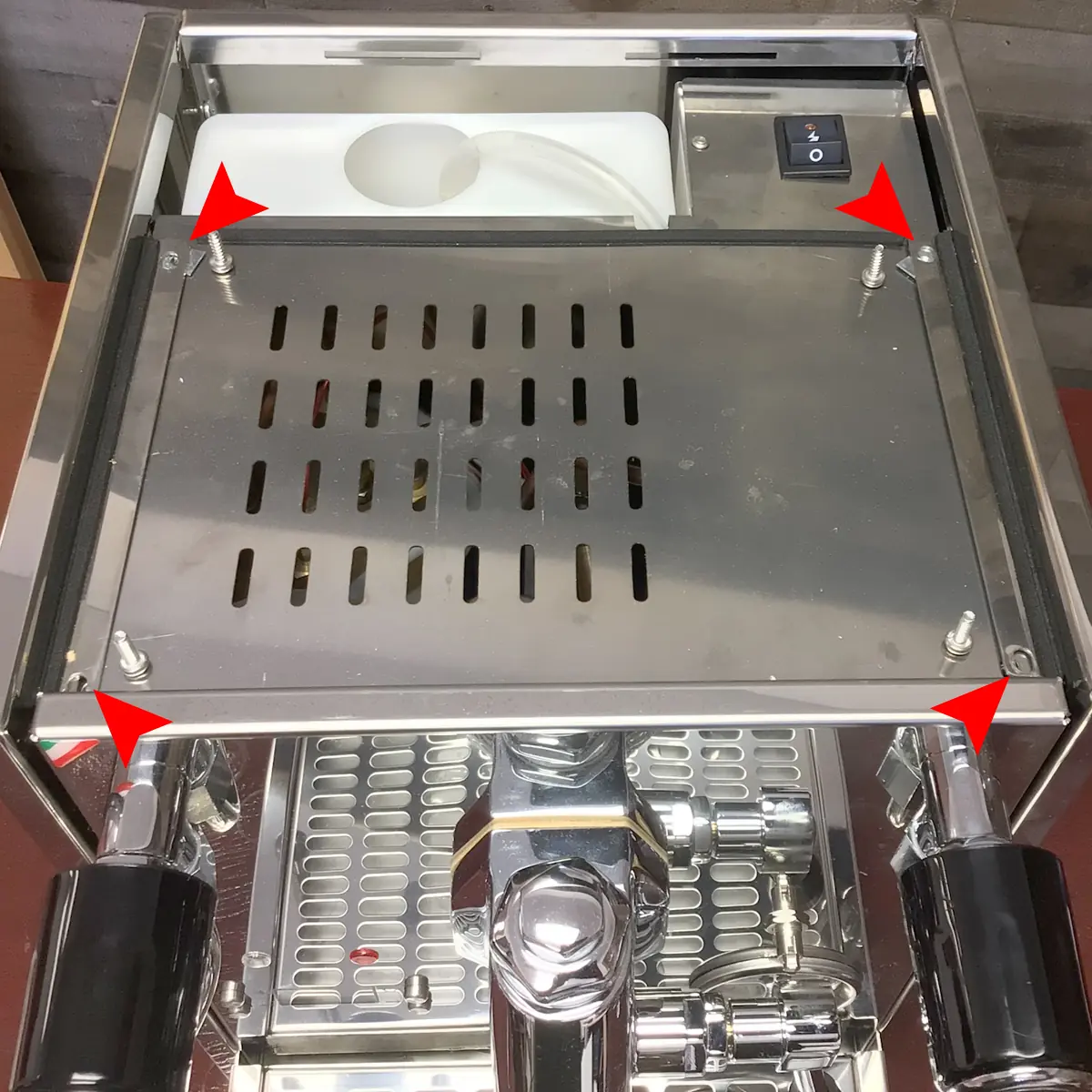
A close-up of a shiny Magister Stella espresso machine with two black handles, a slotted metal drip tray, and two red arrows pointing to a gap between the drip tray and the machine's frame. Inside, a wooden wall serves as the background.
A Magister Stella stainless steel espresso machine with its top panel held by four screws, each marked with a red arrow, shows the water tank underneath—perfect for those interested in accessing the inside for maintenance or inspection.

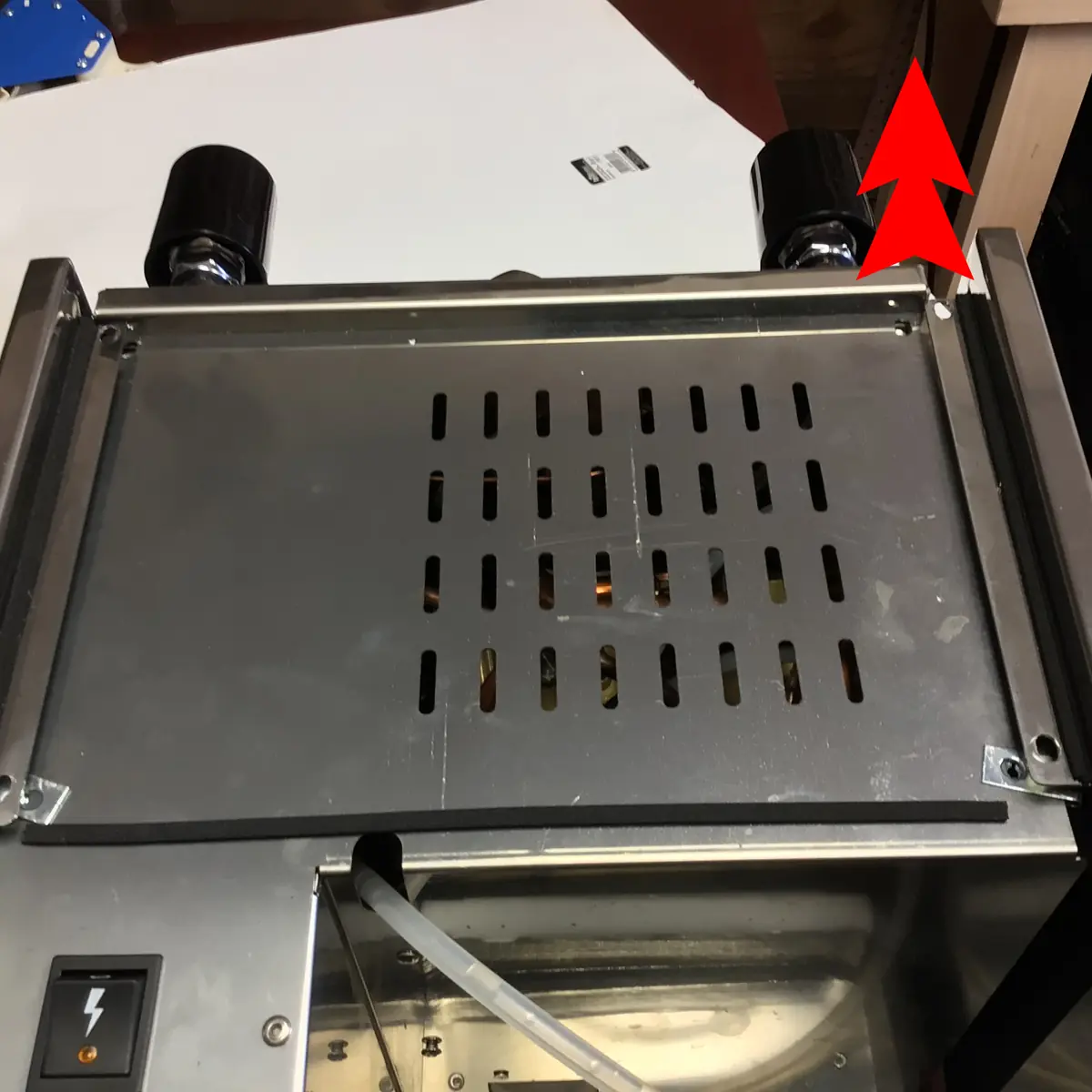
After removing those screws, the side panels should slide upwards. You can see on the bottom the panels are “hooked” onto a screw, but it doesn’t need to be removed.
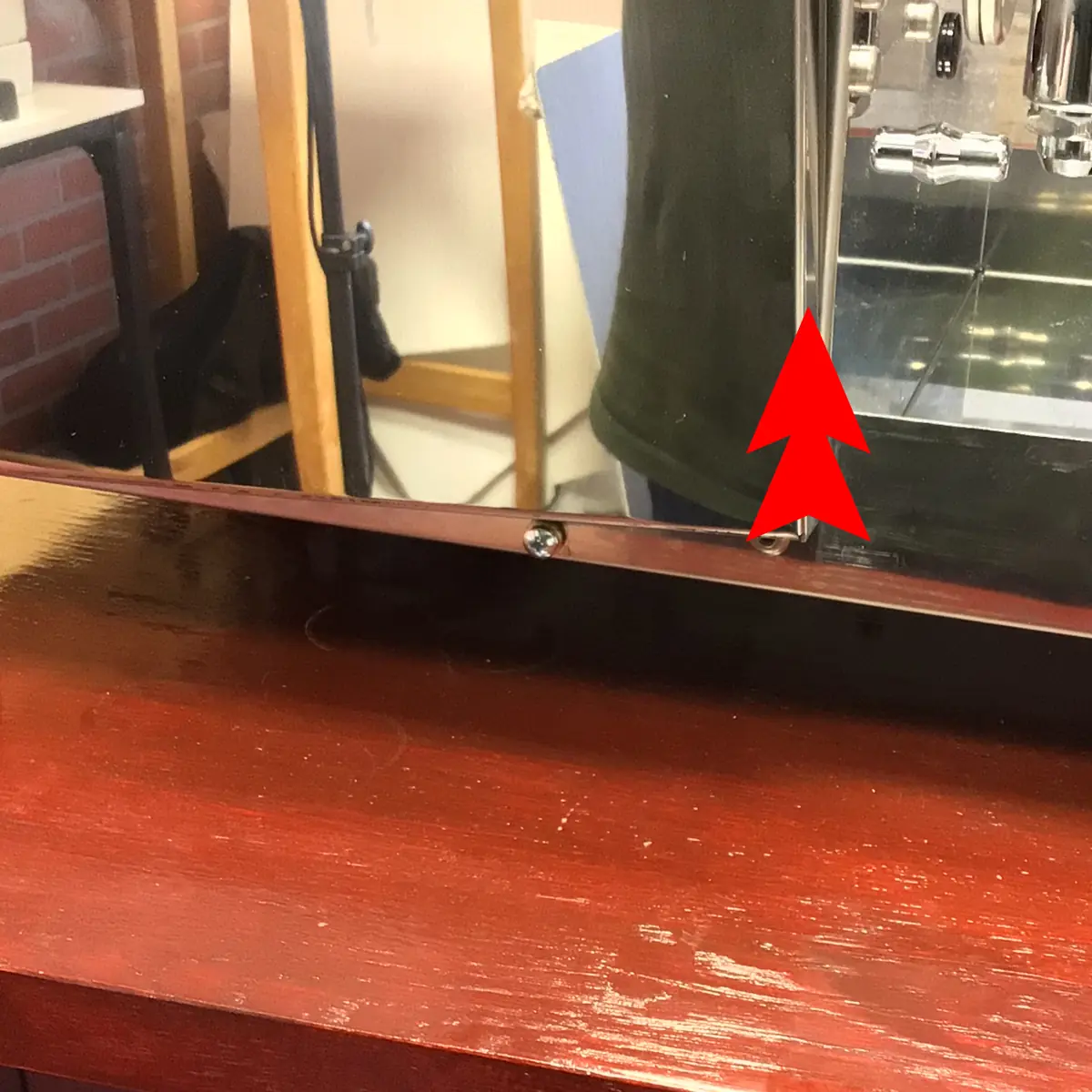
A red arrow points to a silver screw on the edge of a polished wooden surface, suggesting Accessing the Inside, with a mirror reflecting part of a person and some equipment in the background.
A Magister Stella metal machine with a grated surface and two black knobs on top. A switch and a cable are visible at the bottom left, with a large red arrow pointing to Accessing the Inside in the upper right corner.

Once both panels are removed, you will have side access to most parts of the machine.
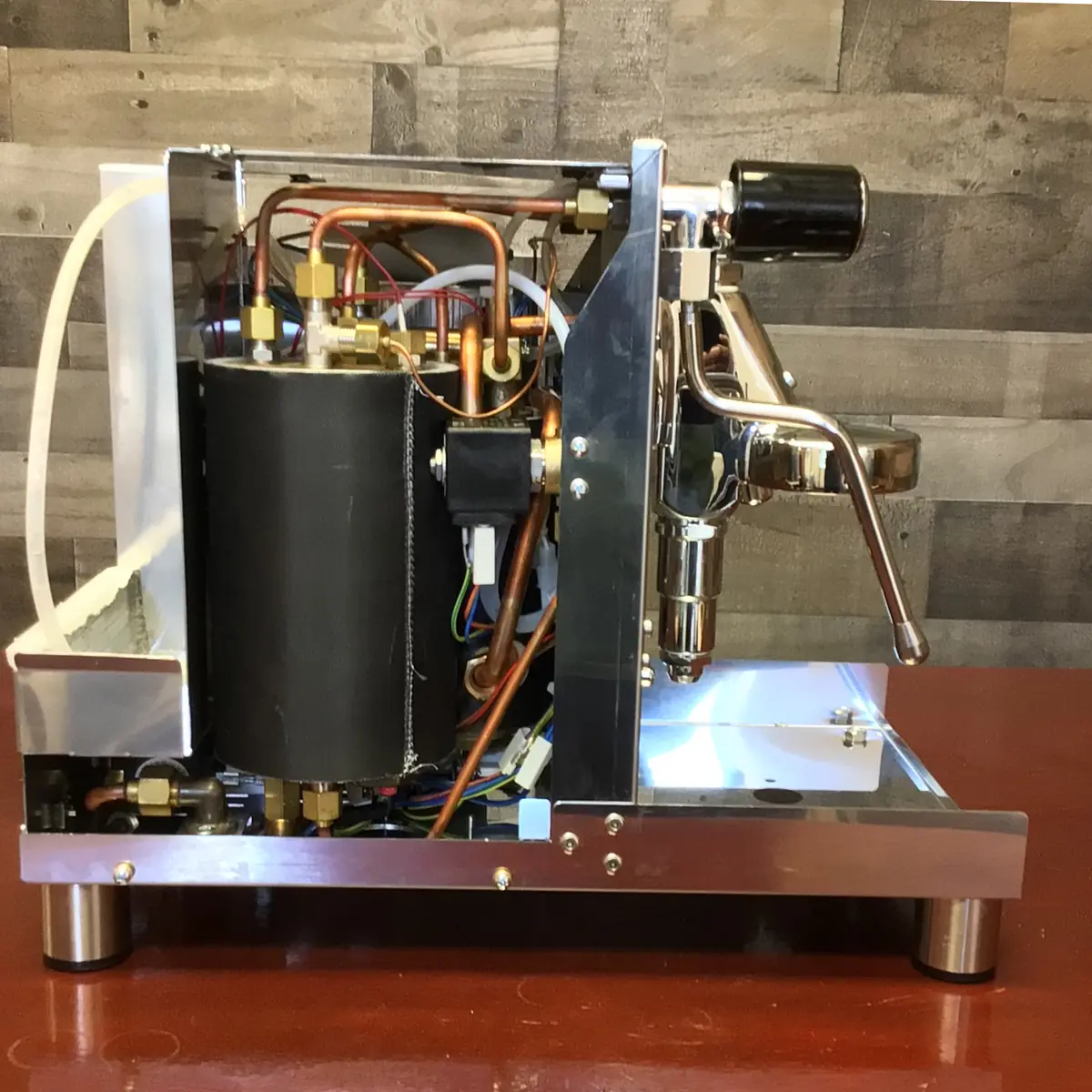
A Magister Stella semi-automatic espresso machine with its side panel removed reveals the inside—pipes, wiring, and a boiler—set on a red surface against a wood-patterned wall.
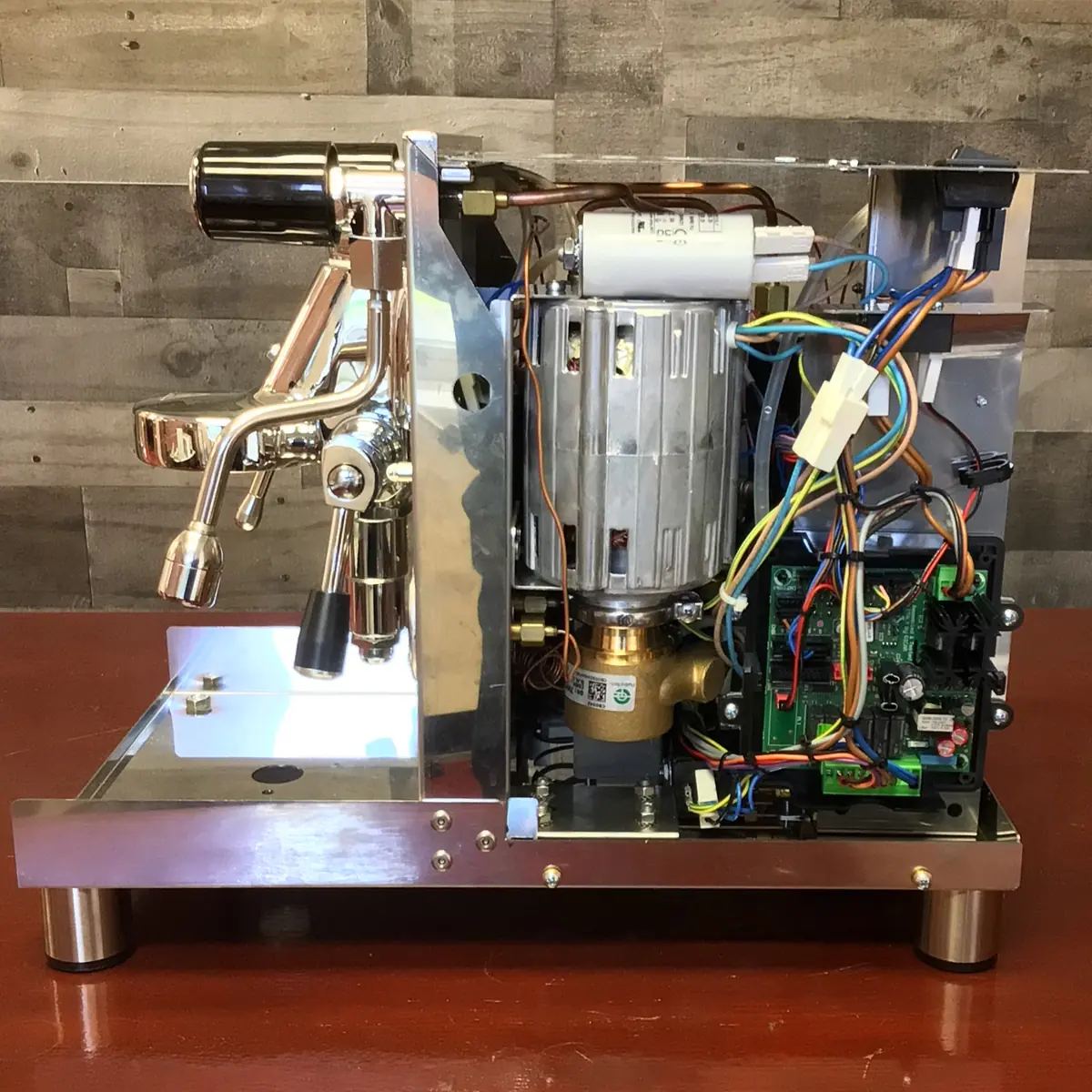
Accessing the inside of a Magister Stella semi-automatic espresso machine with its right side panel removed exposes internal components like wiring, circuit boards, a motor, and metal pipes, all set on a wooden surface with a wood-patterned wall background.

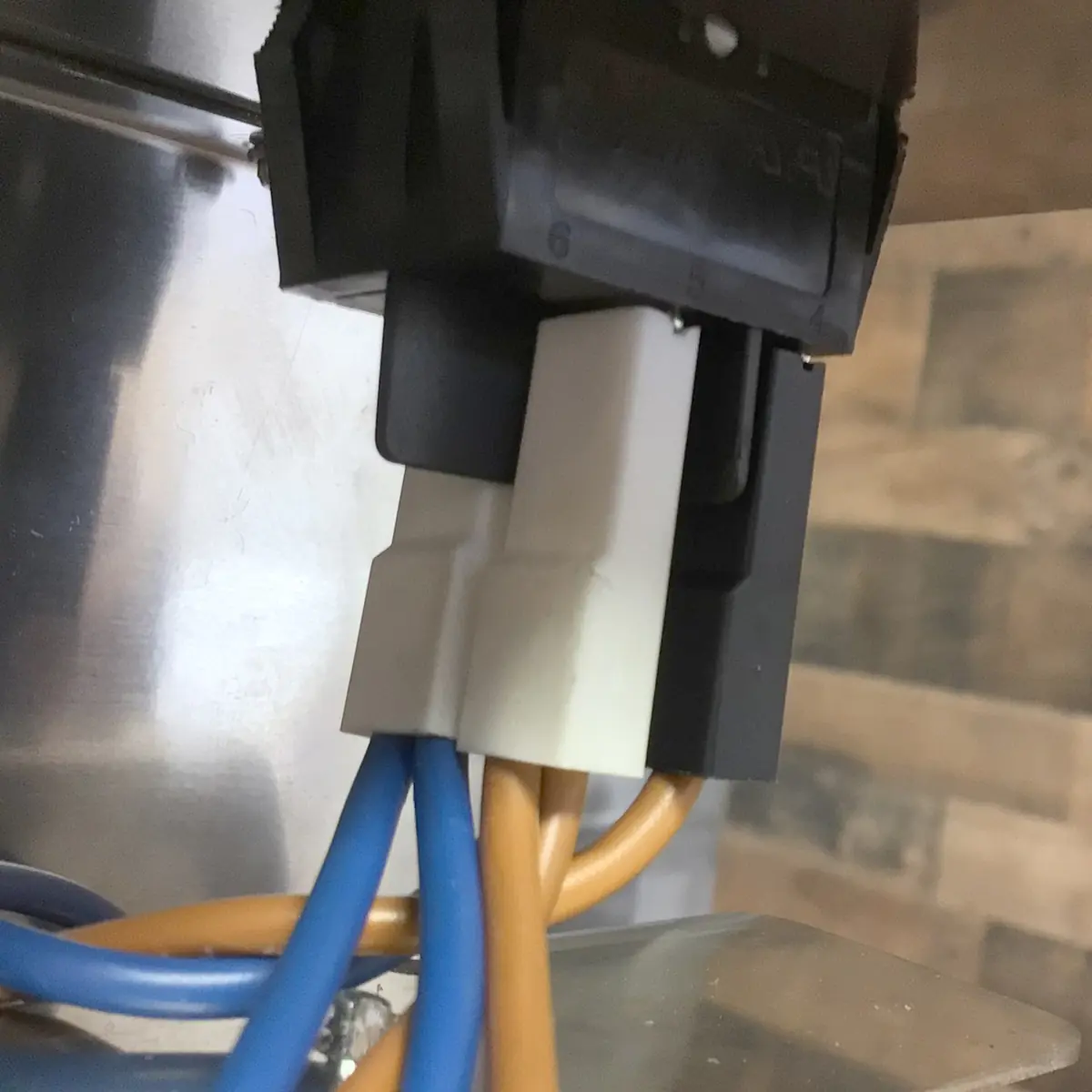
To get full access to the inside, we would need to remove the inside back panel. It’s held in by 2 screws on the lower back frame. Before trying to lift the panel, it is still connected by the power switch. It is almost impossible to move the panel without removing these wires. It is best to take a picture of the connection for reference when you need to reconnect them.
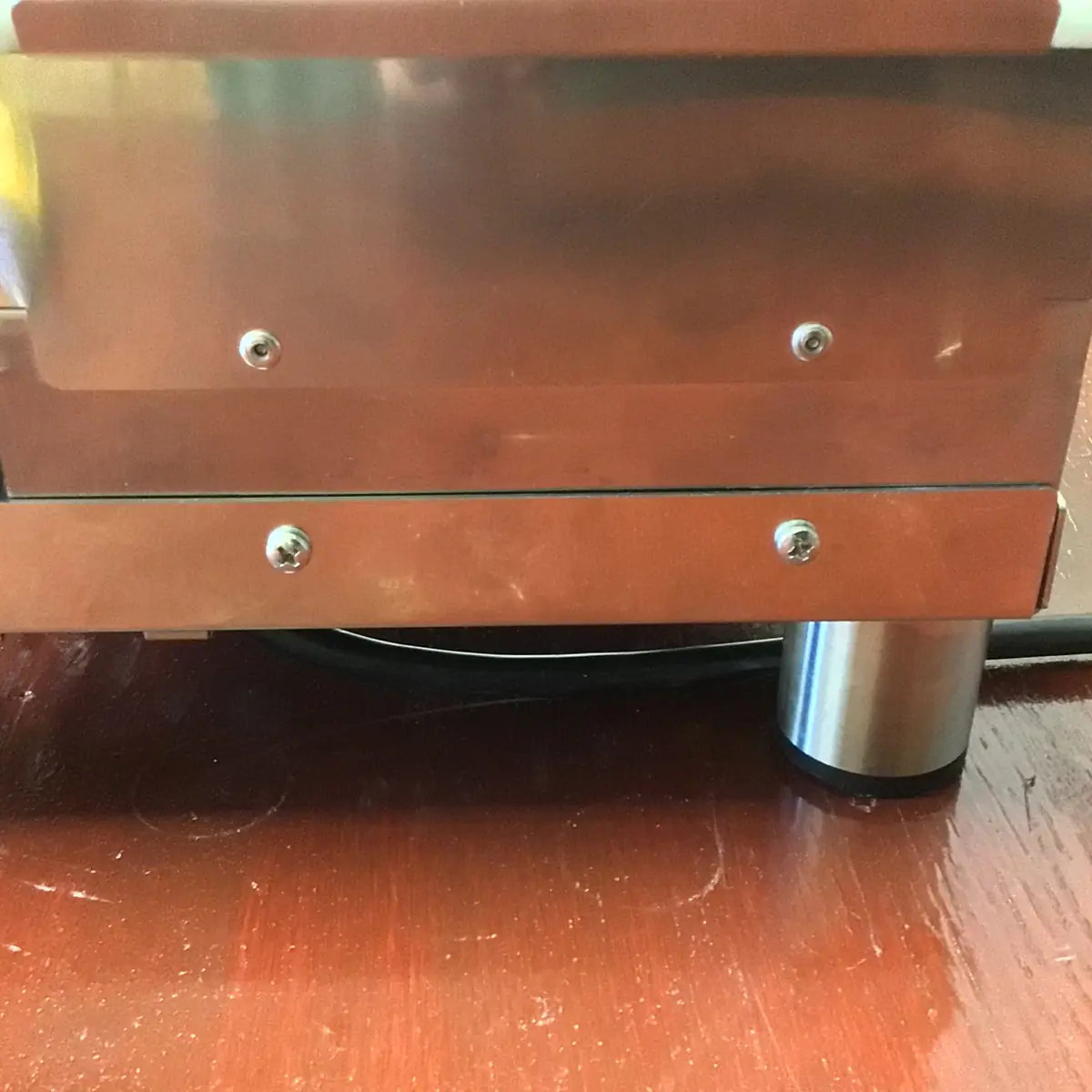
A close-up of a Magister Stella stainless steel appliance with visible screws and a cylindrical metal leg, placed on a shiny wooden surface. A black power cord is partially visible behind the appliance, hinting at its inner workings inside.
Close-up of electrical connectors with blue and brown wires attached, plugged into a black socket—offering a glimpse of accessing the inside—set against a metallic and wooden floor background.

Once the screws and wires are removed, you should be able to lift the panel out. PLease note there are still things connected to the panel, but there is enough slack for it to come out. Once out, you can rotate it from one side to the other and let it rest as shown in the picture.
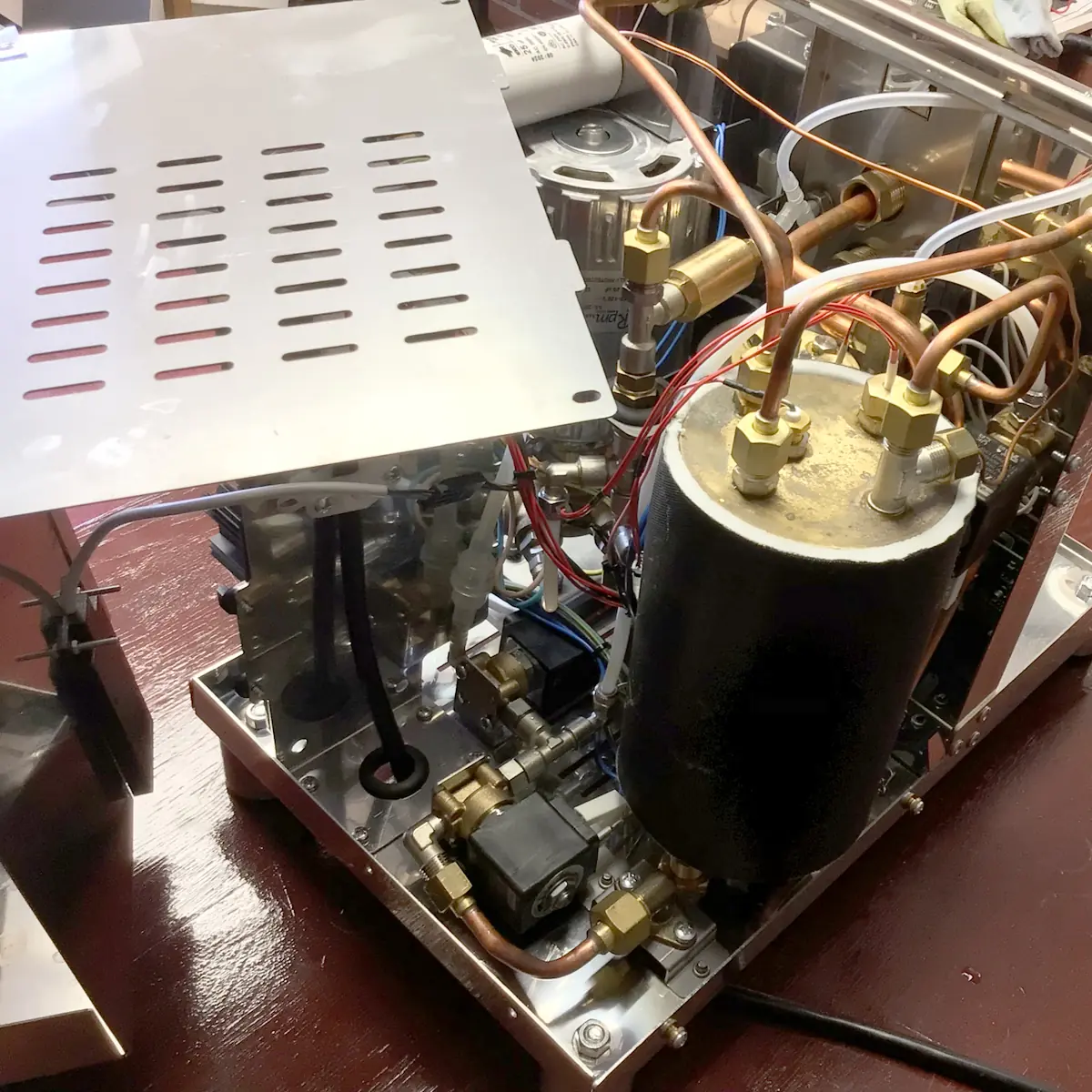
The inside of a Magister Stella espresso machine reveals copper pipes, a cylindrical boiler, brass fittings, and wiring, all visible with the metal cover partially removed on a brown tabletop.
Upload Image...

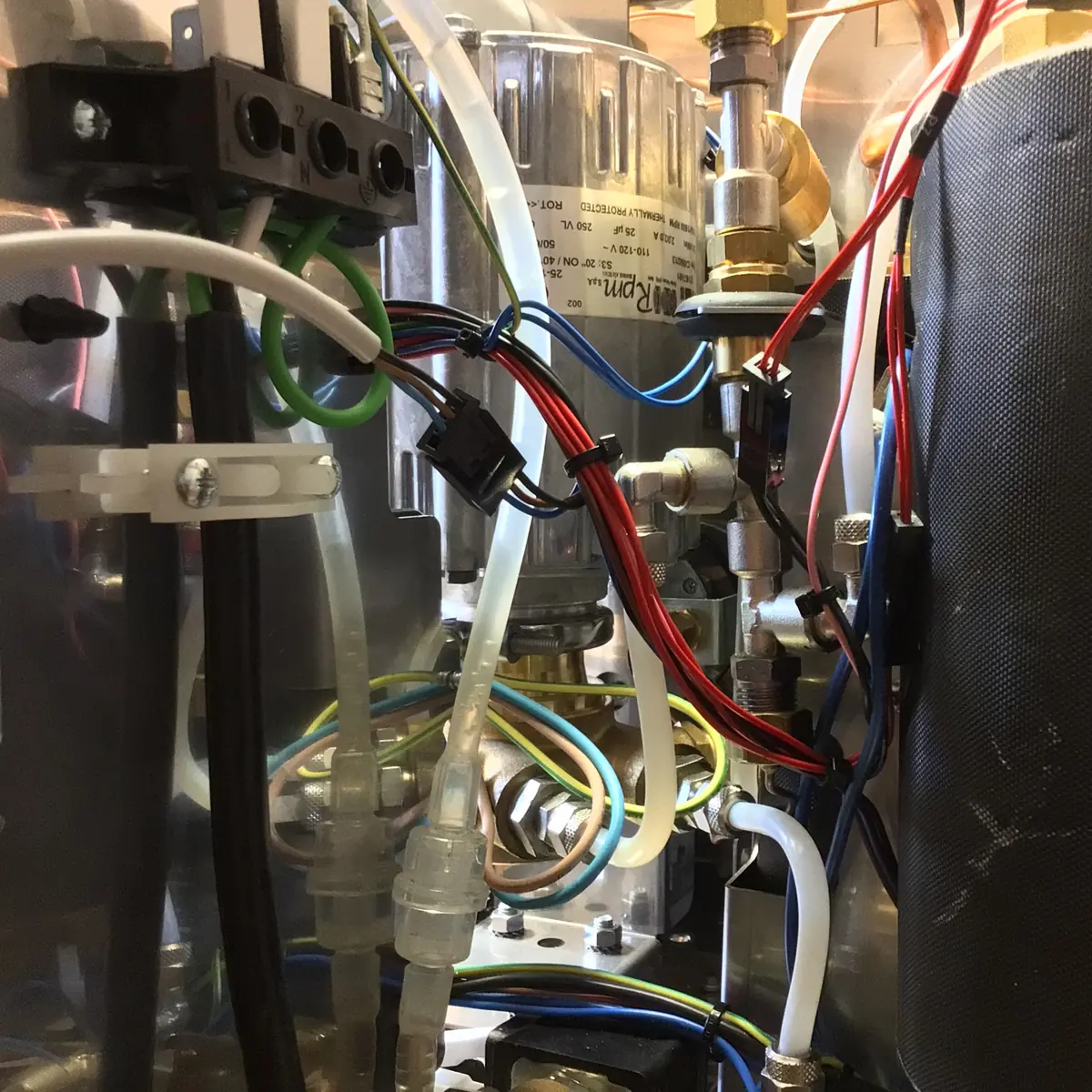
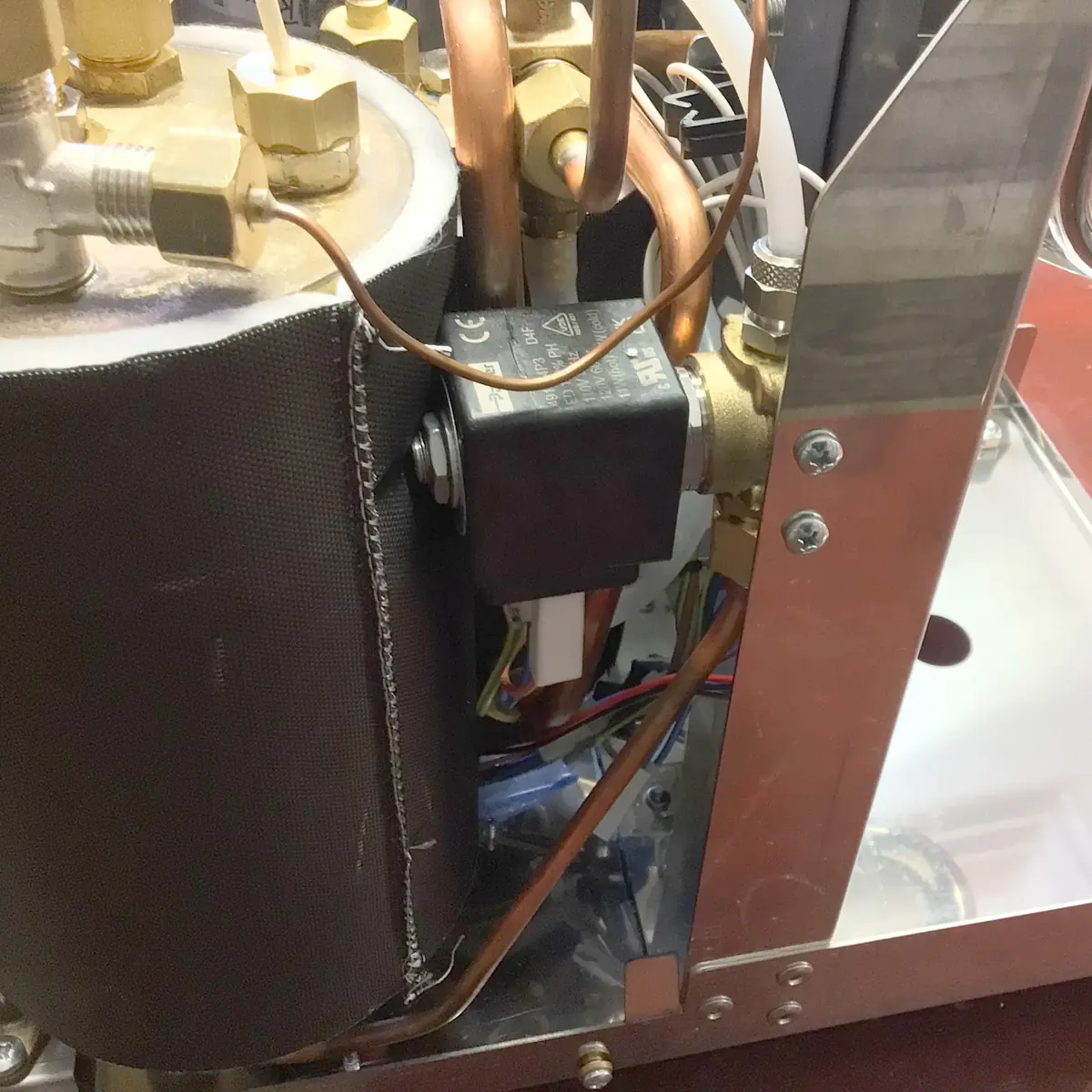
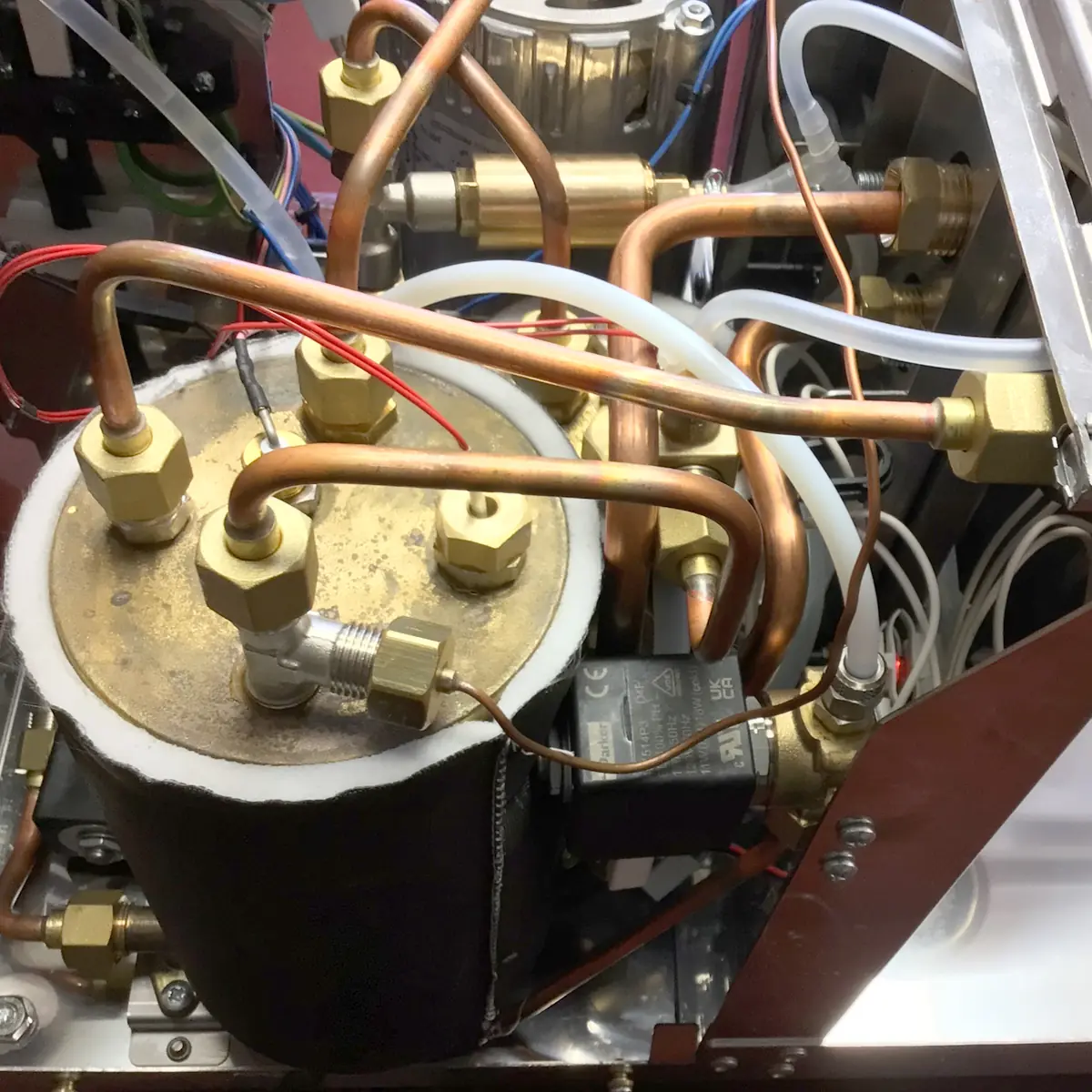
Below are pictures of the inside for your reference.
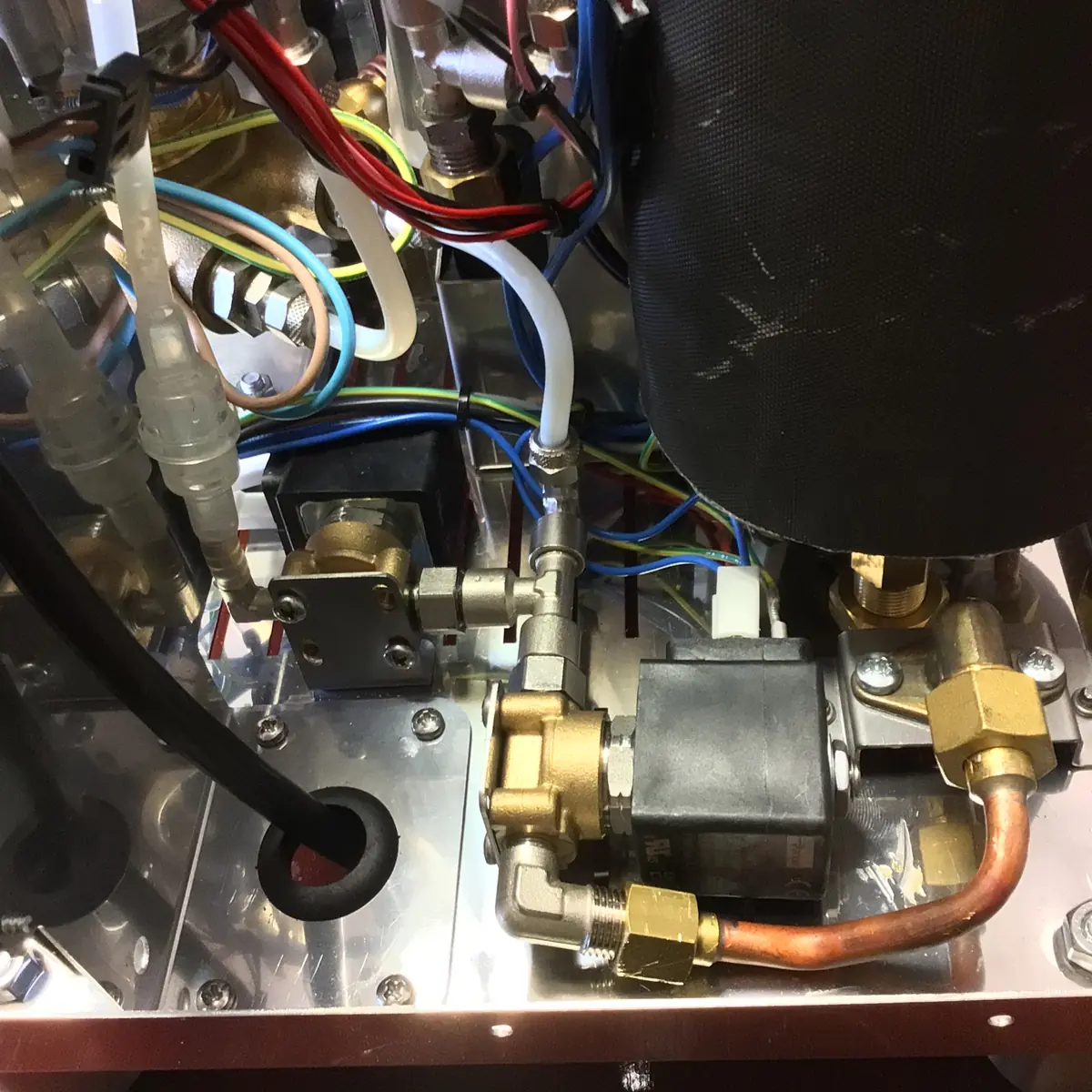
Close-up view inside a Magister Stella espresso machine, showcasing colored wires, metal pipes, valves, and connectors neatly arranged on a reflective metal base.
Close-up view inside a Magister Stella machine, revealing colorful wires, tubes, valves, and metal components that suggest a complex electrical or mechanical system.
Accessing the Inside of a Magister Stella coffee machine reveals a close-up of its internal components: a cylindrical black-insulated boiler, copper pipes, brass fittings, electrical wiring, and a solenoid valve.
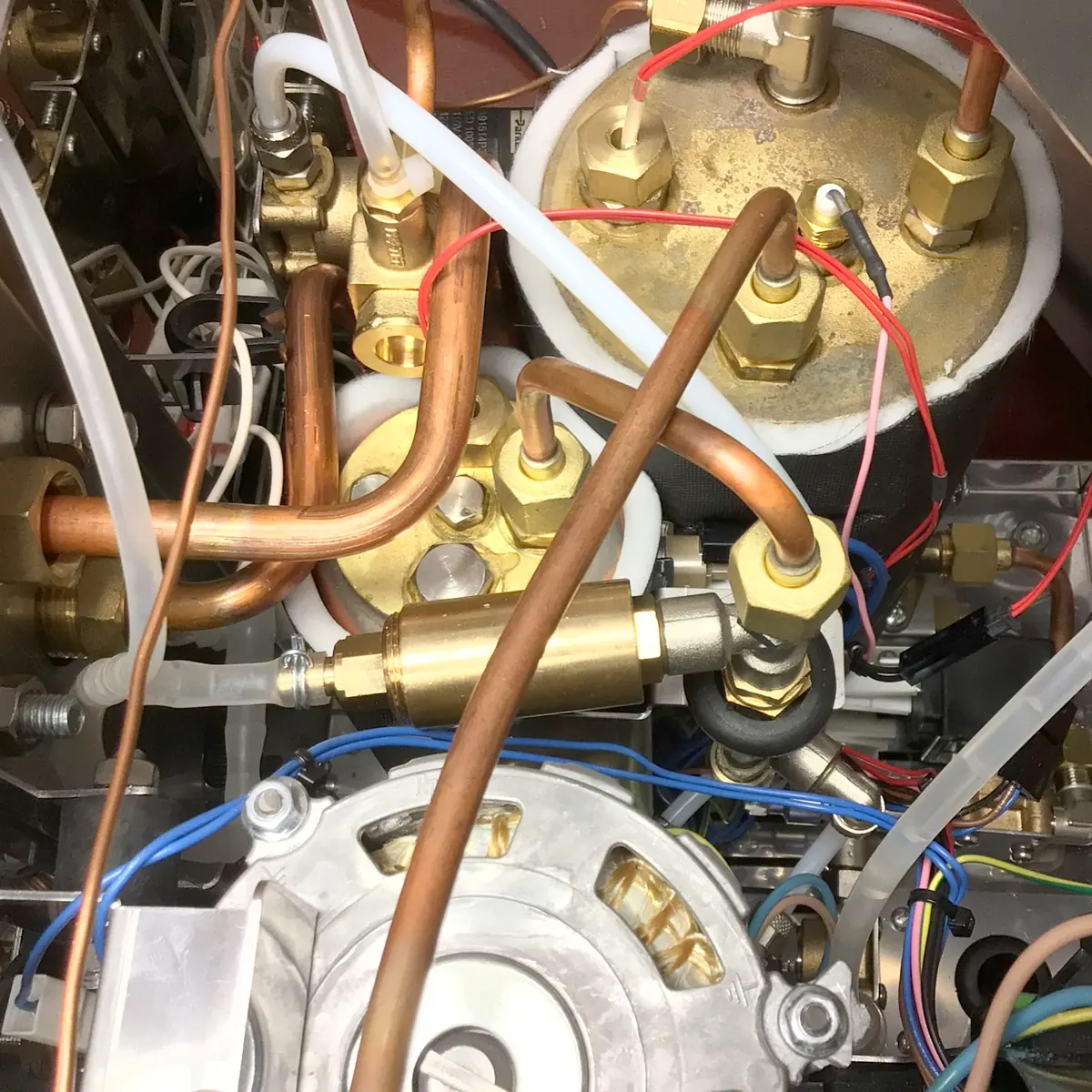
Close-up view inside a Magister Stella coffee machine, revealing copper pipes, brass fittings, wires, and tubes all connected to a cylindrical metal boiler.
Close-up view of the internal components of a Magister Stella espresso machine, showing wiring, copper pipes, and metal parts—Accessing the Inside highlights the complexity of its electrical and hydraulic systems.
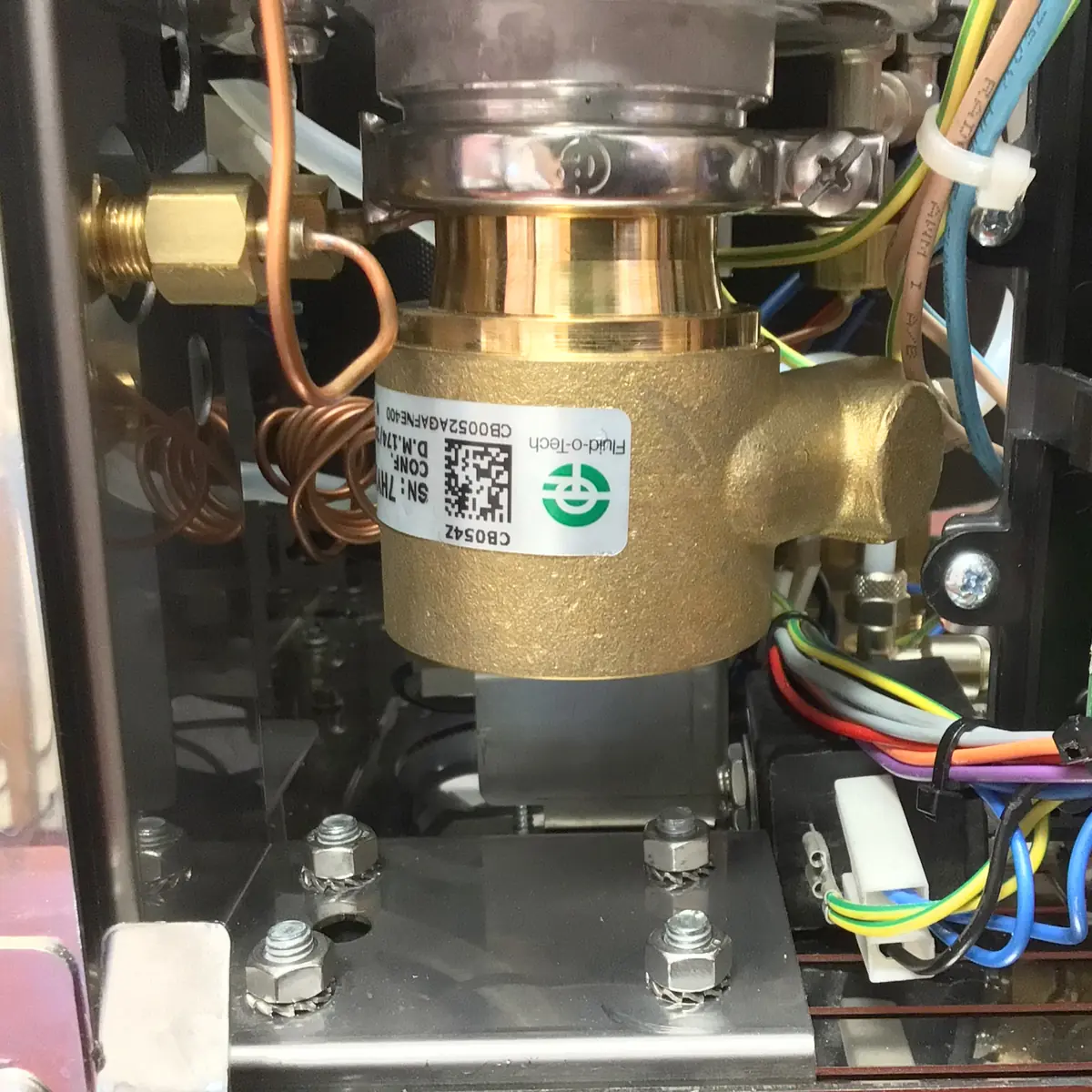
Close-up of internal components of a Magister Stella machine, showing metallic valves, pipes, copper coils, bolts, and multicolored wiring. A QR code and label are visible on a large brass valve at the center, accessing the inside.
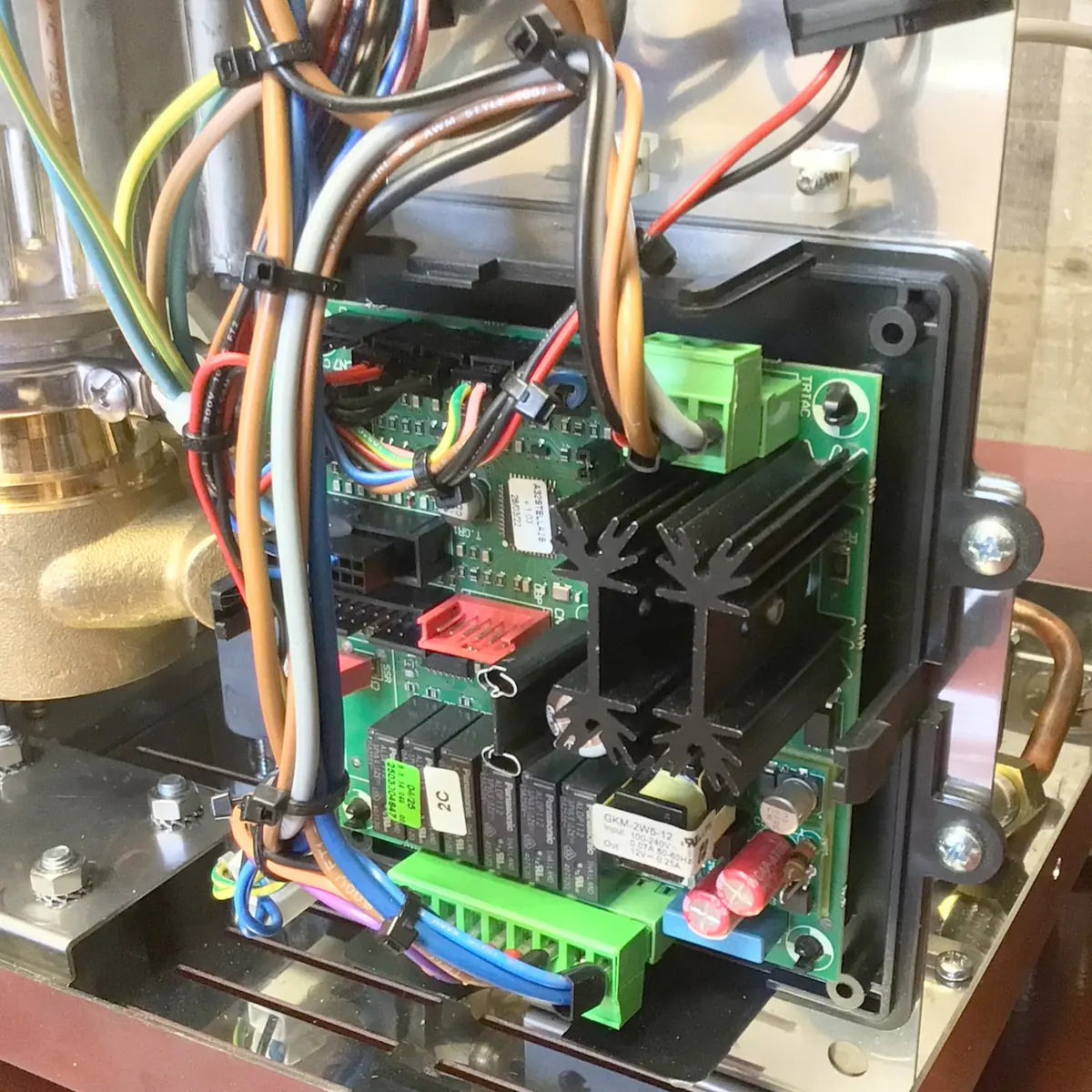
Close-up of an electronic circuit board with multicolored wires connected to various terminals and components, mounted inside a metallic Magister Stella enclosure. Black heat sinks and green connectors are visible on the board.
Close-up view inside a Magister Stella espresso machine, highlighting internal mechanical and electrical components—metal pipes, brass fittings, wires, and connectors all arranged in a compact space.

Leave a Reply

This site uses Akismet to reduce spam. Learn how your comment data is processed.

;
Secret Link