






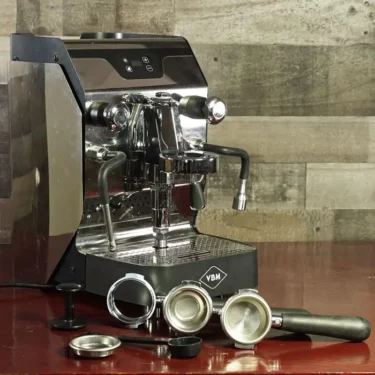

Frequently Asked Questions About Heat Exchanger (HX) Espresso Machines
What is a Heat Exchanger (HX) espresso machine and how does it work?
A Heat Exchanger (HX) espresso machine utilizes a single high-capacity steam boiler kept at steam temperature (~250°F–260°F). Instead of drawing brewing water from this main boiler, a dedicated copper or stainless steel tube (the heat exchanger) runs directly through the boiler core.
When you start brewing, fresh water from the reservoir or direct plumb line is pumped through this tube, flash-heating to optimal brewing temperature (~195°F–205°F) on its way to the group head. This design allows you to pull espresso shots and steam milk at the same time without waiting between functions.
Heat Exchanger (HX) vs. Single Boiler vs. Dual Boiler: Which should you choose?
Choosing the right boiler type depends on your workflow, drink preferences, and budget:
- Single Boiler (Dual-Use): Uses one boiler for both brewing and steaming. You must wait between pulling a shot and steaming milk, making back-to-back milk drinks slow. Steam must be drained from boiler after steaming to refill the internal boiler with water (to avoid damage)
- Heat Exchanger (HX): Offers simultaneous brewing and powerful commercial steaming at a lower cost and smaller counter footprint than a dual boiler. It represents the best price-to-performance value for professional and home baristas who regularly make lattes, flat whites, and cappuccinos.
- Dual Boiler (DB): Uses two dedicated boilers for independent, single-degree PID temperature control without cooling flushes. It is ideal for espresso purists who frequently brew light roasts and want maximum profiling control.
What is a cooling flush, and do modern HX machines still require one?
When an HX machine sits idle, the water resting inside the heat exchanger tube can heat up to steam boiler temperature (~250°F). A cooling flush is a 3-to-8-second water purge through the group head prior to brewing to flush out overheated water.
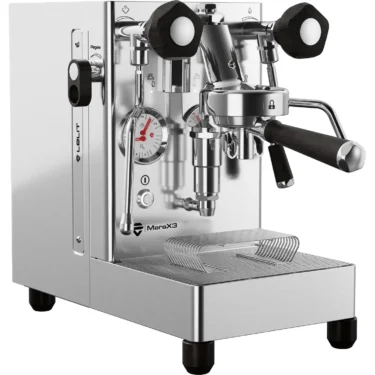
Do modern machines still need it? Traditional HX designs benefit from a quick flush. However, modern PID-controlled HX machines—such as models with tuned thermosyphon restrictors or brew-priority temperature sensors (like the Torre Alfredo, Torre Luigino, or Lelit MaraX)—maintain ready-to-brew temperatures and virtually minimize the need for cooling flushes.
What are the benefits of an E61 group head with a thermosyphon loop on an HX machine?
The iconic Faema E61 group head contains 8 to 10 pounds of solid brass, offering significant performance advantages:
- Thermosyphon Thermal Stability: Hot water continuously circulates via natural convection through the group head and back to the heat exchanger, keeping the entire brewing pathway hot and thermally stable.
- Mechanical Pre-Infusion: The E61's internal pre-infusion chamber gently saturates the coffee puck at low pressure (2–4 bars) before full 9-bar pump pressure ramps up, preventing channeling and improving sweetness.
- Flow Control Upgrades: Many E61 HX machines, included on the Torre Luigino, can be fitted with needle-valve flow profiling kits for real-time pressure profiling.
Should I choose a water reservoir or a direct-plumbed HX machine?
1st-line Equipment offers both configurations to suit different kitchen setups:
- Internal Water Reservoir: Uses a 2.5–4 liter tank with low-water auto-shutoff sensors. Convenient, portable, and requires no plumbing modifications.
- Direct Water Line (Rotary Pump): Connects directly to treated water mains and drain lines. Rotary pumps operate whisper-quietly and allow line-pressure pre-infusion and endless water supply.
- Dual-Source Models: Many commercial and prosumer HX machines feature switchable water supply systems, allowing you to start on reservoir mode and plumb in later.
What water quality and preventive maintenance are required for an HX machine?
Consistent care protects internal components and preserves extraction flavor:
- Softened Water (80-100 ppm Hardness): Mineral scale is the leading cause of solenoid failure, boiler leakage, and heating element damage. Always supply filtered, softened water free of chlorine and chloramines.
- Daily Backflush: Perform a quick plain-water backflush at the end of each day to rinse off the dispersion screen.
- Weekly Detergent Backflush: Use dedicated espresso cleaner (such as Cafiza or Puly Caff) with a blind filter basket to dissolve oils in the grouphead and 3-way discharge valve.
- Descaling Precaution: Avoid aggressive chemical descaling at home without professional guidance, as dislodged scale chips can clog delicate 0.5–0.8mm internal gicleurs and damage internal components.
Why purchase your Heat Exchanger espresso machine from 1st-line Equipment?
Since 1997, 1st-line Equipment has served as a factory-authorized direct importer, distributor, and warranty repair center for premier European espresso brands (including Torre, Lelit, Rocket Espresso, Bezzera, ECM, Elektra, Rancilio, and Vibiemme). Every purchase comes with:
- 15 or 20 amp 110–120 volt US-Spec Equipment: Direct factory builds optimized for most power sources.
- Pre-Shipment Bench Testing: Every machine is tested for pressure, heating, and quality assurance before shipping.
- Domestic OEM Parts & Schematics: Full access to replacement parts, exploded view diagrams, and long-term repair support for 1st-line equipment clients.
- Expert Technical Support: Direct guidance from trained technicians.
- EspressoPoints Rewards: Earn rewards points toward accessories, barista gear, and water filters.