The Best Water Choice for Your Espresso Machine

Disclaimer: The technical statements, support, information and recommendations contained herein are believed to be accurate as of the date hereof, but 1st-line Equipment, LLC does not make representations or warranties, express or implied, as to its accuracy, its completeness, or the results to be obtained. The information is being provided for informational purposes only and is intended for use by persons having adequate skill and expertise regarding the proper selection, use and application of the products and recommendations and at their own risk and discretion.

1st-line Equipment, LLC is not responsible for any injury or damages from such information. Please note that parts are available for purchase from 1st-line Equipment, LLC self service parts portal. These parts do not include any technical support. If you're unfamiliar with the technical aspects of repairing equipment, please contact a professional for proper evaluation.

By continuing to read further, you agree to abide by all the terms and conditions on this website. If you disagree, please leave our website.

What type of water do I use in my espresso machine?

Using purified water (ex. formulated waters distilled, reverse osmosis (RO), deionized) as your water choice generally cannot be used in heat exchange espresso machines or dual boiler espresso machines. Although formulated waters do not impact the refill capabilities of the above machines, but in our experience, these formulated waters and hard waters with calcium and magnesium cause overheating issues. Distilled and purified waters can cause corrosive oxidation on components which can cause clogs, damage to heating elements, and make pressurstats fail.

The general reason is that these machines need to send 5 volts of electricity through the water in the boiler. This is how the espresso machine detects if the water in the boiler is low. The second area is proper temperature reading on espresso machines with PID sensors built into the boiler.

What happens to the water in the boiler?

Heat exchange boilers (and steam boilers in dual boiler espresso machines) have a metal probe typically through the top of the boiler. It connects to the brain unit through a wire. This probe typically acts as the boiler’s maximum refill level. In other words, this design manages the water level in the boiler so that the heating element is aWater Choicelways submerged to prevent damage.

Electrical current typically runs through this probe at very low voltage. When the water level reaches the probe’s tip inside the boiler, the electricity runs through the water (carried by minerals) to the outer boiler wall. The brain unit picks up this reading and then shuts the boiler refill valve to ‘closed’ and powers ‘off’ the pump. When steam is made (which lowers the water level) or when hot water is taken from the water wand, the water level in the boiler goes below the point of the probe. This stops the low voltage electricity to the boiler wall. When this happens, the brain unit turns on the pump and opens the boiler refill valve to refill the boiler. In some cases, there is a second probe to protect the heating element and it will not allow power to the heating element.

Hence, when you use purified water as your water choice, electricity may not flow through the water in the boiler. The brain unit will keep filling the boiler to the point that it overflows through the boiler safety valve on top of the boiler.

The secondary reason is the aforementioned waters can become corrosive on certain metal components in espresso machines. First and foremost, if the espresso machine has a PID sensor built into the interior of the boiler wall, it can be become corroded or filmed up with calcium, magnesium, biofilms, etc. In other words, a film can build up and the PID sensor will read a lower temperature than the actual temperature of the boiler. The boiler will tend to overheat or act erratically in its temperature reading. The sensor will need to be removed and cleaned. The machine will usually operate normally and the water needs to be changed.

The Bezzera 5265819 Maximum Water Level Probe is displayed diagonally on a white background, featuring a flat, wide tip and long shaft, ideal for maintenance tasks. © 2025 1st-line.com

The best water choice

The conclusion is to use softened water. This type of water does not have the limescale-causing agents like calcium and magnesium. It also leaves some of the good minerals.

  1. for the espresso machine to refill the boiler correctly and
  2. for the proper espresso extraction to take place where the minerals pull the solubles.
Two clear, flexible tubes rise from a white rectangular base placed next to a Rancilio Silvia M Espresso Machine on a metal counter with a brown tiled wall in the background. © 2025 1st-line.com

Espresso machines with an intake hose in the water reservoir
ex. Rancilio Silvia

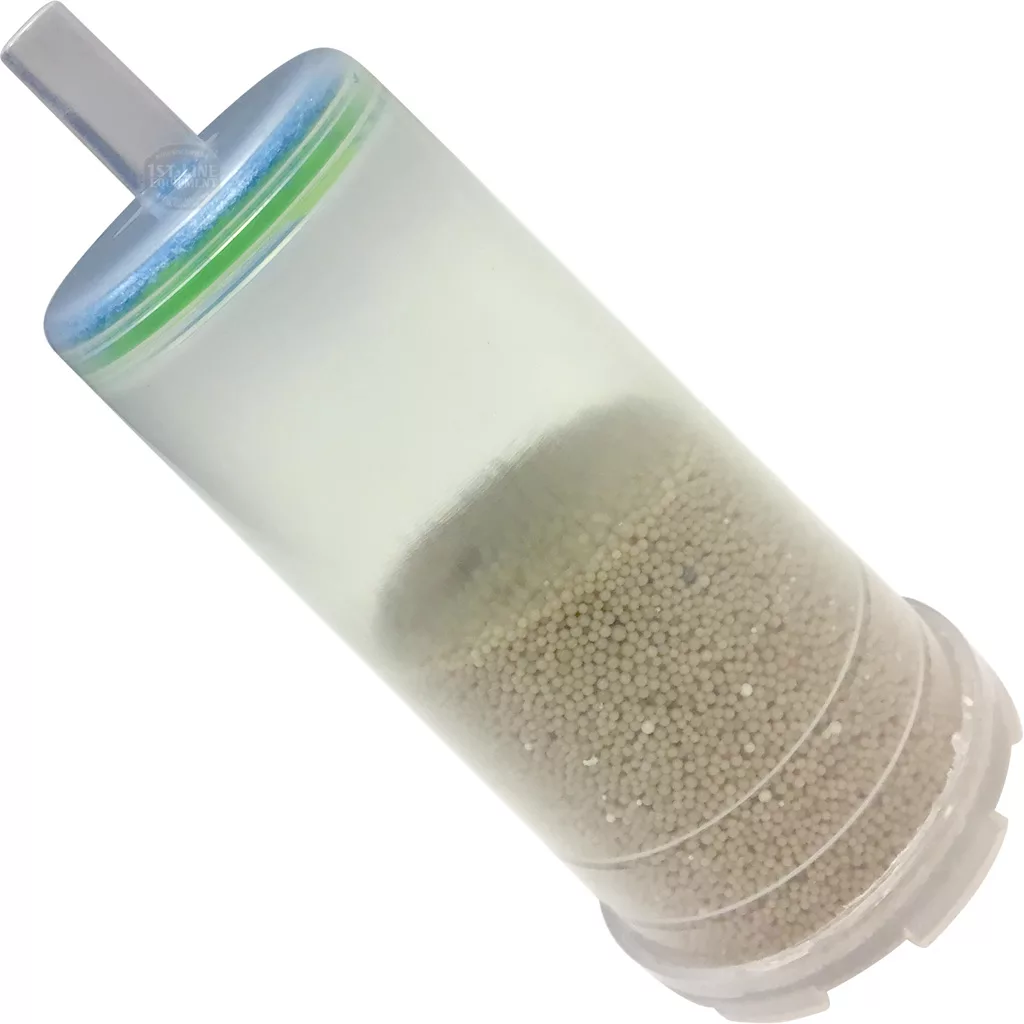
The BILT In Tank Rechargeable Water Softener / Particle Filter is a transparent cylindrical cartridge with a mouthpiece, contains small round beads and colored rings near the top, and is designed for in-tank use. © 2025 1st-line.com

BILT In Tank Rechargeable Water Softener / Particle Filter

A close-up of the Rocket Giotto Cronometro Type V HX Espresso Machine’s shiny drip tray with a metallic grid and black portafilter holder, set against a textured wooden wall background. © 2025 1st-line.com

Espresso machines without an intake hose in the water reservoir
ex. Rocket Giotto Cronometro Type V

A sealed transparent plastic bag filled with fine white granules, possibly for use in processes like Osmotic Scale Reduction, features the BILT Osmotic Scale Reduction Cloth Pack (OSCAR 150) - large on a white background. © 2025 1st-line.com

BILT Osmotic Scale Reduction Cloth Pack

Close-up of two flexible Water Choice metal hoses side by side; the left hose features a smooth, segmented surface, while the right showcases a tightly braided metallic exterior. Both are set against a light gray background. © 2025 1st-line.com

Espresso machines that hook up to a direct water connection
ex. Elektra T1 Sixties Deliziosa

A close-up of the BWT Bestmax Installation Kit shows its white container with a blue screw-on cap, attached lever, and the BWT logo displayed on the cap. © 2025 1st-line.com

BWT Bestmax Installation Kit

Further Learning

Please note the above information is subject to copyright. It cannot be published by any means without the expressed written consent of 1st-line Equipment, LLC.