Compact single boiler espresso machine with extra boiler refill switch. Great for making straight espresso's or an occasional cappuccino.
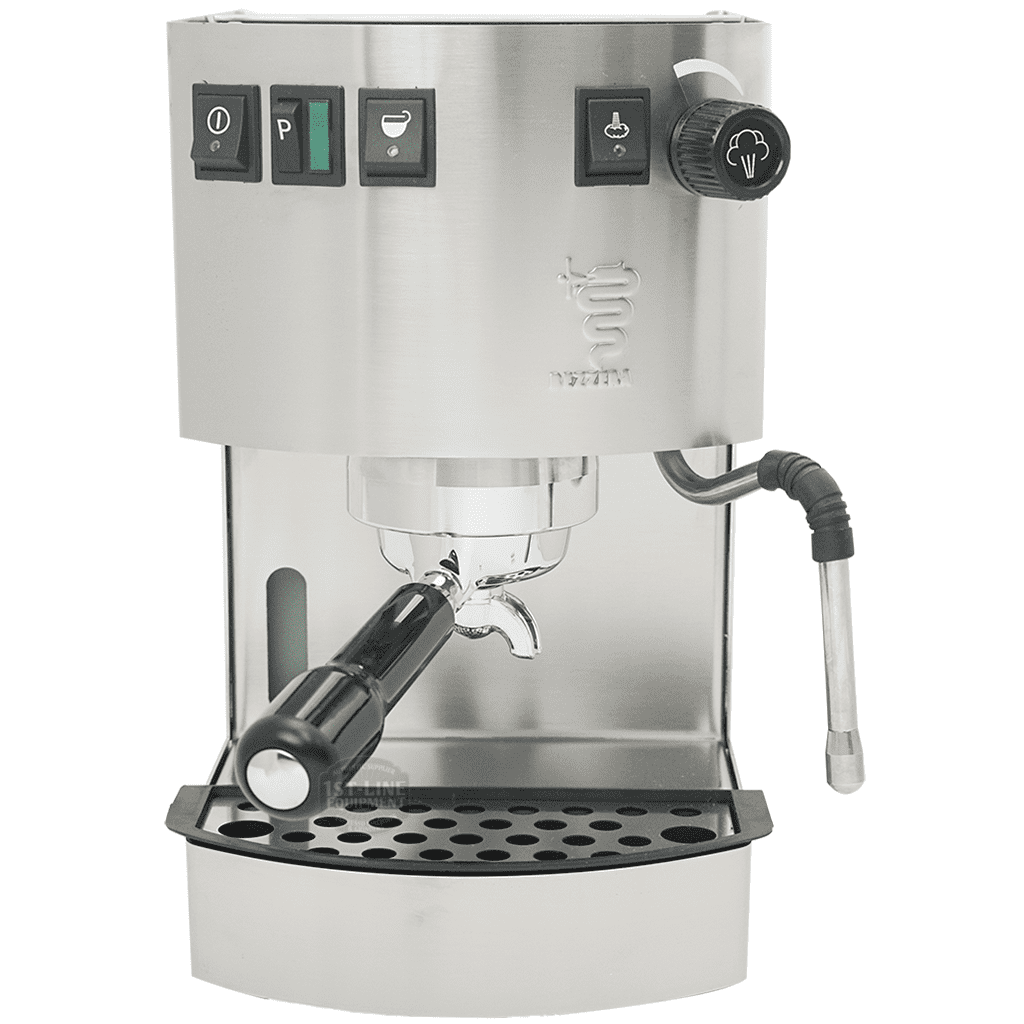
Bezzera New Hobby Espresso Machine
$799.00 $699.00
┌ Espresso Maker Deals ┐
Build Your Espresso Bar
"Build Your Espresso Bar" with accessory discounts!
GET THIS DEAL
Standard Terms & Conditions of Sale
- For more information, please see Terms & Conditions.
2 year parts & labor warranty limited to manufacturer's defect
- Defects due to limescale buildup are not covered under warranty. Please read about Limescale Prevention.
- For any issues within your warranty period, please contact us.
Shipping included on orders over $99!
- Standard ground shipping within the contiguous 48 states. Alaska & Hawaii shipping costs extra.
- Total order must be over $99 after all discounts.
- For more information, please see Shipping Included.
Earn up to 3% in EspressoPoints!
- Must be logged into your online account when purchasing to accrue EspressoPoints.
- For more information, please see EspressoPoints.
Overview
Bezzera New Hobby PM Espresso Machine – Tank, Semi-Automatic, 110V
The Bezzera New Hobby PM Espresso Machine will allow you to make some of the best espressos, cappuccinos, lattes, and tea at home or a small office! Furthermore, this machine will perform so efficiently in its range! After all, this is thanks to its front panel controls, 3-liter tank, reliable grouphead, and 3-way solenoid valve to give this entry-level machine a semi-commercial quality.
The Bezzera New Hobby PM is a nicely compact and simple home espresso machine. Additionally, the machine includes a quality, high power steam wand to produce your favorite milk-based beverages. Seriously, it works absolute wonders in the steaming department! After every steaming session (approximately every 8-16 ounces of milk steamed/frothed), the “P” switch (pump switch) should be used to refill the internal boiler with water from the reservoir as this is not automatic in steam mode. The “P’ switch makes it easy to refill so the boiler’s heating element does not get damaged.
Moreover, this is one of the FEW espresso machines that consists of a “P” switch. Precisely, when you are ready to dispense your hot water, simply press the switch after rotating the hot water/steam knob counter-clockwise. Also, the “P” switch is able to fill the water in the internal reservoir. With the simplicity of the Bezzera New Hobby PM’s additional semi-automatic push switch features, you will operate this machine and maintain it with smooth sailing!
Videos
2 videos found
Tech Tips: Electrical Testing On Espresso Machines
Bezzera Hobby Home Espresso Machines
Features
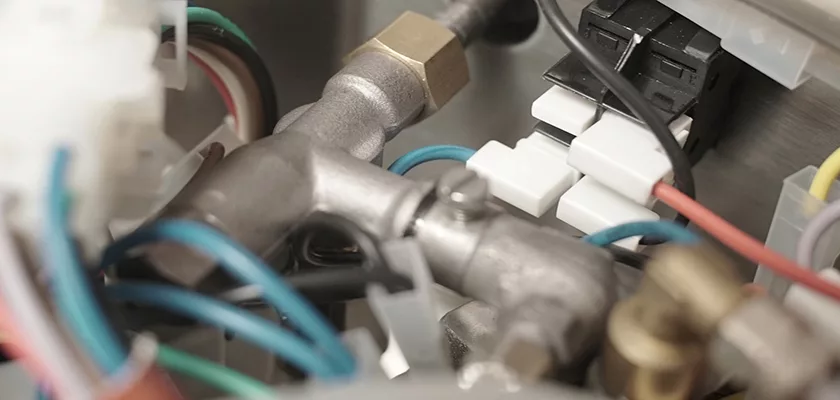
Single Boiler, Dual Purpose System
- Nickel-plated brass boiler: The boiler is made nickel-plated brass which retains heat better than stainless steel. Nickel-plating helps to prevent limescale build-up. We highly recommend utilizing the optional water softener, the Ascaso V725!
- Dual-purpose: This means there is one boiler inside. The machine heats and rests in coffee mode. The steam switch will need to be depressed to get to steam mode.
Steam Wand
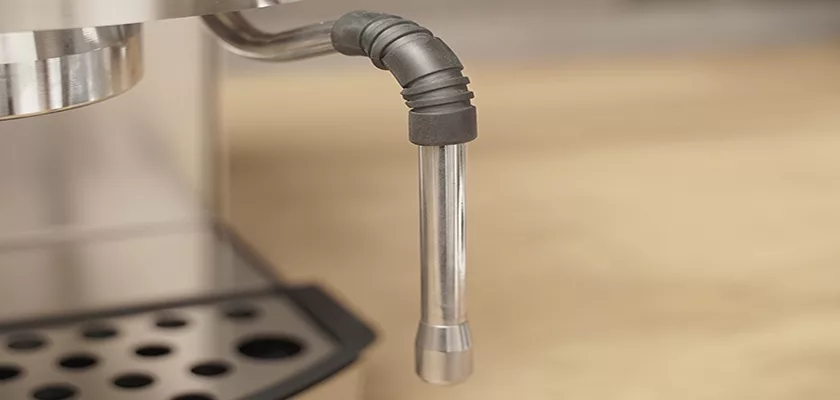
- Multi-directional: Allows for greater movement and flexibility at different angles. The wand is equipped with a rubber grip which helps you position the wand without burning your fingers.
- No-burn: Insulation is placed inside the steam wand to help prevent burns when quickly touching and moving the steam wand.
- 2 hole steam tip: Gives you a good amount of steaming power and helps create microfoam.
Tank/Reservoir System
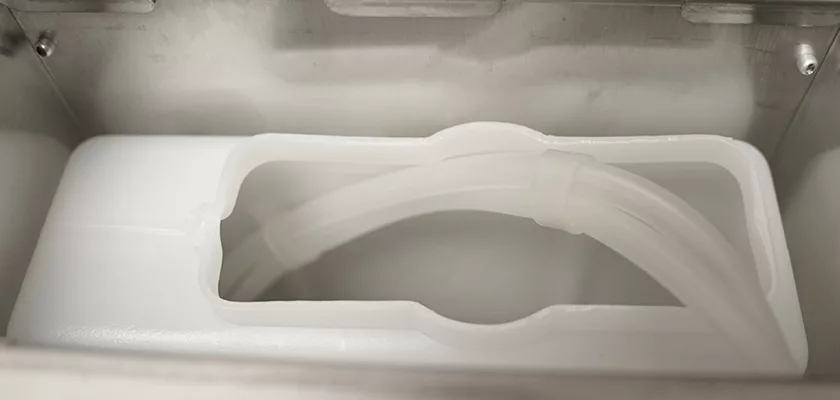
- 3-liter capacity: While most home espresso machines are 2 liters, the Bezzera New Hobby PM holds up to 3 liters of water.
- Low water leveler: Display on the front right side, just above the cup holder grid. Includes a visible level signal to let you know when to refill.
- Removable: For easy refilling every two weeks.
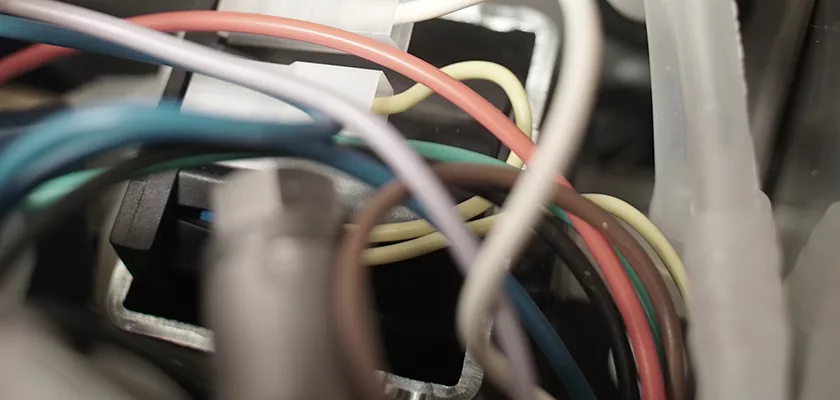
Vibratory Pump
- Cost-effective: Pumps will degrade in performance over time. Replacing a vibration pump will be less costly than a rotary vane pump.
- Passive pre-infusion: The vibration pump takes up to 9 seconds to get up to full pump pressure. Hence, in those 9 seconds, the coffee is getting pre-infused.
- Up to 51 watts.
Semi-Commercial Features
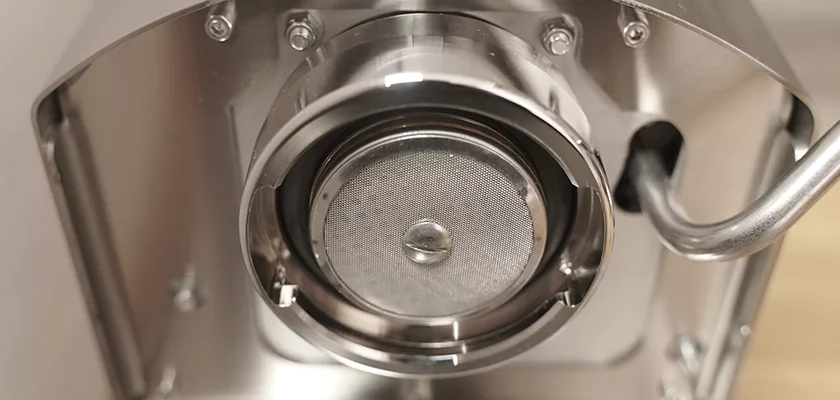
- 3-way solenoid valve: Used to reduce pressure from the grouphead after brewing by excessive pressure built up in the portafilter. In addition, it drains from internally through underneath the drip tray.
- Single Bezzera commercial grouphead: Made with chrome-plated brass. The boiler heats up the Bezzera 58mm group.
Quality Construction
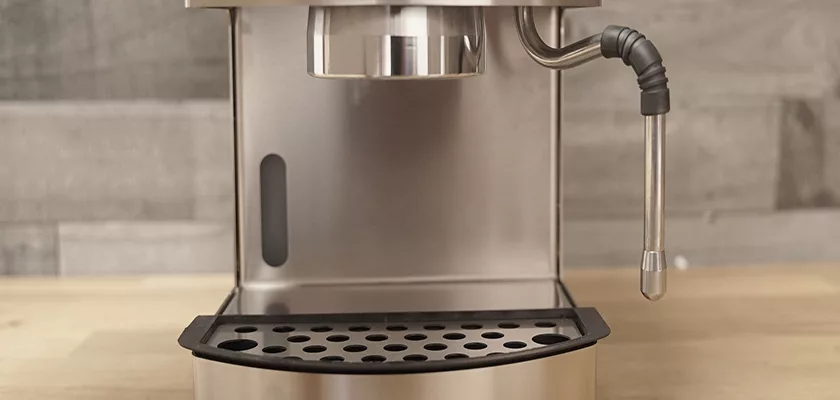
- Stainless steel body and frame: With a matte finish. The front and back panels have the Bezzera logo on top in small 3D print.
- Cup warmer: On top with a matte finish. It takes approximately 2 hours to heat cups up.
- Drip tray: With a matte finish. Additionally, consists of a cup holder grid and a drain tray.
- Cup storage: Right behind the drip tray. Espresso/demitasse cups can fit here.
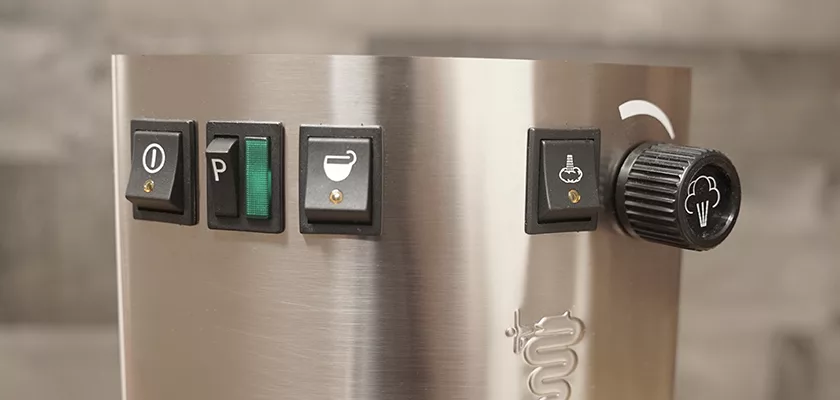
Front Panel Controls from Left to Right
- Main power switch: For powering on and off the Bezzera New Hobby espresso machine. Warm-up time is approximately 10-20 minutes (depending on the environment).
- “P” switch (pump switch): Press this when you are ready to dispense hot water AFTER steaming milk. AFTER steaming milk and closing the steam valve, press this again to stop. This switch is also used in coffee mode to pump water out of the steam wand for Americanos.
- General temperature warning light: When the light is green, that means the machine is ready at an ideal temperature for espresso extraction.
- Coffee switch: Press to start and stop the espresso extraction. A yellow light will turn on and off on the bottom of the switch.
- Steam switch: Press and wait 30-60 seconds to warm up for steam mode. After the steaming session, turn the switch off and run water through the steam wand using the “P” switch. A yellow light will come on when this switch is active.
- Water/steam knob: Rotate counter-clockwise to prepare to dispense steam or hot water. After dispensing, rotate clockwise to close valve.
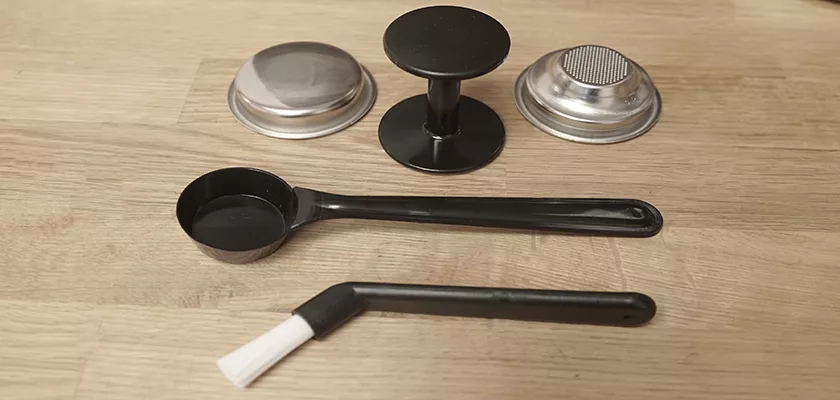
Accessories Included
- Bezzera 58mm dual spout portafilter: Designed with chrome-plated brass. The bottom side shows the Bezzera name. Black plastic handle and commercial-grade.
- Particle filter: Takes particles out to prevent the pump from jamming.
- Filter baskets: 1-cup stainless steel filter basket for making one cup of espresso, 2-cup stainless steel filter basket for making two cups of espresso, and blind filter basket for backflushing.
- Tamper: A cheap plastic tamper, common for most espresso machines to keep the overall selling price of the machine low. We recommend upgrading to a better 58mm espresso tamper.
- Scoop: Simple plastic scoop if using preground espresso coffee.
- Grouphead cleaning brush: For cleaning the grouphead gasket.
- Instruction manual: For operation and maintenance. Also, available in five different languages: Italian, English, French, German, and Spanish.
Specifications
| Brand | Bezzera |
|---|---|
| Height (inches) | 14, approximate |
| Width (inches) | 8, approximate |
| Depth (inches) | 9.5, approximate |
| Weight (pounds) | 22, approximate |
| Wattage (watts) | 1100 |
| Voltage (volts) | 110 – 120 |
| Boiler Type | Single Boiler, Dual Purpose |
| Boiler capacity (liters) | 0.25 |
| Tank capacity (liters) | 3 |
| Portafilter size (mm) | 58 |
| Country of manufacture | Milan, Italy |
| E61 Grouphead | No |
| Operation | Semi-Automatic |
| PID Control | No |
| Water Connection | Tank / Reservoir |
Notes
General Espresso Machine Notes/Warnings:
- Upon first use (tank/reservoir models): On the initial start-up (or after a long period of non-use), it is important to make sure the pump is removing water from the tank. When the machine is powered on, you will hear the pump running. After 5 seconds, squeeze the in-line hose in the tank (usually the longest hose, has a particle filter attached). if you hear a different sound, this means the pump is working correctly. If not, immediately power down the machine and contact us. For more information, visit this page General Manual Pump Priming.
- Electrical: To avoid electrical damage to this espresso machine which is not considered a manufacturer's defect, please acquire and install a single-outlet surge suppressor rated at 1080 joules or higher. Without the recommended surge suppressor, the espresso machine can be damaged at the power switch, the electronics, the heating element, the pressurstat, or the wiring inside. For more information, visit this page Power Protection.
- Water: To increase the useful life and not damage your espresso machine, please use softened water. Softened water is water without calcium and magnesium, but still has other minerals for espresso extraction. Do not use distilled, purified, or reverse osmosis water as these types of water create oxidation with the metals and cause the same damaging effects as limescale. For more information, visit this page Water Choice.
- Descaling: We do not recommend descaling unless there is an issue with the espresso machine. Too much descaling can eat away at the metals and gaskets inside an espresso machine. As a preventative measure, we recommend using softened water as explained in the bullet point above.
- Backflushing: This procedure of cleaning the grouphead will need to be performed from time to time. For more information, visit this page Espresso Machine Backflush – Why 50?
Support
Parts Diagram
No block ID is set
Reviews
[yith_ywar_show_reviews_form product_id=73256]
Q & A
Ask a question
Please ask follow up questions as a new question. Submitted questions will be first reviewed, answered, and lastly publicized.
-
Hi, i think one of my electrical switches just went bad on my Bezzera hobby. it is the switch on the front with the "P" on it and with the green light build right into the switch case. Do you have any of these in stock? Thanks.
-
Q Hi, i think one of my electrical switches just went bad on my Bezzera hobby. it is the switch on ...... Read more answer nowAsked by on May 21, 2025 10:56 amAnswered by the admin
Hello. The parts diagram for the Bezzera Hobby is found here - https://www.1st-line.com/wp-content/uploads/2017/05/HOBBY-Parts.pdf . After you have found your part, please search our website using the corresponding part number. Thanks.
I am purchasing a Bezzera New Hobby espresso machine and would like to know if your "1st-Line Single 58mm Pressurized Professional Filter Basket" will work in the Bezzera with ess pods?
-
Q I am purchasing a Bezzera New Hobby espresso machine and would like to know if your "1st-Line Sin...... Read more answer nowAsked by on June 17, 2022 12:29 pmAnswered by the admin
Hi,
We tested the 1st-Line Single 58mm Pressurized Professional Filter Basket on the Bezzera Hobby and it does fit the portafilter. These baskets are meant for ground coffee. You can try it with pods. However, we can't comment on the quality of the shots.
I am somewhat new to the prosumer level of machines - upgrading from a La Pavoni Lusso PL16 after 20 years - and I have many questions about the Bezzera New Hobby that I ordered from you and received today. I'd also be happy to just call and discuss if that is easier. 1) The instructions taped on the machine for cleaning of the hydraulic circuit they talk about two steps of the operating instructions and then, leaving the machine on for 12 hours (at machine start up or after 7 days of rest) and then, "draining the boiler by the steam tap" and then repeating. So don't pull my very first shots for consumption until the machine's effectively been on for 24 hours? Is this necessary? How is the boiler drained (run steam until no more steam is produced?)? 2) It also notes in the instructions for cleaning of the hydraulic circuit, that, after 4 hours of inactivity (so pretty much every morning when I wake up), "drain the boiler from the respective tap for 5 seconds" and "let the water flow from the group head for 15 seconds." So is this meaning to run for 20 seconds each morning after the boiler heats? For regular operating instructions it seems to pretty much be fire it up and go (unless of course I would want to run water to heat the group head before pulling a shot). So, these two instructions seem to conflict each other. Can you provide some guidance as to whether and when the instructions for cleaning the hydraulic circuit should be followed? 3) For backflushing, the instructions note to do so after each use, but for one or two shots a day is daily backflushing necessary? How often would you recommend backflushing? Do you recommend that regular backflushing be with water only or a product such as Cafiza tabs? 4) For removing the filter basket, any tricks to getting it out? I had to take several minutes to pry it out with a butter knife and am concerned about damaging the basket, particularly if I am to actually backflush every day. Looking forward to your expertise and hoping that you are happy to help. Do love the machine for sure as it pulls shots far better than the ol' La Pavoni Lusso (which basically pulled mini coffees with pressurized crema)!
-
Q I am somewhat new to the prosumer level of machines - upgrading from a La Pavoni Lusso PL16 after...... Read more answer nowAsked by on February 16, 2022 1:11 pmAnswered by the admin
1) The instructions taped on the machine for cleaning of the hydraulic circuit they talk about two steps of the operating instructions and then, leaving the machine on for 12 hours (at machine start up or after 7 days of rest) and then, "draining the boiler by the steam tap" and then repeating. So don't pull my very first shots for consumption until the machine's effectively been on for 24 hours? Is this necessary? How is the boiler drained (run steam until no more steam is produced?)?
Q1A: Never run the machine in steam mode too long as you will burn out the heating element! Basically, the manufacturer wants water in the machine for 24 hours so it can coat the internal metal components. This is not a machine to leave powered on all day. It should be powered off when not in use. If the machine is idle for 7 days wihtout use or at initial start up, they want to make sure you fill the internal boiler by pulling water out of the reservoir which this machine does NOT do automatically.
2) It also notes in the instructions for cleaning of the hydraulic circuit, that, after 4 hours of inactivity (so pretty much every morning when I wake up), "drain the boiler from the respective tap for 5 seconds" and "let the water flow from the group head for 15 seconds." So is this meaning to run for 20 seconds each morning after the boiler heats? For regular operating instructions it seems to pretty much be fire it up and go (unless of course I would want to run water to heat the group head before pulling a shot). So, these two instructions seem to conflict each other. Can you provide some guidance as to whether and when the instructions for cleaning the hydraulic circuit should be followed?
Q2A: Fresh water in the machine makes better espresso. It also insures the internal boiler is filled, especially if the machine was operated in steam mode and powered off before refilling the internal boiler.
3) For backflushing, the instructions note to do so after each use, but for one or two shots a day is daily backflushing necessary? How often would you recommend backflushing? Do you recommend that regular backflushing be with water only or a product such as Cafiza tabs?
Q3A: Everyone has a different opinion. We recommend once every 50 extractions. You can do more frequently with water only, but the pump may not last as long.
4) For removing the filter basket, any tricks to getting it out? I had to take several minutes to pry it out with a butter knife and am concerned about damaging the basket, particularly if I am to actually backflush every day. Looking forward to your expertise and hoping that you are happy to help. Do love the machine for sure as it pulls shots far better than the ol' La Pavoni Lusso (which basically pulled mini coffees with pressurized crema)!
Q4A: Use the rm of the other basket to jam in and pry off. Start watching our YouTube channel for more info.
Is there a PID mod for the Bezzera Hobby?
-
Answered by the admin Sorry, there is no modification available by the manufacturer. Since there is very little room inside, it will probably be very difficult.
How does the Bezzera Hobby compare with the Rancilio Silvia? I had decided to buy the Siliva but then I saw the Bezzera and now I'm torn. I like that there appears to be a large amount of support with the Siliva in terms of youtube videos ect on maintenance and repairs. Is the Bezzera also easy to work on if needed?
-
Q How does the Bezzera Hobby compare with the Rancilio Silvia? I had decided to buy the Siliva but ...... Read more answer nowAsked by on January 20, 2021 6:43 pmAnswered by the admin
Both are comparable machines. There are some design differences as well as internal differences. Due to the body design, the Silvia may be considered a little easier to work on. However, the Bezzera Hobby espresso machine is not that difficult.
How does the Bezzera Hobby compare with the Lelit Glenda? Which is best to purchase? Pros and cons?
-
Q How does the Bezzera Hobby compare with the Lelit Glenda? Which is best to purchase? Pros and cons? answer nowAsked by on December 6, 2020 4:48 amAnswered by the admin
The Bezzera Hobby espresso machine has a heavier weight frame. The Lelit Glenda espresso machine has superior temperature control via the PID. The drip tray is larger on the Glenda.