

Comparing 1-Cup and 2-Cup Filter Baskets for Espresso Extraction
By Public Relations, 1st-line Equipment, LLC
Espresso extraction determines cup flavor and quality. Choosing between 1‑cup and 2‑cup filter baskets affects yield, concentration, and technique for home and professional setups. This article summarizes how basket size changes shot volume, flavor balance, and operational approach, with practical guidance to improve consistency.
Optimal Shot Yield:
Shot yield tracks basket capacity: 1‑cup baskets typically use about 7–9 g (single serving), while 2‑cup baskets accept roughly 14–22 g (double shots or multiple servings). Matching dose to the basket helps meet target output and efficiency.
Knowing these ranges helps baristas pick the right basket to hit extraction targets and maintain flavor consistency.
Quality Differences:
Basket configuration influences the cup. A 1‑cup basket often yields a more concentrated, delicate profile that highlights lighter roasts and single origins. A 2‑cup basket typically produces fuller body and thicker crema, which can complement darker roasts and blends.
Impact on Brewing Techniques:
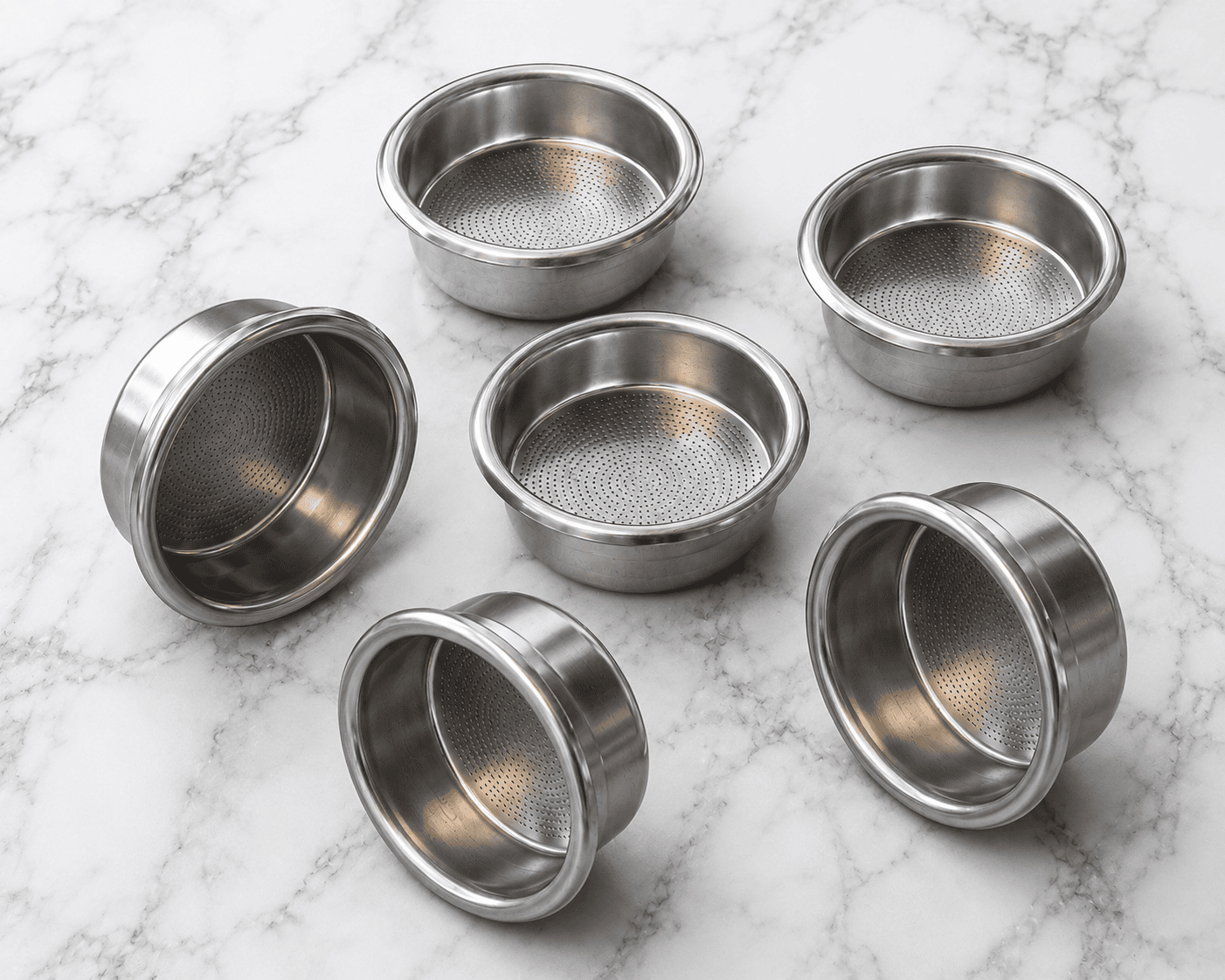
Basket choice changes technical requirements. 1‑cup baskets need tighter grind control and precise tamping to avoid over‑extraction. 2‑cup baskets tolerate slightly coarser grinds and more variation in tamp pressure, giving more room for experimentation.
What Are the Key Differences Between 1-Cup and 2-Cup Espresso Filter Baskets?
A direct comparison highlights practical differences that affect workflow and beverage attributes.
- Shot Volume and Extraction Parameters : 1‑cup baskets generally yield about 1–1.5 fl oz; 2‑cup baskets about 2–2.5 fl oz. Smaller beds usually need shorter effective brew times and finer grinds to hit extraction targets.
- Taste and Extraction Quality : 1‑cup extractions concentrate soluble compounds, accentuating delicate notes. 2‑cup extractions favor body and crema, often producing a rounder cup.
- Compatibility with Espresso Machines : Check portafilter and machine specs, especially width of the basket: not every model accepts both sizes. Interchangeable baskets add operational flexibility.
How Do Basket Sizes Affect Espresso Shot Volume and Extraction Parameters?
Basket size sets shot volume and affects bed depth, which in turn influences grind, dose, and tamp adjustments. Smaller baskets typically require finer grinds and slightly faster flow control; larger baskets allow coarser settings while still achieving balanced extraction.
How Does Basket Size Influence Espresso Taste and Extraction Quality?
Geometry and capacity shape how water interacts with coffee solids. A compact bed concentrates soluble extraction and highlights acidity and aromatics; a larger bed spreads extraction, increasing body and crema. Choose basket size to suit bean characteristics and desired cup profile.
Peer-reviewed research indicates that filter basket configuration significantly affects the chemical composition and sensory quality of espresso.
Filter Basket Influence on Espresso Quality & Composition
This study evaluated the effect of perforated disc height and filter basket configuration—two integral components of the espresso machine—on espresso carbohydrate content and composition. Two different filter baskets were used to prepare Italian‑style espresso and to assess the feasibility of reducing ground coffee mass while maintaining the quality of a standard Italian espresso. Arabica and Robusta beans were prepared using 12 g and 14 g of roasted coffee powder, respectively, to produce 40 mL of espresso split into two cups. The study concluded that filter configuration modulates the brew’s chemical profile and has a measurable impact on espresso cup quality.
Effect of perforated disc height and filter basket on espresso coffee carbohydrates content and composition, G Khamitova, 2022
What Role Does Grind Size and Brew Ratio Play in Using 1-Cup Versus 2-Cup Baskets?
Grind and brew ratio are primary controls. Use a finer grind and careful dosing with 1‑cup baskets to reach extraction targets; 2‑cup baskets typically allow a slightly coarser grind. Adjust brew ratio to balance strength and extraction yield for each basket.
Can a 2-Cup Basket Be Used Effectively for a Single Espresso Shot?
Yes—if you adjust variables. Change grind distribution and tamp pressure to prevent over‑ or under‑extraction and measure outcomes until the concentration and sensory balance match your goal.
Which Espresso Machines Are Compatible with 1-Cup and 2-Cup Filter Baskets?
Compatibility depends on portafilter and basket dimensions. Review machine documentation; many commercial and home espresso machines offer interchangeable baskets for flexibility.

What Are the Material and Design Considerations for Durable Filter Baskets?
Choose well‑made baskets in stainless steel or brass for stability and corrosion resistance. Hole size, count, and distribution influence flow rate and uniformity—specify quality fabrication to ensure reproducible results.
How Do Accessory Tools Like Tampers and Grinders Complement Basket Selection?
Precision tools reduce variation. A calibrated tamper and a high‑resolution grinder help achieve consistent compaction and the particle distribution required by the chosen basket and dose.
What Are the Best Practices for Cleaning and Maintaining Espresso Filter Baskets?
Rinse baskets after each use and perform a weekly deep clean with approved detergents. Store dry and inspect regularly to prevent buildup, deformation, or damage.
How Does Proper Cleaning Impact Extraction Consistency and Basket Durability?
Regular cleaning prevents oil and residue accumulation that alters flavor and extraction. Maintenance reduces wear and corrosion, improving shot consistency and extending basket life.
Frequently Asked Questions
What is the ideal grind size for 1-cup and 2-cup filter baskets?
1‑cup baskets usually need a finer grind to reach target extraction in a shallow bed; 2‑cup baskets allow a slightly coarser setting. Tune grind empirically to taste and extraction metrics.
How can I adjust my brewing technique when switching between basket sizes?
Adjust tamping consistency, grind, brew time, and temperature when changing basket size. Prioritize even tamping and incremental grind changes while monitoring shot time and yield.
What are the common mistakes to avoid when using a 2-cup basket for a single shot?
Failing to change grind or tamp settings can cause over‑ or under‑extraction. Also watch brew ratio and tamp uniformity to avoid channeling and uneven flow.
Can the choice of coffee beans affect the performance of different basket sizes?
Yes. Lighter roasts often benefit from concentrated 1‑cup extraction to reveal nuance; darker roasts and blends can gain body and crema from 2‑cup extractions.
What maintenance practices are recommended for prolonging the life of filter baskets?
Rinse after use, deep clean weekly, store dry, and inspect for wear. Promptly replace damaged baskets to preserve extraction quality.
How does the design of a filter basket influence espresso extraction?
Diameter, depth, hole size, and distribution affect flow, bed saturation, and extraction uniformity. Match design features to your extraction goals.
What factors should I consider when selecting an espresso machine for different basket sizes?
Verify basket compatibility with the portafilter, and consider machine pressure profiling, temperature stability, and features such as programmable dosing to support consistent extraction.
Conclusion
Choosing between 1‑cup and 2‑cup filter baskets is essential for controlling shot yield, extraction consistency, and cup character. Use systematic trials—adjusting grind, dose, tamp, and brew ratio—supported by proper tools and maintenance to optimize results for your beans and service needs.
