

Master Your Espresso Grinder Choice
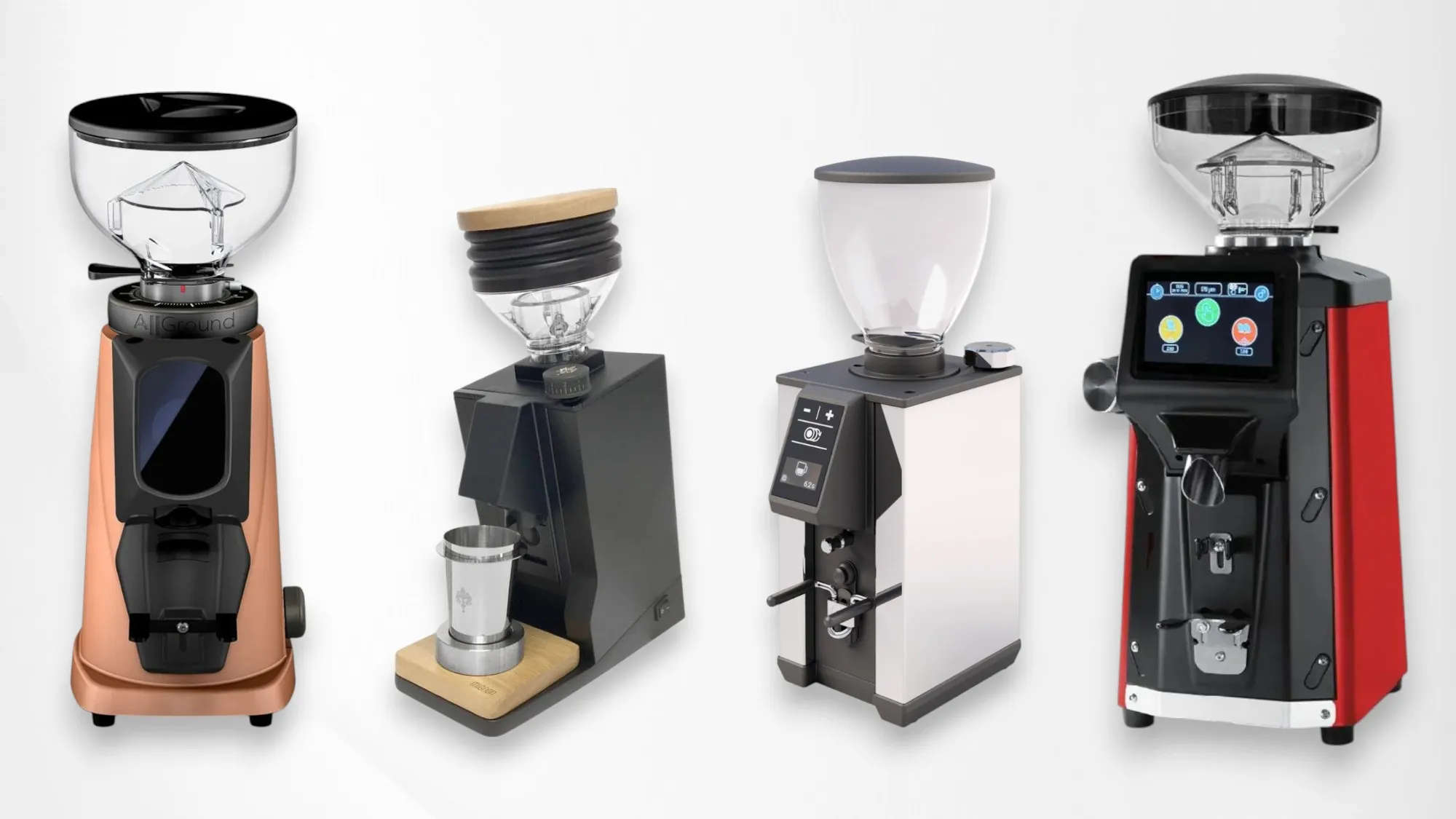
Selecting an appropriate espresso grinder is essential to obtain consistent grind size and reliable extraction. This article provides practical guidance on grinder types, the impact of grind size on espresso quality, key features to evaluate, maintenance practices, and how to match a grinder to a specific machine model. Applying these considerations will improve repeatability and the overall brewing outcome.
What Are the Main Types of Espresso Grinders and Their Features?
Espresso grinders are generally classified as burr or blade models. Burr grinders crush beans between two abrasive surfaces to deliver consistent particle size and precise adjustment. Blade grinders use a spinning blade to chop beans, which often produces irregular particle sizes that can adversely affect extraction and flavour consistency.
How Do Burr and Blade Grinders Differ in Espresso Preparation?
Burr grinders deliver superior consistency and permit fine adjustments required for even extraction. Uneven particle sizes from blade grinders increase the risk of over- or under-extraction and inconsistent flavour. Blade units are typically less costly and more portable, but they are not recommended where precise espresso extraction is required.
Additional research indicates that achieving a defined, consistent grind size is generally possible only with burr-based grinders rather than blade designs.
Blade vs. Burr Grinders: Achieving Defined Grind Size
Blade grinder: This is a basic technology for grinding coffee. A defined grind size can only be achieved when the grinder is equipped with burrs. The quality of the grind is determined by the shape of the teeth in the burrs, the surrounding burr casing and the distance between the burrs. The grind—Particles and particularities, 2017
What Are the Advantages of Manual Versus Electric Espresso Grinders?
Manual grinders offer precise user control over grind size and are typically more affordable and portable, but they require more time and effort. Electric grinders provide speed, higher throughput, and features such as programmable settings and automatic dosing that benefit commercial or high-volume environments.
How Does Grind Size Affect Espresso Quality and Machine Compatibility?
Grind size directly affects extraction rate and the resulting flavour profile. Finer grinds increase surface area and can enhance flavour intensity but risk over-extraction and bitterness if too fine. Coarser grinds may produce under-extracted, weak or sour results. Determining the appropriate grind grade for a given machine is necessary to achieve consistent, optimal results.
What Is the Ideal Grind Size for Different Espresso Machines?
Ideal grind size depends on the machine type. Traditional espresso machines generally require a fine grind. Semi-automatic machines often use a fine to medium-fine grind, while single-serve systems typically perform best with a medium grind. These are general guidelines and may require adjustment for beans and machine specifics.
- Traditional Espresso Machines : Fine grind (similar to table salt)
- Semi-Automatic Machines : Fine to medium-fine grind
- Single-Serve Machines : Medium grind
Following these guidelines will assist in achieving appropriate extraction and expected flavour from the beans.
How Does Grind Size Influence Extraction and Flavor Profiles?
Grind size controls extraction kinetics: finer particles accelerate extraction of soluble compounds and oils, increasing richness and complexity; excessive fineness can cause over-extraction and bitterness. Coarser particles slow extraction and can yield weak, underdeveloped flavour. Balancing grind size is essential to obtain the desired flavour profile.
Empirical studies further highlight grind grade as a primary variable affecting espresso quality and extraction efficiency.
Grind Grade’s Impact on Espresso Quality & Extraction
Grinding grade is one of the most important sources of variation in the quality of espresso. This study tests an innovative method to prepare coffee powder puck, designed to reduce variability in flow rate between extractions. The method is based on stratified layers of ground coffee with different granulometry, and it was tested in three trials with different coffees and grinders. Grinding consists of reducing beans to obtain a homogeneous powder. The primary objective is to increase the specific extraction surface or, more specifically, to increase the interface between water and coffee, to facilitate the transfer of soluble and emulsifying substances into the brew. Test of an innovative method to prepare coffee powder puck, improving espresso extraction reliability, G Angeloni, 2022
Which Features Should Be Considered When Selecting an Espresso Grinder?
Evaluate features that affect grind consistency, adjustment precision, dosing accuracy, throughput, build quality, and ease of maintenance. These aspects determine long-term performance and suitability for your intended use.
What Are the Benefits of Stepless Adjustment and Dosing Controls?
Stepless adjustment enables fine, continuous control of grind size for incremental optimisation. Dosing controls ensure repeatable coffee quantities, supporting consistent extraction and flavour across multiple brews.
How Do Noise Level and Maintenance Requirements Impact Grinder Choice?
Noise level is relevant for domestic environments and early-morning use. Maintenance considerations include accessibility of removable parts, ease of cleaning, and the frequency of serviceable wear items. Regular cleaning and inspection extend service life and preserve grind consistency.
How Should You Maintain and Clean Your Espresso Grinder for Optimal Performance?
Regular maintenance prevents buildup of coffee oils and residues that alter flavour and impair performance. Establish a cleaning routine appropriate to usage and the grinder’s design to maintain consistent operation.
Maintaining and cleaning the grinder, together with correct setup, are critical factors for consistently achieving high-quality espresso.
Espresso Grinder Setup, Maintenance & Quality
Suggestions and routine procedures for manual grinder setup and cleaning cycles are crucial to preserve and improve the final beverage quality.
Correlating espresso quality with coffee-machine parameters by means of association rule mining, D Apiletti, 2020
What Is the Recommended Maintenance Schedule for Commercial and Home Grinders?
Home grinders should be cleaned every few weeks depending on frequency of use. Commercial units typically require daily cleaning. Inspect burrs regularly and replace them according to manufacturer guidance; a common interval is every 6–12 months depending on load.
Which Cleaning Techniques Ensure Longevity and Consistent Grind Quality?
To maintain consistent performance, employ targeted cleaning methods and tools appropriate to the grinder design.
- Use a Brush : A soft brush can help remove coffee grounds from the burrs and hopper.
- Grinder Cleaning Tablets : These can be used to clean the internal components and remove oils.
- Vacuum : A small vacuum can help remove any leftover grounds from hard-to-reach areas.
Applying these techniques will support reliable operation and consistent grind quality over time.
How Can You Match an Espresso Grinder to Your Specific Machine Model?
Ensuring compatibility between grinder capabilities and machine requirements is necessary to achieve intended extraction and flavour performance.
What Compatibility Factors Should Be Verified Between Grinder and Espresso Machine?
When choosing a grinder, confirm parameters that affect compatibility and operation.
- Grind Size Range : Ensure the grinder can produce the required grind size for your machine.
- Dosing Mechanism : Check if the grinder’s dosing mechanism aligns with your machine’s requirements.
- Hopper Size : Ensure the grinder’s hopper can accommodate the amount of coffee you typically brew.
Verifying these factors will assist in selecting a grinder that functions effectively with your espresso machine.
How Do Expert Recommendations and Product Specifications Guide Selection?
Consult expert reviews and manufacturer specifications to assess performance, durability, and compatibility. Use comparative data and user feedback to inform a decision that matches your operational needs and brewing preferences.
Frequently Asked Questions
What is the difference between conical and flat burr grinders?
Conical burrs use a cone-shaped inner component and a ring-shaped outer burr, typically producing consistent particles with lower heat generation. Flat burrs use two parallel discs that can achieve a uniform grind but may generate more heat. Selection depends on the desired flavour characteristics and machine compatibility.
How can I tell if my grinder is producing a consistent grind size?
Test consistency by grinding a sample and sifting it through a mesh screen; a majority of particles within a narrow size range indicates consistency. Evaluate extraction behaviour in an espresso shot as uneven grinds often manifest in variable extraction times and flavours or channeling in spent espresso pucks.
What should I look for in a grinder if I want to brew different coffee styles?
Choose a grinder with a broad grind range and precise adjustment (preferably stepless) and a dosing mechanism that supports different brew methods to enable reliable switching between espresso, pour-over, and French press.
Are there specific brands known for high-quality espresso grinders?
Several manufacturers are recognized for durable, precise grinders, including Eureka, Fiorenzato, Macap, and Quamar. Review model specifications and independent evaluations to identify units that meet budget and performance requirements.
How does the material of the grinder affect performance?
Burr material influences wear, heat transfer and longevity. Stainless steel burrs offer durability and wear resistance; ceramic burrs may run cooler but are more brittle. Housing materials affect noise and heat retention. Select quality materials consistent with expected use.
What role does grind retention play in espresso preparation?
Grind retention denotes residual grounds remaining in the grinder after use. High retention can introduce stale particles into fresh doses and degrade flavour. Opt for designs that minimise retention and maintain a regular cleaning regime to ensure freshness.
Conclusion
Choosing an appropriate grinder is fundamental to maximising extraction control and flavour consistency. By understanding grinder types, key features, maintenance requirements, and compatibility factors, you can select equipment that meets your operational needs. Review available models against these criteria to identify the best match for your machine, such as the following models:
- Fiorenzato All Ground Sense Coffee Grinder – Weight-Based Grinding
- Eureka Mignon Single Dose Espresso Coffee Grinder
- Macap Leo 55 Espresso Coffee Grinder
- Quamar A01 65 Espresso Coffee Grinder
