If you own a Bezzera Sole, occasional maintenance and servicing are part of keeping it running at its best. Some components—like the grouphead and steam/hot water wands—are easily accessible from the exterior for routine cleaning and upkeep. Other internal components, such as the boiler and pump, require opening the machine to reach them.

Below are step-by-step instructions to help you safely and easily remove the panels for internal access.

Before you begin: We always recommend powering off your machine and allowing it to cool completely before starting any service. Remove any loose components, including the portafilter, drip tray, and top lid. Unplug the machine and remove the water tank. Accessing certain internal components may require tilting or turning the machine. Taking these steps beforehand helps prevent potential burns, avoids scratches to the machine, and reduces the risk of water spilling from the tank.

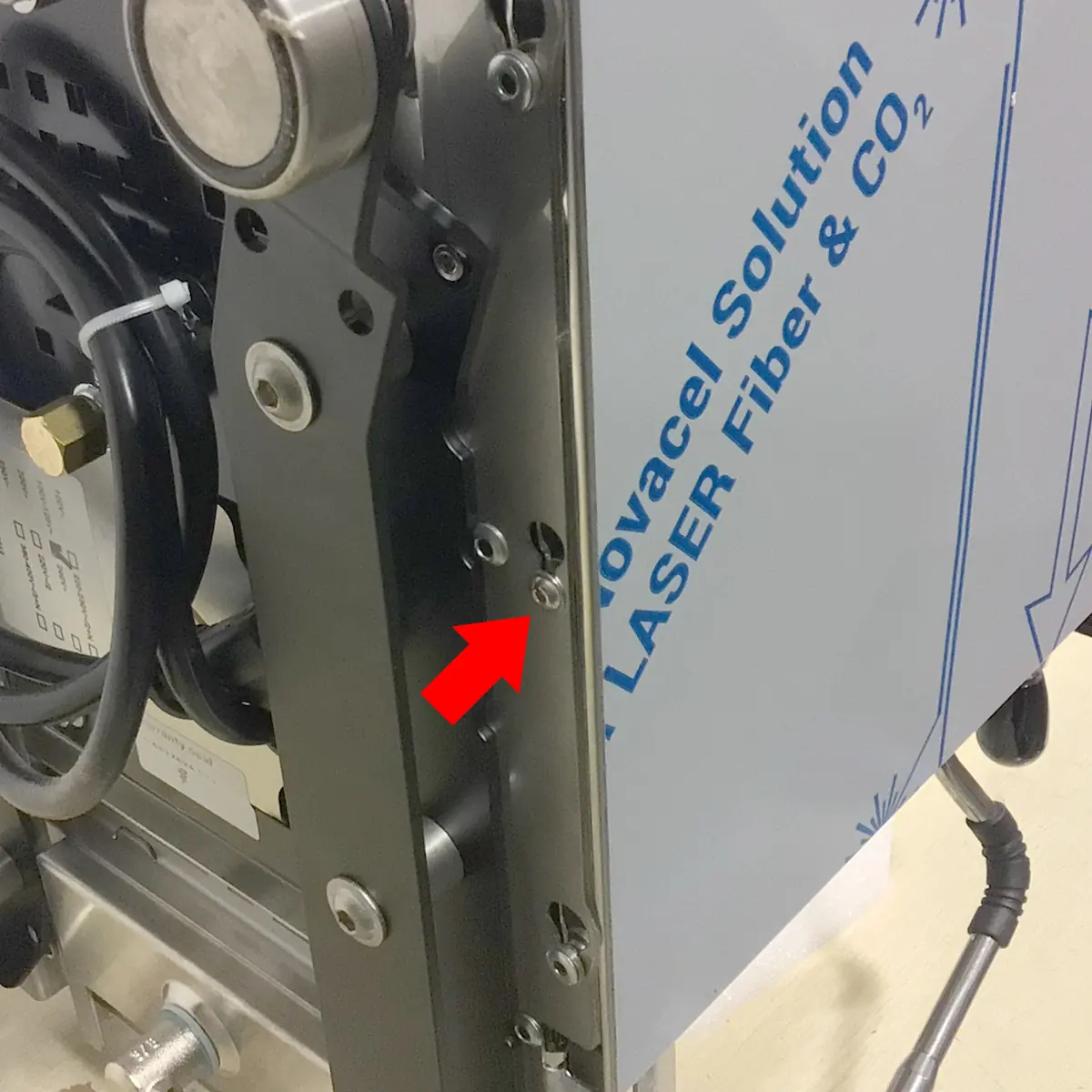
To remove the side panels, there is 1 Allen key screw (3/32″) for each side panel that has to be removed/loosened first. The easiest way to tilt the machine forward. To prevent scratching the grouphead, you can place a cloth underneath it, or if  you have the original packaging, there is a thick piece of foam you can use.
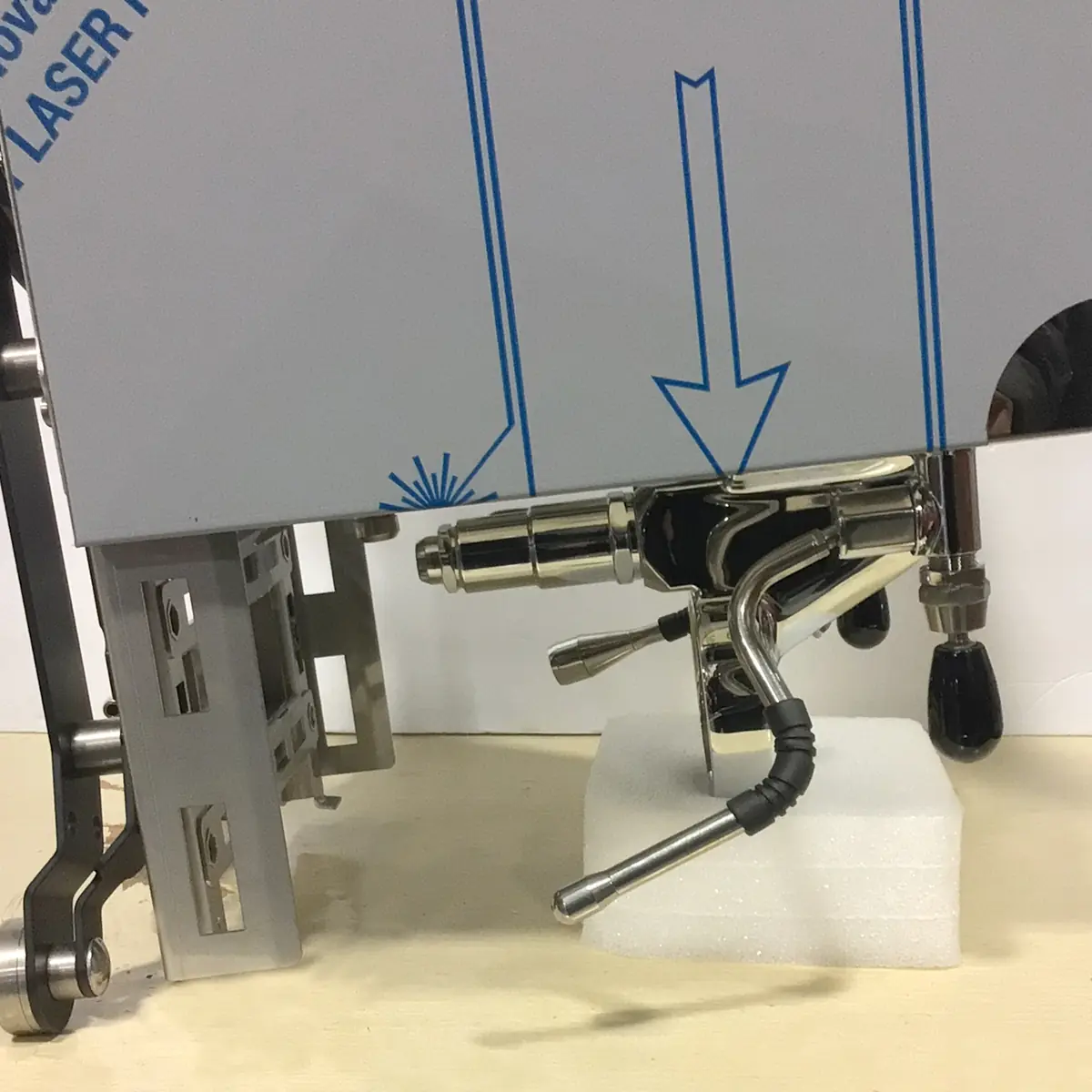
A close-up of a shiny Bezzera Sole espresso machine group head and steam wand, partially wrapped in protective film with blue arrows, resting on a white foam block on a light surface.
Close-up of industrial equipment, similar to the inside access of a Bezzera Sole espresso machine, with a protective blue film labeled Novacel Solution LASER Fiber & CO₂. A red arrow points to a small screw; cables and components are visible.

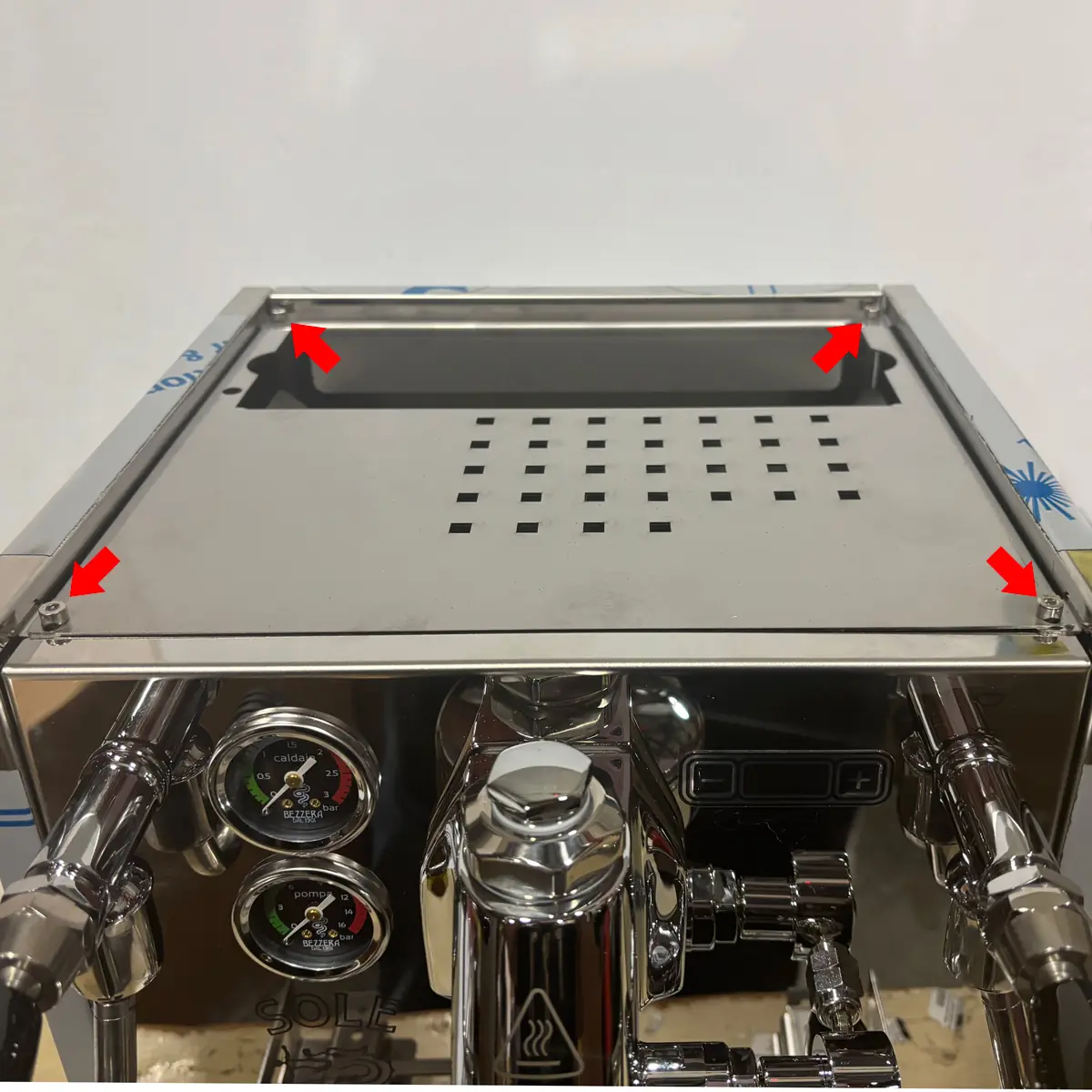
The top panel is secured by four Allen-head screws (3mm), one located at each corner. Each screw is concealed by a plastic cap; remove these caps using pliers. Remove the four screws and lift off the top panel. Once removed, the boiler, PID controller, pressure gauges, and steam and hot water valve connections are accessible from the top of the machine.
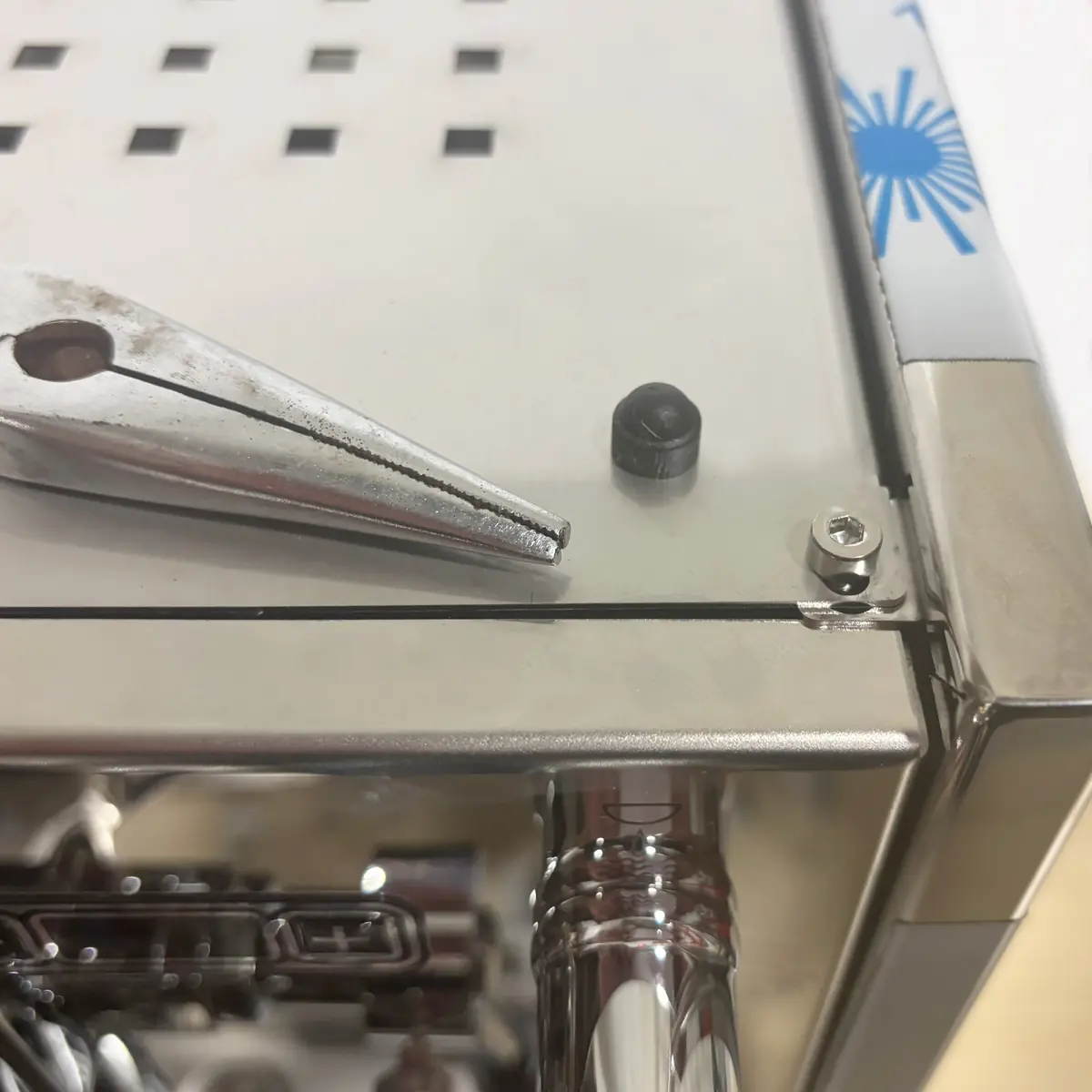
Pliers removing plastic cap from top panel screw of Bezzera Sole espresso machine, revealing access to internal components for maintenance.
Top panel of Bezzera Sole espresso machine showing four Allen-head screws at corners, with visible pressure gauges and steam valves below, indicating access for maintenance.

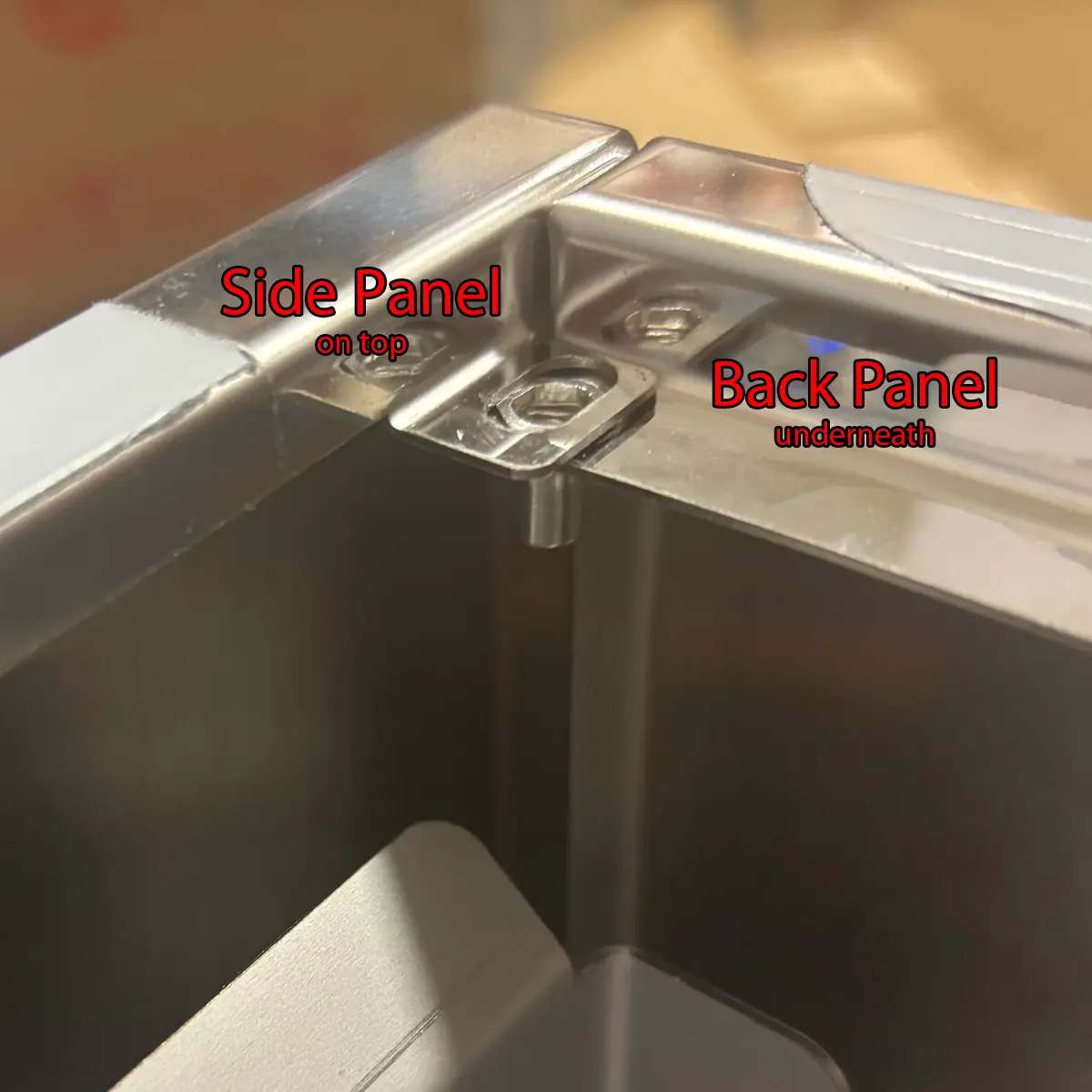
Of the three panels, the rear panel must be removed first. Slide the rear panel upward to disengage it from the chassis. Near the top of the panel is an extended flange that sits beneath tabs attached to the side panels. To release the rear panel, gently flex the side panels outward to clear the tabs, then lift the rear panel away from the machine. Removing the rear panel provides access to the water tank connection, rotary pump, and motor.
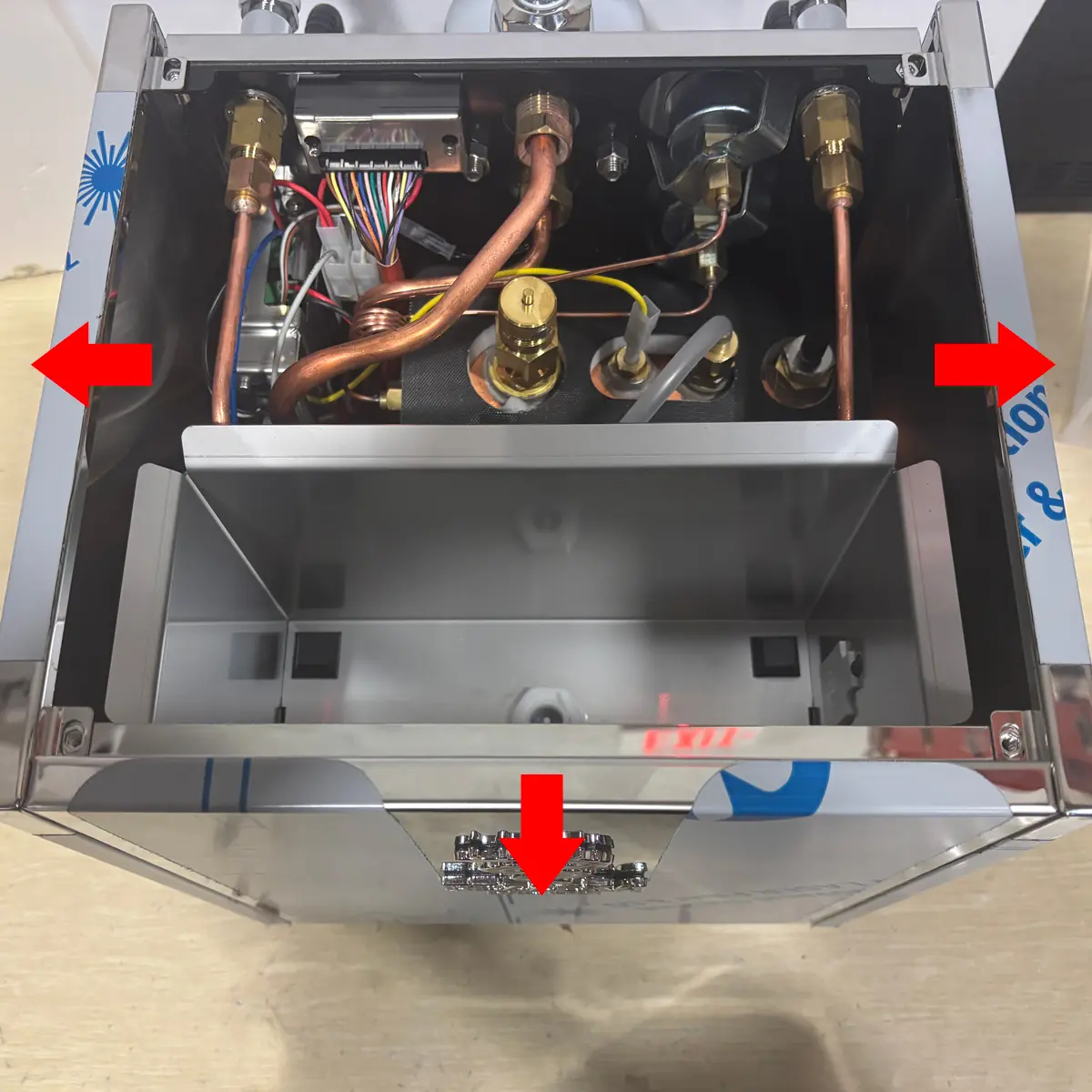
Top view of a Bezzera Sole metallic box with exposed wires and copper pipes inside; three red arrows point to key components, highlighting areas for accessing the inside of the device.
Close-up of metal panels joined at a corner on the Bezzera Sole, labeled “Side Panel on top” and “Back Panel underneath” in red text, showing how the panels overlap for accessing the inside during assembly.

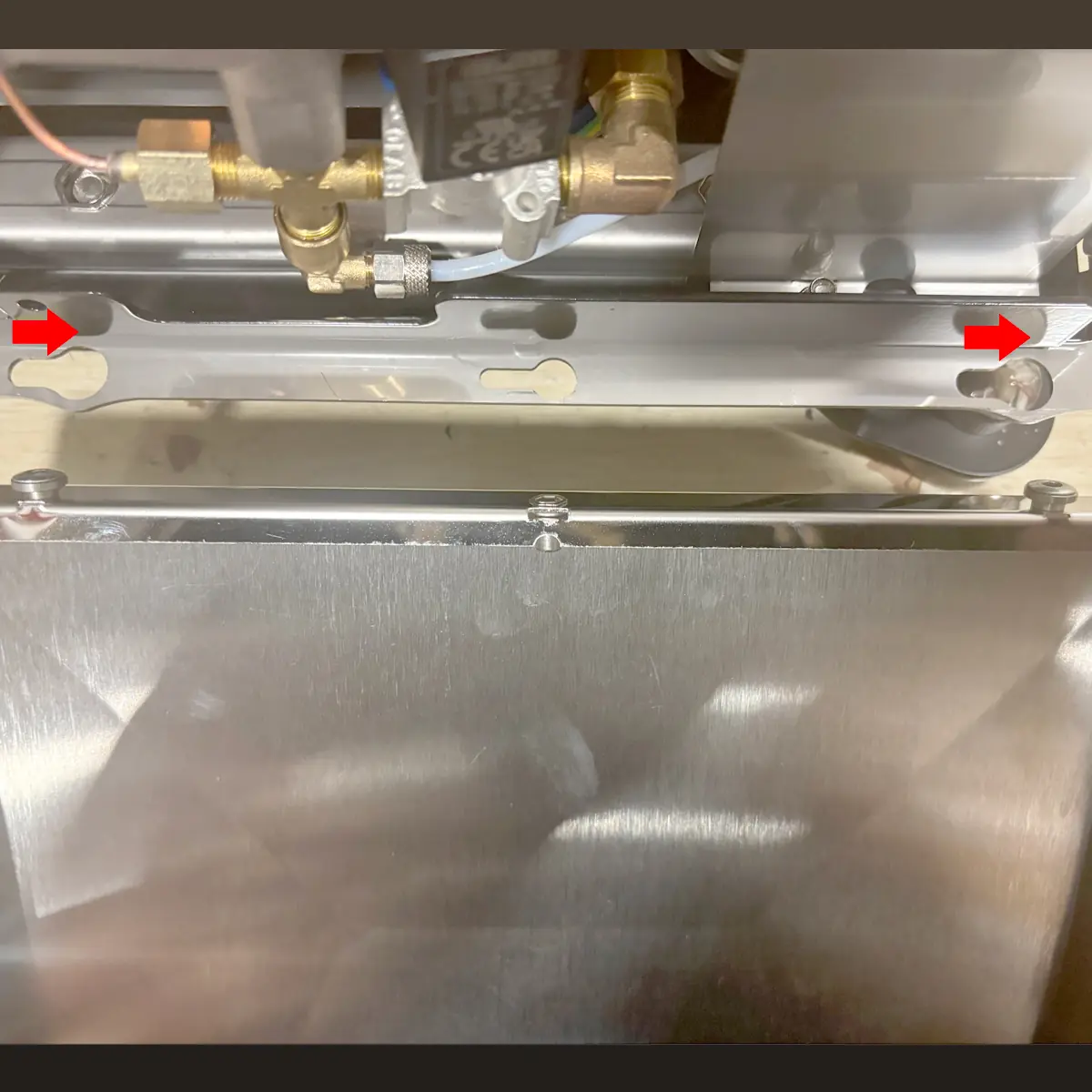
Each side panel slides rearward to disengage from the lower panel. The image to the right illustrates a side panel and the corresponding lower-panel hooks. The center feature shown is the screw located underneath the panel, which was removed/unscrewed in an earlier step.
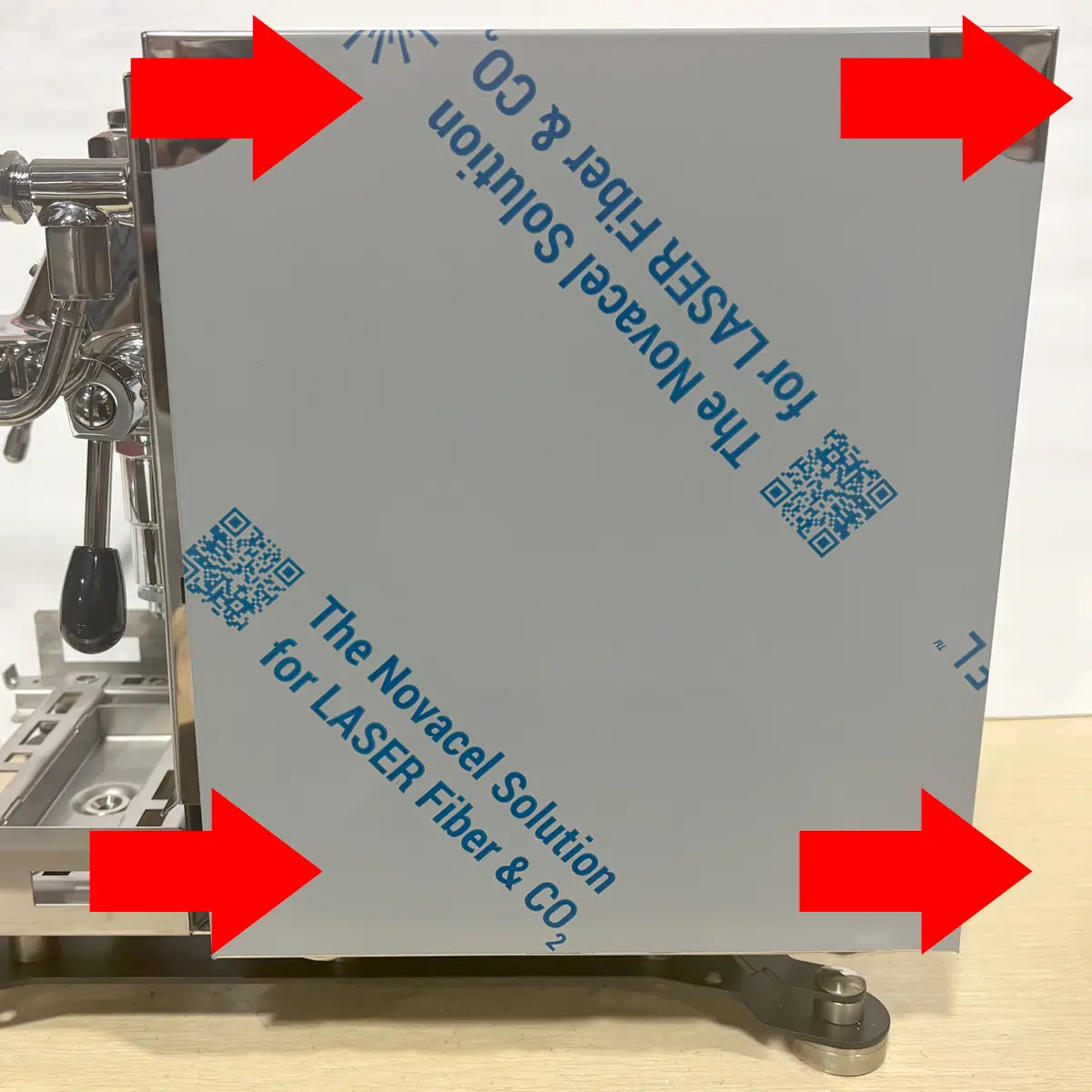
A metal panel with protective film, partially attached to an espresso machine—possibly a Bezzera Sole—is outlined by four large red arrows pointing at its edges. Text and QR codes are visible on the film, highlighting points of access.
Close-up of a Bezzera Sole machine part with two red arrows pointing at screws along a panel, possibly indicating points for adjustment or accessing the inside. The image features a reflective metallic surface at the bottom.

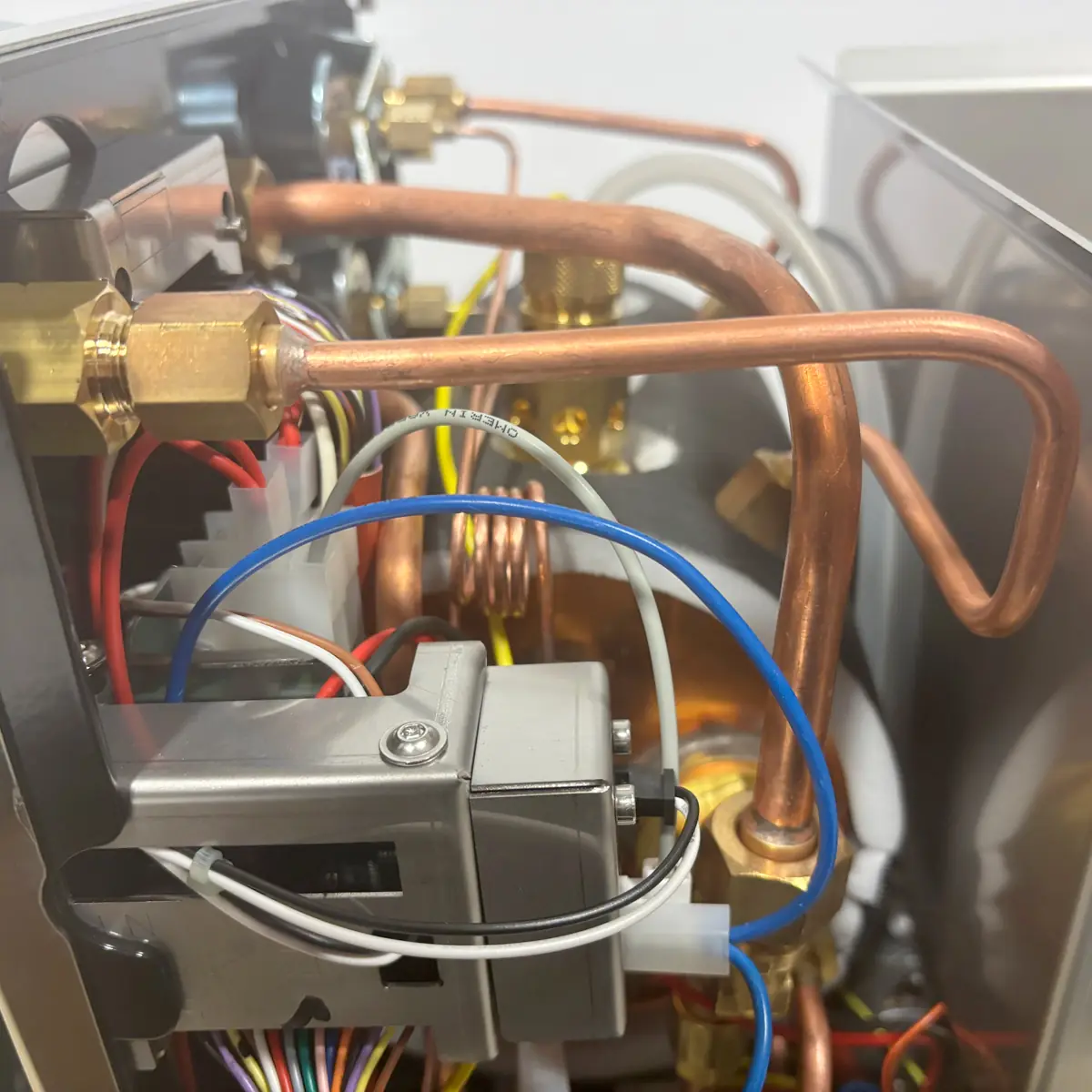
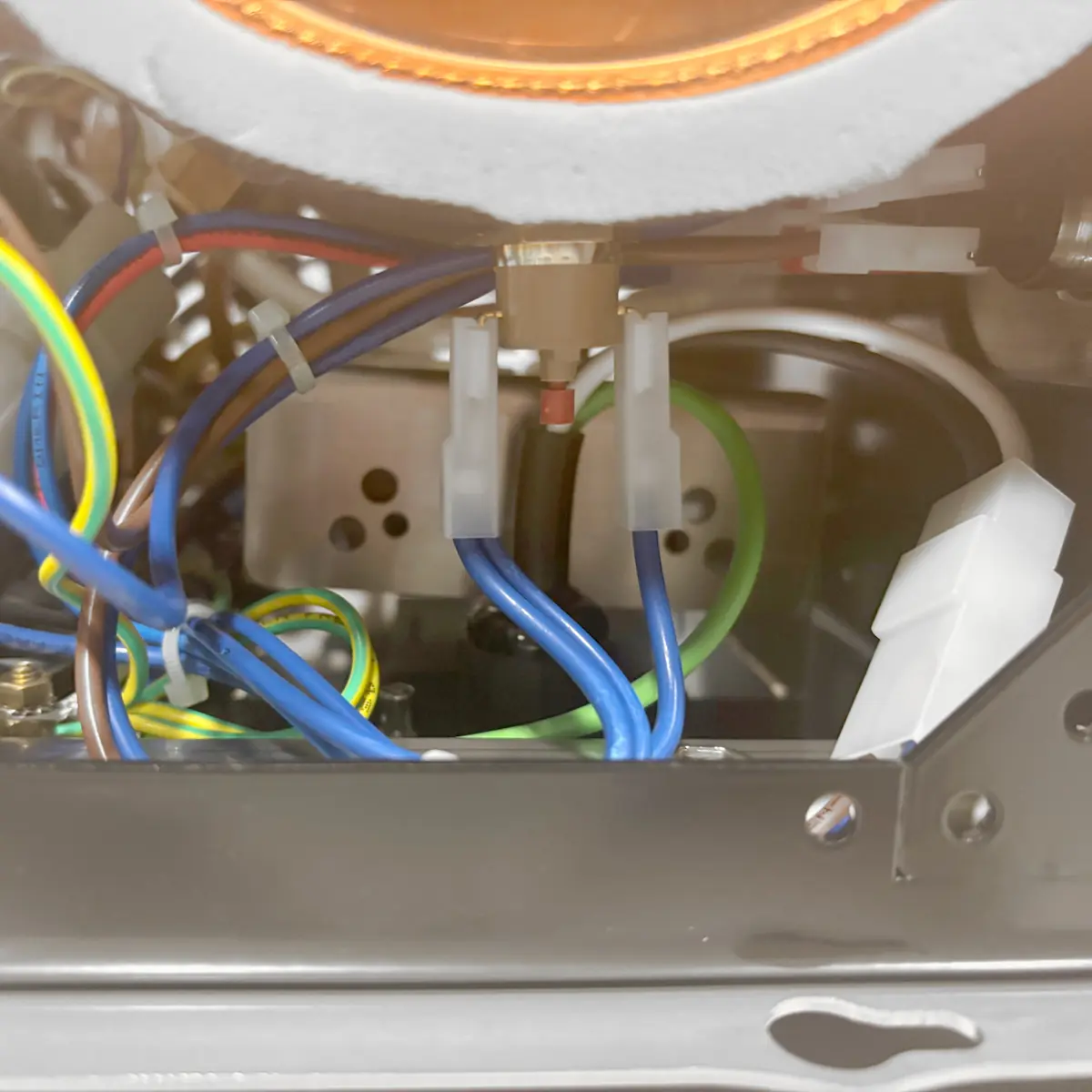
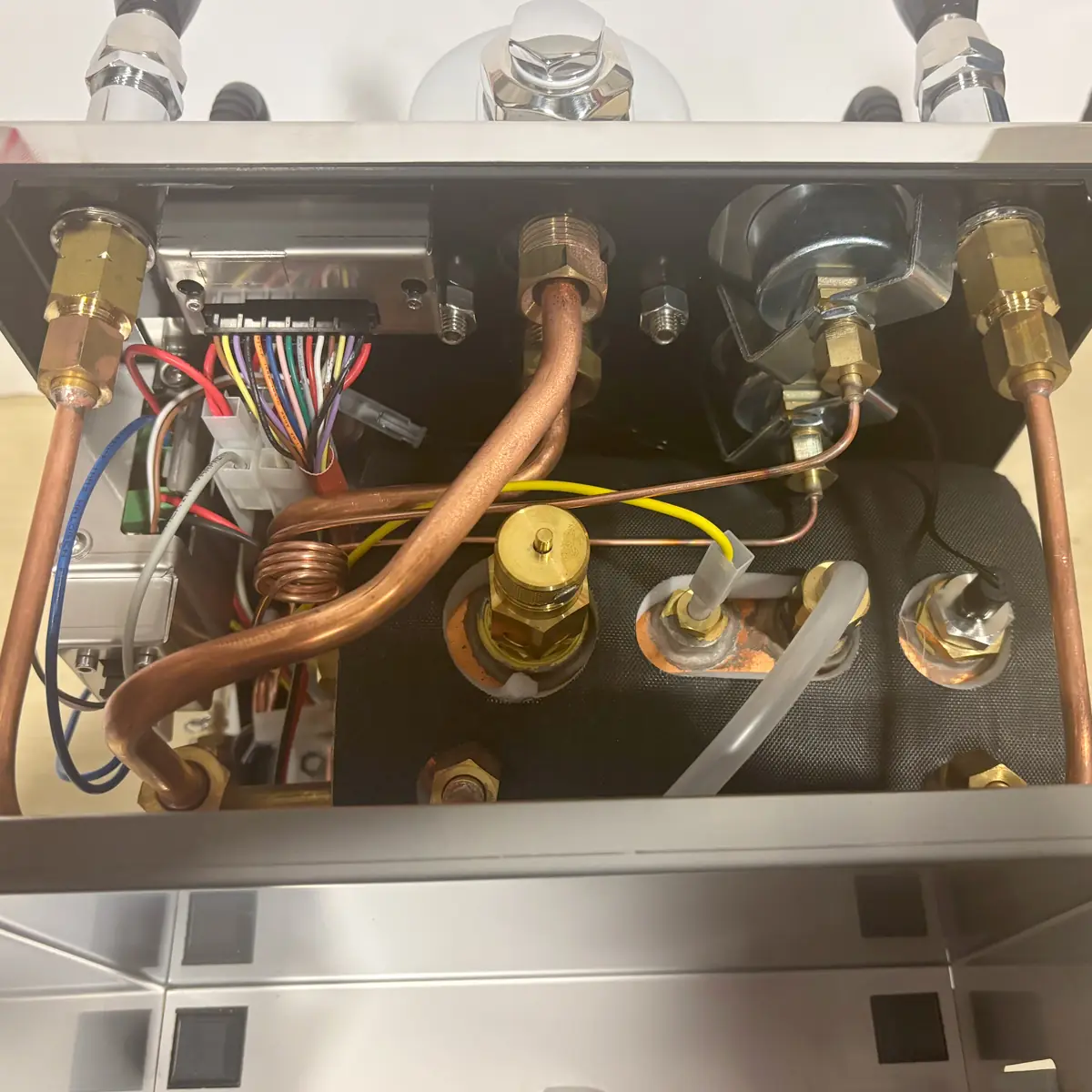
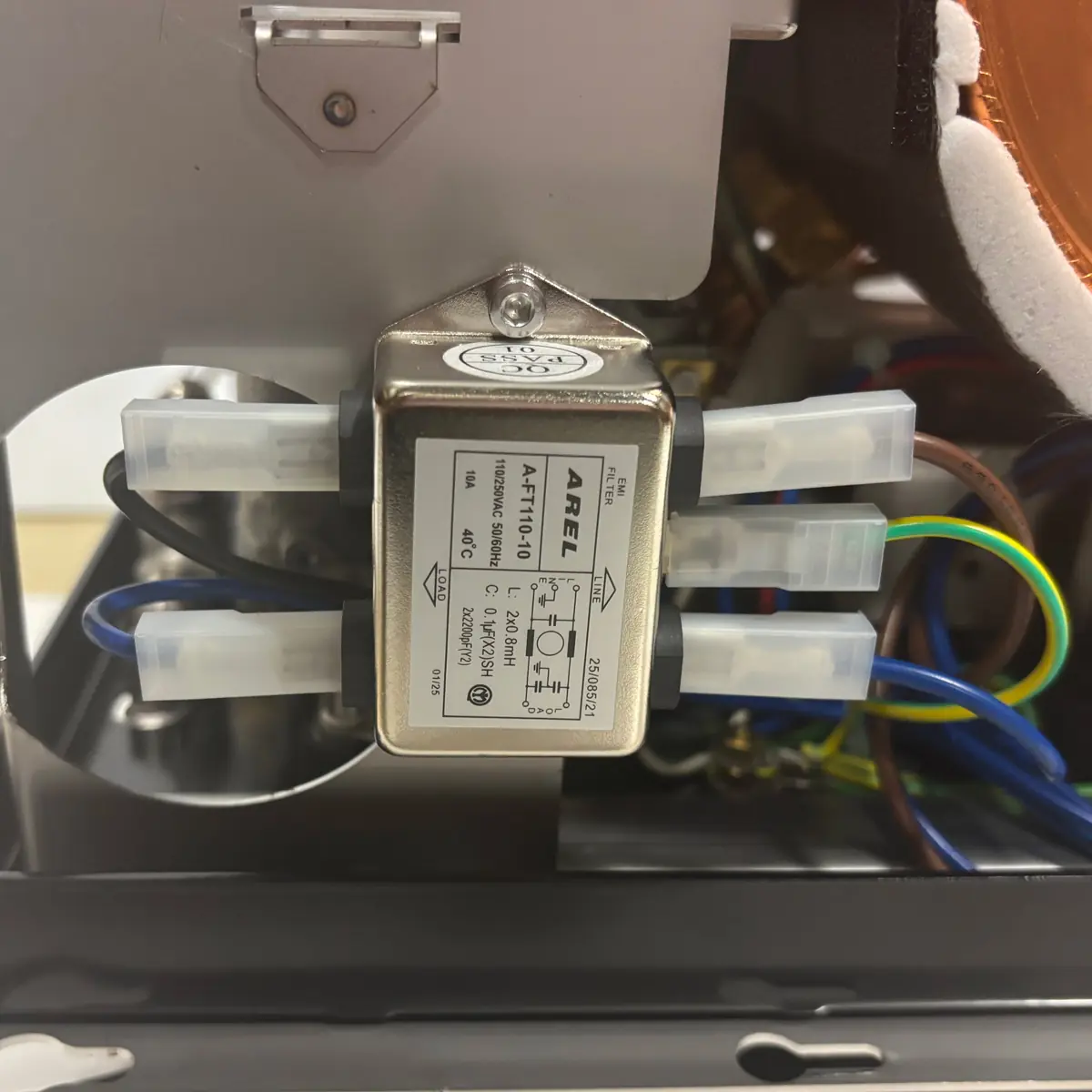
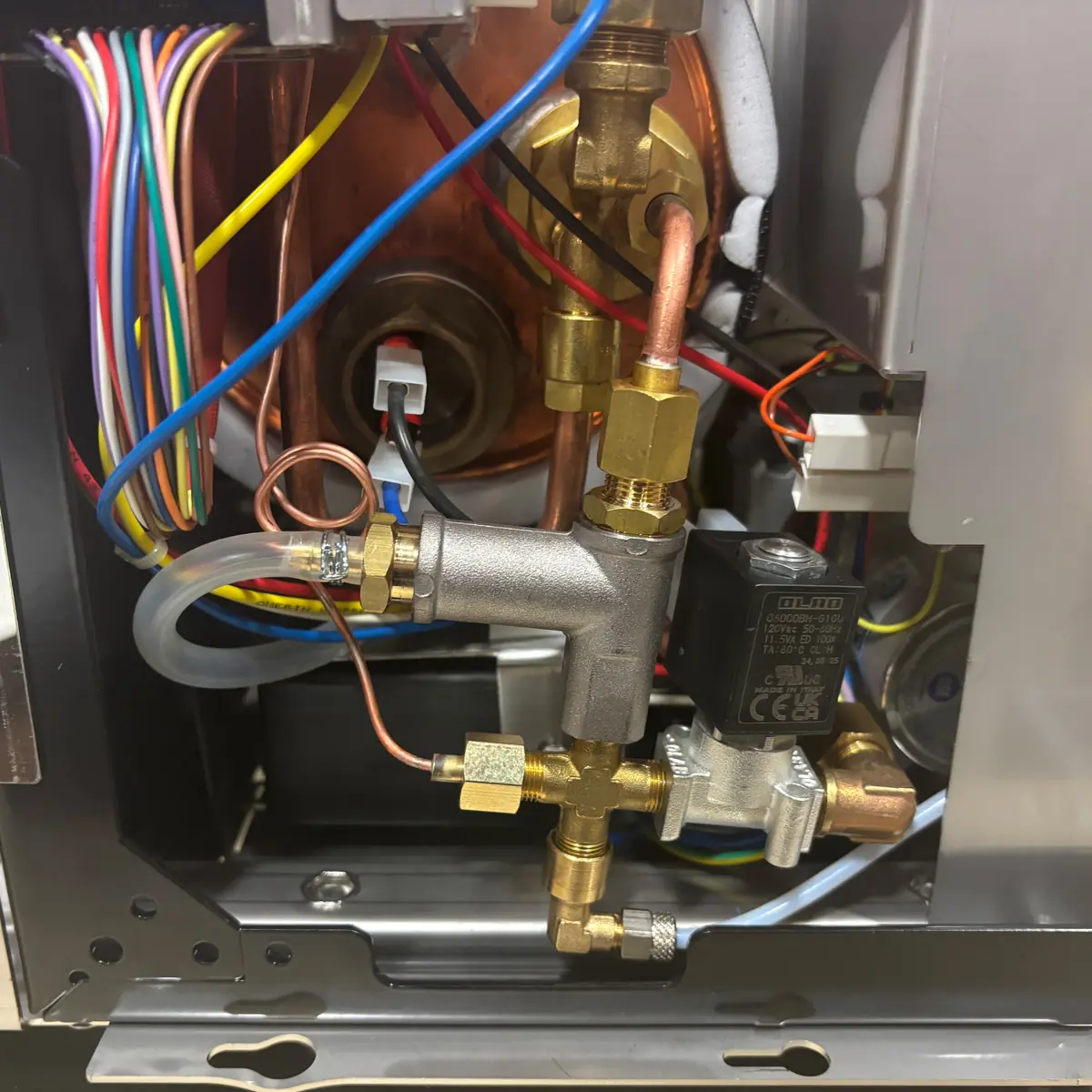
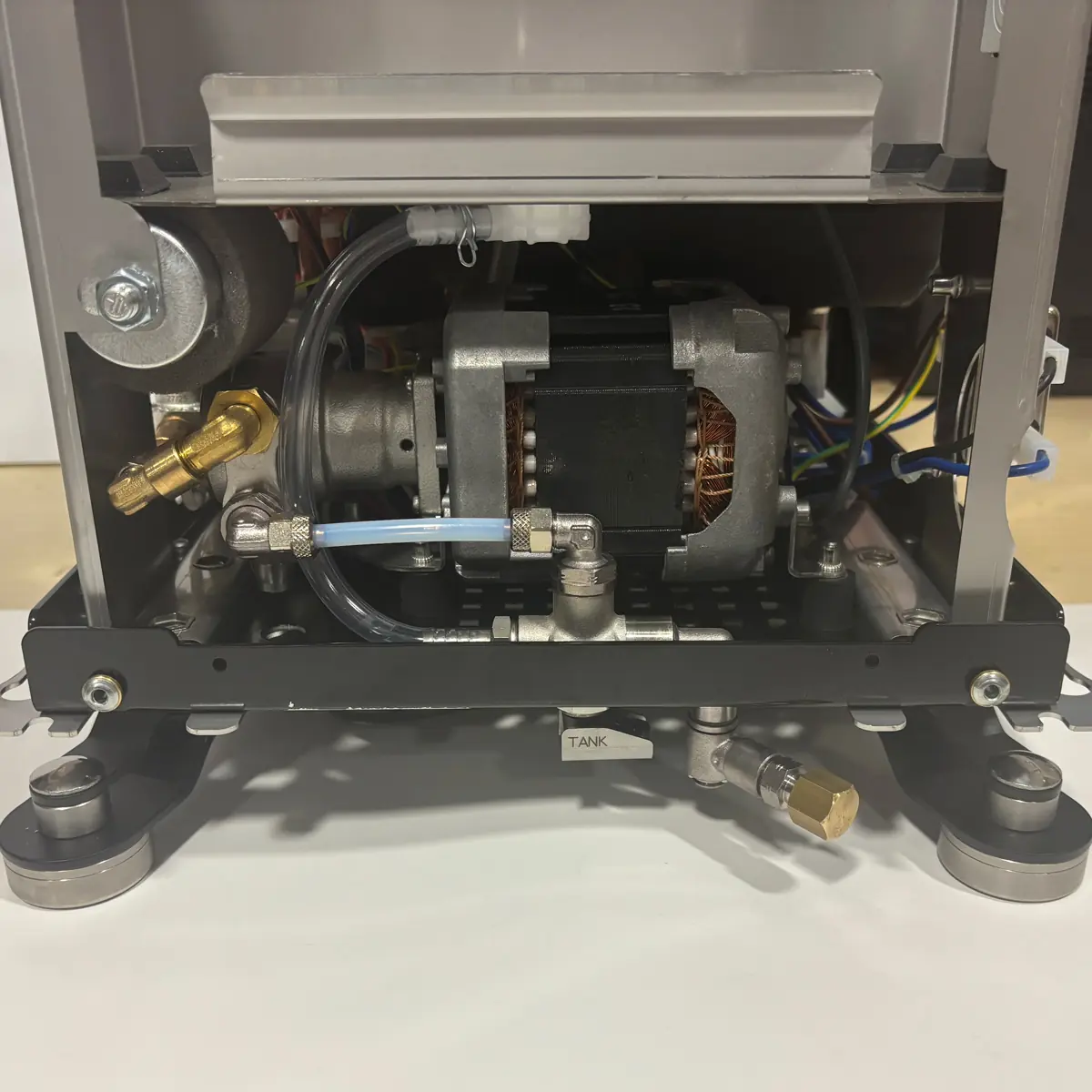
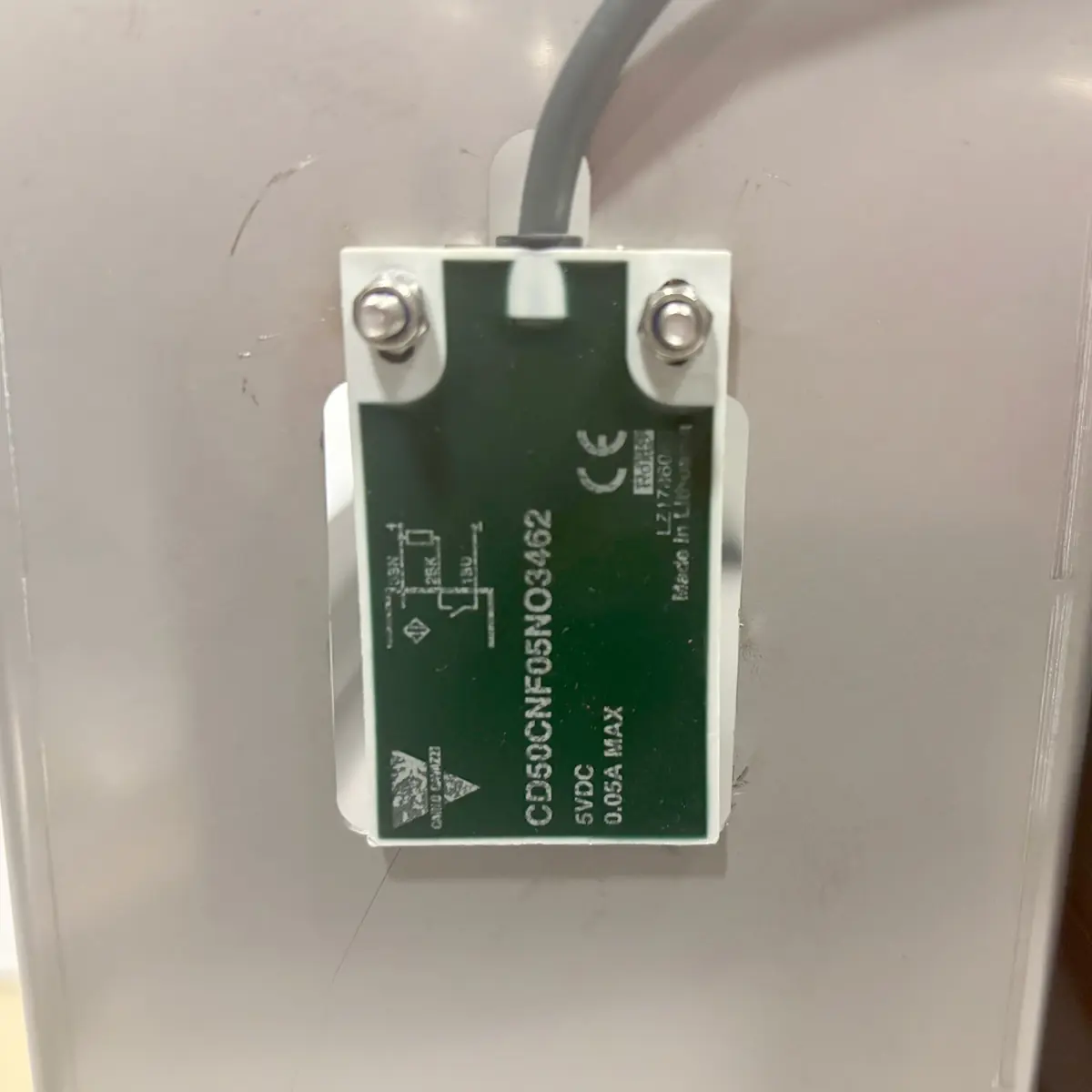
Below are pictures of the inside for your reference.
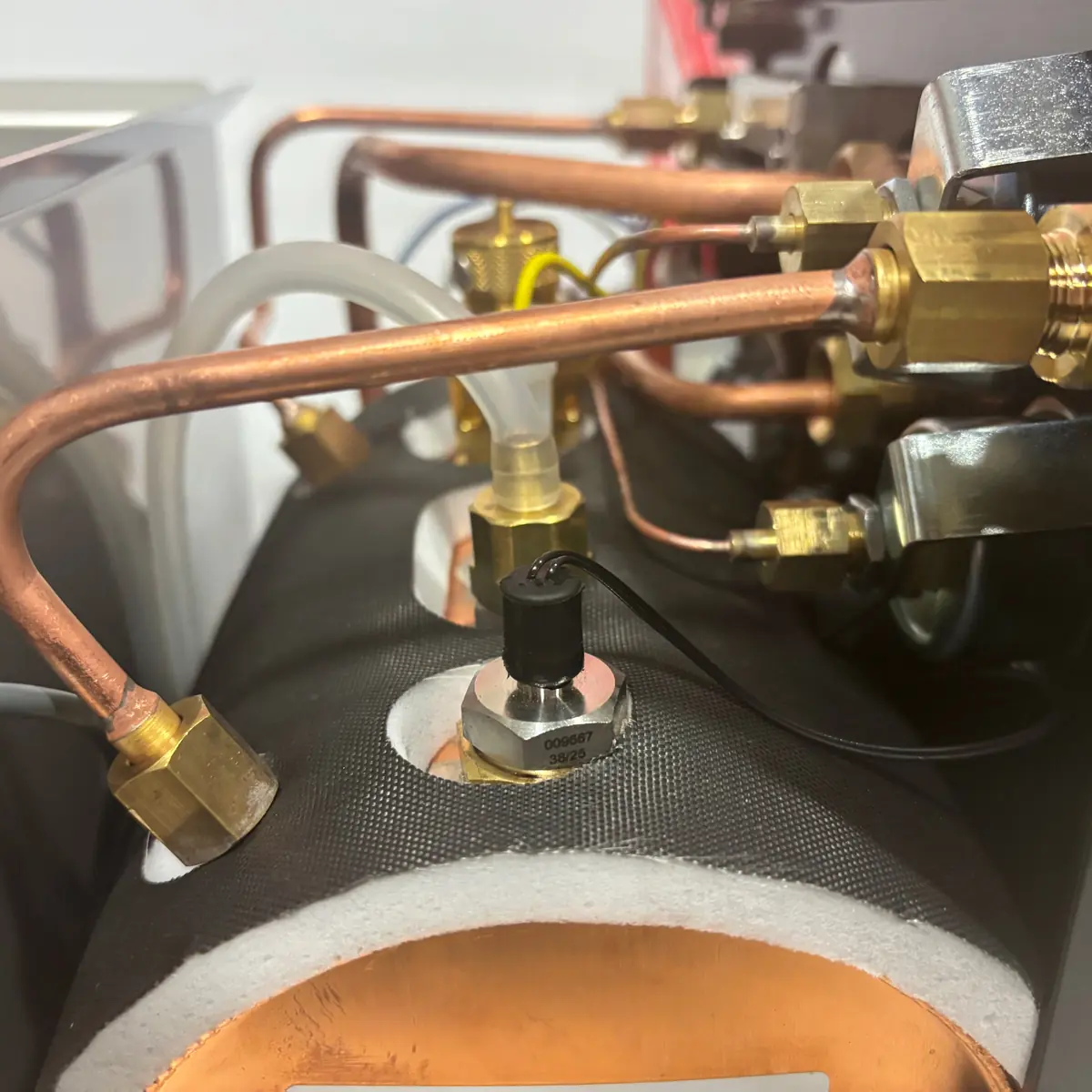
Close-up of copper pipes, brass fittings, and a black sensor attached to a cylindrical, insulated metal component, possibly part of industrial or HVAC equipment. White and clear tubes are also connected.
Close-up view of the internal components of a machine, showing copper pipes, wiring, and electrical parts inside a metal frame. The scene highlights the complex engineering of the device.
Close-up of electrical wiring inside a metallic appliance, showing blue, green-yellow, and brown wires connected to white plastic connectors, with mechanical components partially visible in the background.
Close-up view of the internal components of a machine, showing copper pipes, brass fittings, wires, and tubes connected to a black insulated part and circuit board, likely part of an espresso machine or similar appliance.
Close-up of an electrical component labeled “AREE AF1T51110C” with wires connected to its terminals, inside a machine with visible colored wiring in the background.
Close-up view of the internal components of a machine, showing colorful wires, copper tubing, brass fittings, a solenoid valve, and various connectors arranged within a metallic enclosure.
The image shows the internal components of a machine, featuring a motor, wires, tubes, and metal fittings. The machine is elevated on four legs, and a label reading TANK is visible near the bottom center.
Close-up of a green electronic sensor or module labeled CDS5CNFE0503462, attached to a white surface with two screws. A black cable is connected at the top, and technical specifications are visible.

Leave a Reply

This site uses Akismet to reduce spam. Learn how your comment data is processed.

;