3 Way Solenoid Valve Cleaning / Changing – Rancilio Silvia

Disclaimer: The technical statements, support, information and recommendations contained herein are believed to be accurate as of the date hereof, but 1st-line Equipment, LLC does not make representations or warranties, express or implied, as to its accuracy, its completeness, or the results to be obtained. The information is being provided for informational purposes only and is intended for use by persons having adequate skill and expertise regarding the proper selection, use and application of the products and recommendations and at their own risk and discretion.

1st-line Equipment, LLC is not responsible for any injury or damages from such information. Please note that parts are available for purchase from 1st-line Equipment, LLC self service parts portal. These parts do not include any technical support. If you're unfamiliar with the technical aspects of repairing equipment, please contact a professional for proper evaluation.

By continuing to read further, you agree to abide by all the terms and conditions on this website. If you disagree, please leave our website.

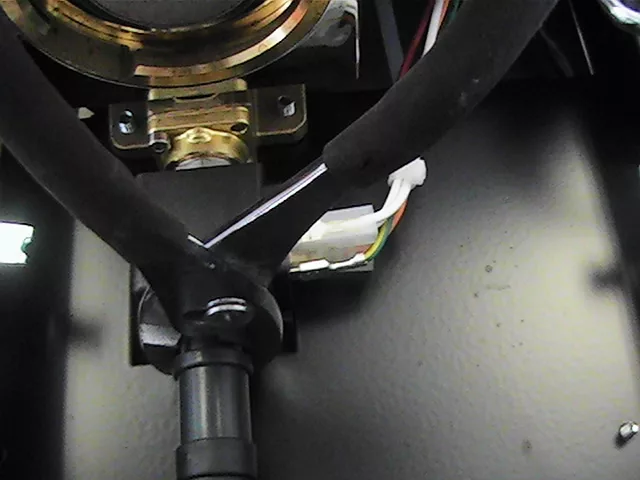
Close-up of an electrical component with wires, mounted against a black metal surface inside a Rancilio Silvia machine. The component includes a brass fitting and various connectors, essential for adjusting OPV and fine-tuning performance. © 2025 1st-line.com

Remove the front cover below the grouphead (see detailed instructions).

Close-up of mechanical components and wiring in a Rancilio Silvia espresso machine, including black tubing, a brass fitting, and colored electrical wires connected to a white plastic connector—ideal for OPV adjustment. © 2025 1st-line.com

With pliers, loosen the spout under the 3 way valve starting from the right side and moving pliers to the left. Once loosened, remove them by hand.

Close-up of an electrical component with wires attached, mounted on a black metal surface—typical of espresso machines like the Rancilio Silvia. The component features a black casing, hex nut, and brass-colored part, often seen during OPV adjustment. © 2025 1st-line.com

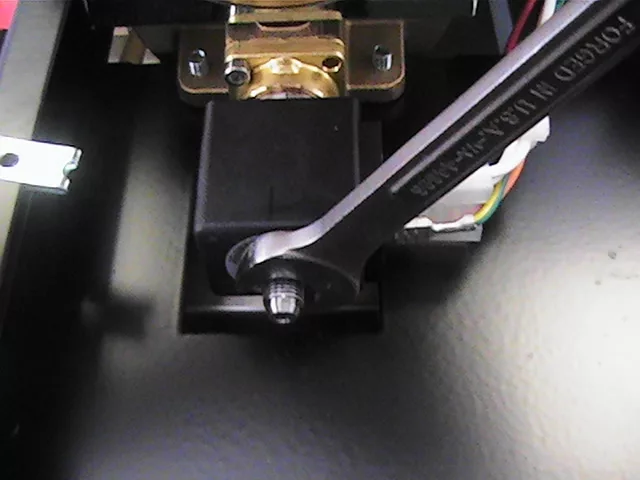
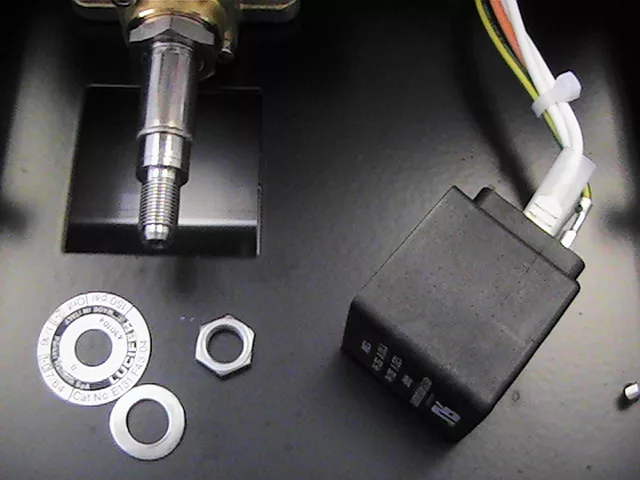
With a 14mm (or 9/16″) open end wrench, loosen the nut below the black box starting from the right side and moving the wrench to the left. Once loosened, remove the nut by hand. Two small washers will come out – first the unlevel one and then the very flat one.

A wrench is tightening a nut on a black component of a Rancilio Silvia espresso machine, with wires connected nearby and a brass fitting mounted above, all on a dark surface, likely during an OPV adjustment. © 2025 1st-line.com
A close-up of a wrench tightening a hex nut on a black component of a Rancilio Silvia espresso machine, with wires connected to a nearby plug and a brass fitting above, all mounted on a metallic surface, suggesting an OPV adjustment in progress. © 2025 1st-line.com
Close-up of electrical components, including a metal shaft, black relay switch, nut, washers, and multicolored wires secured with a zip tie—commonly seen during OPV adjustment on a Rancilio Silvia espresso machine. © 2025 1st-line.com

Slide the black box down the shaft. This can be a little difficult to pull down due to the wires.

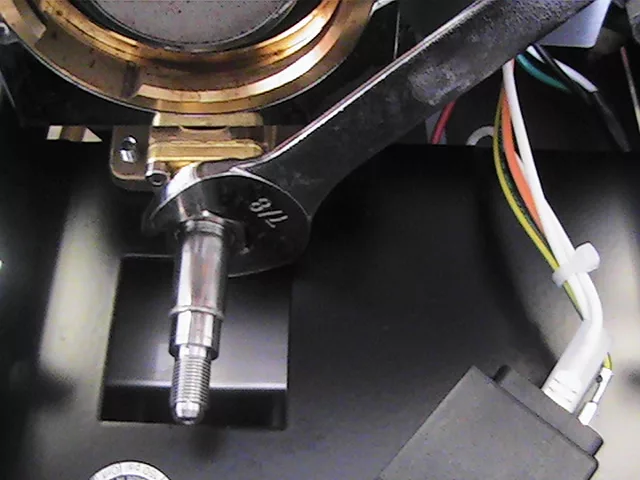
A close-up of a 7/8 inch wrench on a metal bolt during an OPV adjustment, with wires and mechanical parts from a Rancilio Silvia espresso machine visible in the background. © 2025 1st-line.com

The shaft is part of the big nut attached to the brass. With a 22mm (or 7/8″) wrench on the nut below the brass, loosen the nut and shaft starting from the right side and moving the wrench to the left. The shaft is on VERY tight.

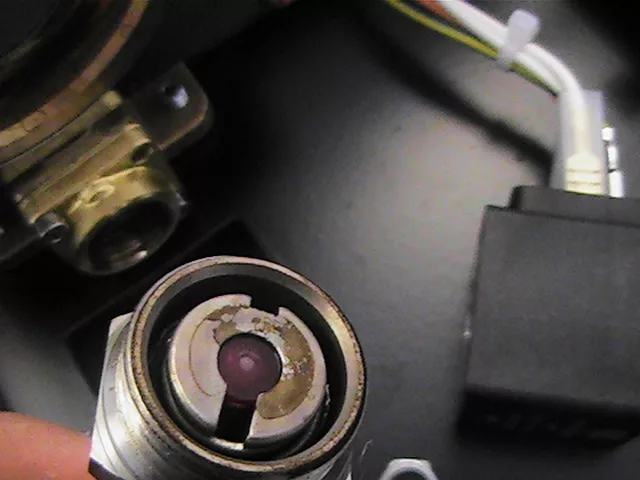
A close-up of a dirty or corroded sensor or connector in a Rancilio Silvia espresso machine, with wires and electronic components in the background, showing visible rust or residue on the metal surface. © 2025 1st-line.com

When the shaft is removed, there is a piston inside. If it does not spring out, use a small flathead screwdriver to try to pry it out from the outside perimeter outside of the red ruby.

A close-up of a persons hand holding a spark plug near an espresso machines engine component with attached wires and a black connector. The background shows metal parts of the Rancilio Silvia and a loose hex nut, possibly during OPV adjustment. © 2025 1st-line.com

If the piston was stuck, you will need to clean the inside of the shaft and make sure there are no rough surfaces. Lubricate with a little or every small film of olive oil on the inner wall of the shaft. Place the piston back in and test by pushing it in with your finger about 10-15 times and allowing to pop out. Everytime it pops out, rotate the piston 1/8th turn to make sure the piston pops out from all positions.

A close-up of a hand holding a metal fitting, with a spring-loaded valve component, electrical wires, and other mechanical parts from an espresso machine like the Rancilio Silvia visible—perfect for OPV adjustment—on a dark surface. © 2025 1st-line.com

The previous picture has the piston in the up position. This gets re-assembled back into the brass. The picture above shows the inside wall of the shaft with the piston removed.

Please note the above information is subject to copyright. It cannot be published by any means without the expressed written consent of 1st-line Equipment, LLC.