Accessing the inside – Cuadra

Disclaimer: The technical statements, support, information and recommendations contained herein are believed to be accurate as of the date hereof, but 1st-line Equipment, LLC does not make representations or warranties, express or implied, as to its accuracy, its completeness, or the results to be obtained. The information is being provided for informational purposes only and is intended for use by persons having adequate skill and expertise regarding the proper selection, use and application of the products and recommendations and at their own risk and discretion.

1st-line Equipment, LLC is not responsible for any injury or damages from such information. Please note that parts are available for purchase from 1st-line Equipment, LLC self service parts portal. These parts do not include any technical support. If you're unfamiliar with the technical aspects of repairing equipment, please contact a professional for proper evaluation.

By continuing to read further, you agree to abide by all the terms and conditions on this website. If you disagree, please leave our website.

Close-up of a shiny chrome Cuadra espresso machine with a black lever switch, perforated drip tray, and an Italian flag sticker labeled made in Italy. Reflections appear on the metal surface, hinting at accessing the inside for maintenance. © 2025 1st-line.com

Power off your machine and let it cool for at least an hour or 2.

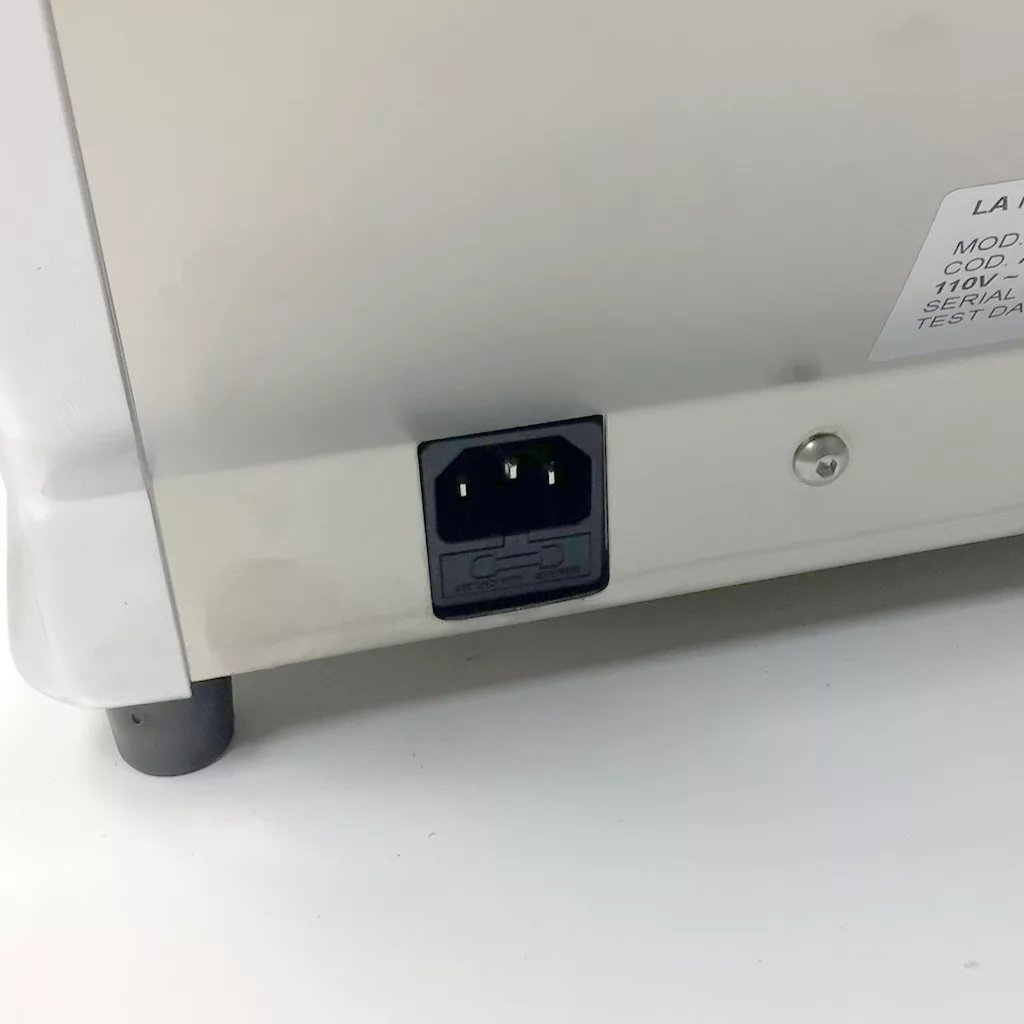
Close-up of the back of a Cuadra electronic device showing a three-prong power connector socket and part of a product label, with a white and gray casing, black foot, and hints for accessing the inside. © 2025 1st-line.com

Unplug the power cord from both the outlet and the machine.

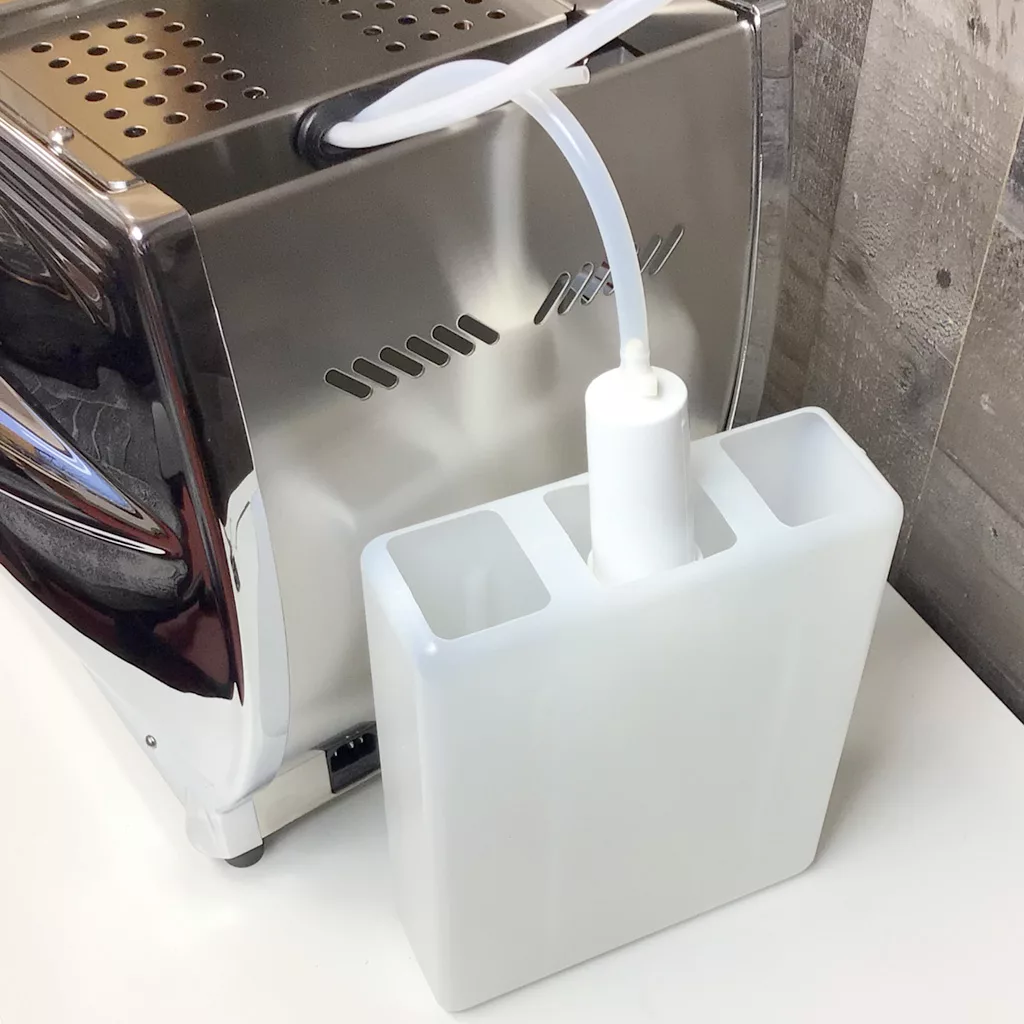
A white plastic water tank with attached tubing is connected to the back of a stainless steel Cuadra espresso machine, sitting on a white countertop near a gray wall, with easy access for accessing the inside. © 2025 1st-line.com

Remove the drip tray, top cover, and water tank.

A Cuadra stainless steel machine with a perforated metal top panel, shown partially open for accessing the inside. Four red arrows highlight screws at each corner, while white tubes and a dark interior are visible within the machine. © 2025 1st-line.com

On the top, there are 4 Allen key screws (usually 2.5 mm). This holds the top inside panel and the side panels.

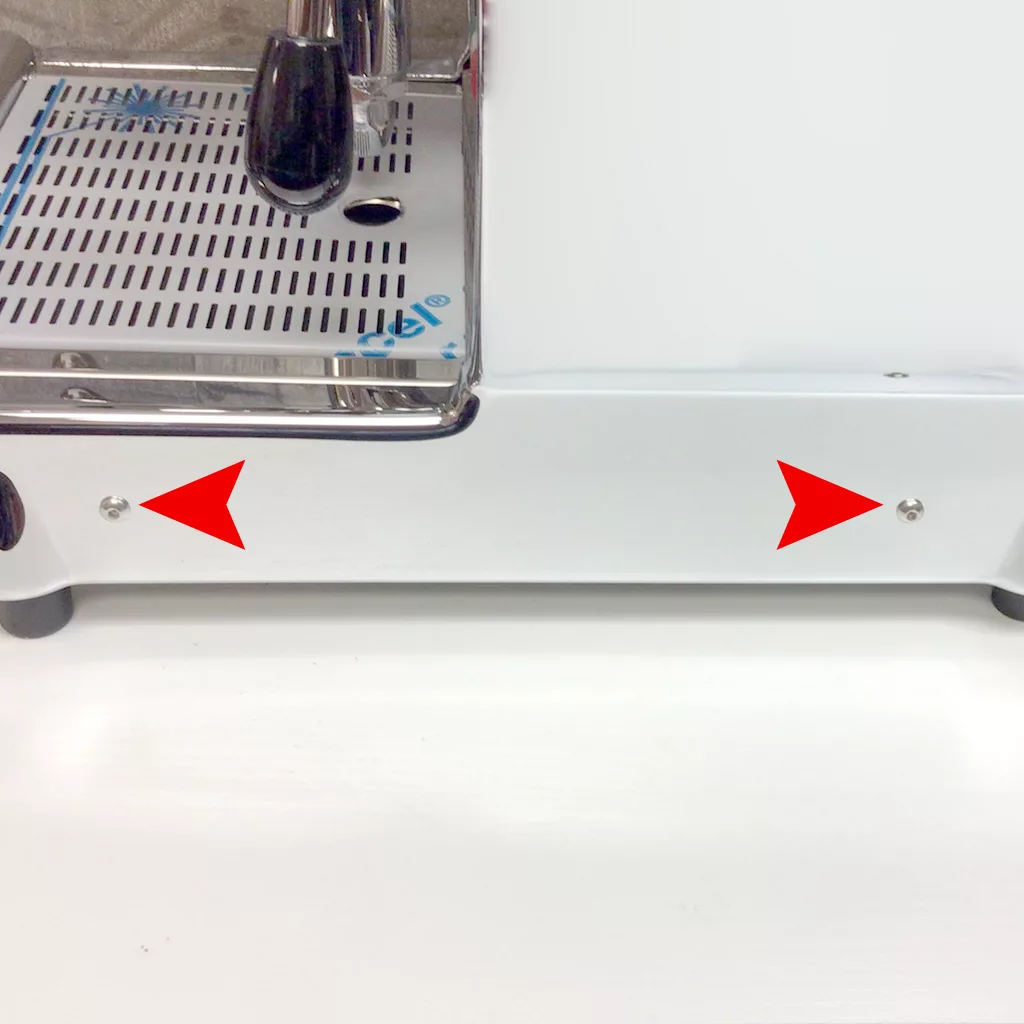
A close-up of the bottom front panel of a coffee machine inside Cuadra, with two red arrows pointing to screws on each side. © 2025 1st-line.com

On the side of each side panel, there are 2 Allen key screws (usually 2.5 mm).

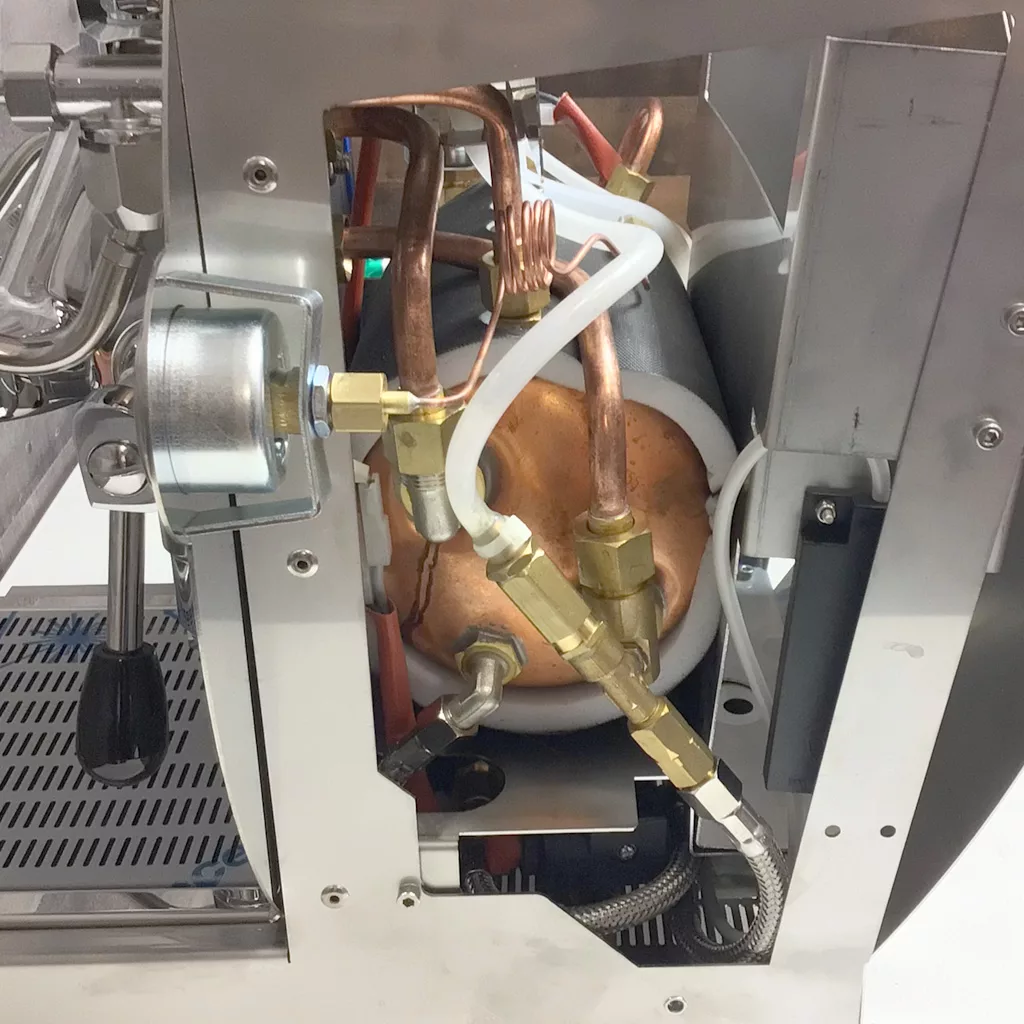
Close-up of the internal components of a Cuadra espresso machine, showing copper pipes, a boiler, brass fittings, and various connecting tubes and wires inside a metallic housing after accessing the inside. © 2025 1st-line.com

Once the panels are removed you will have side access to the inside. On the right side, you can access the pressure gauge.

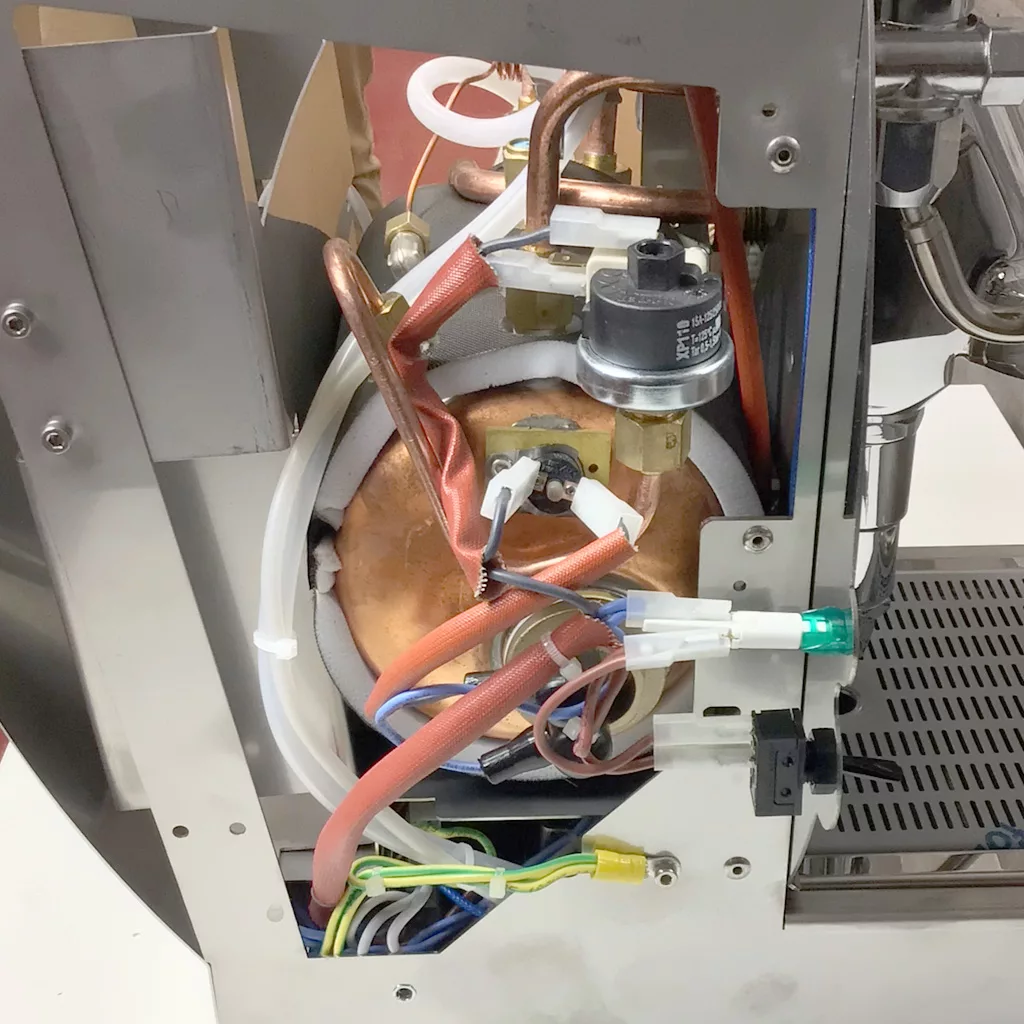
The image shows the internal components of a Cuadra espresso machine, including copper tubes, wires, a pressure valve, and a large cylindrical boiler, all visible when accessing the inside through its metallic frame. © 2025 1st-line.com

On the left side, you can access the pressurestat, safety thermostat reset, heating element, indicator light, & power switch.

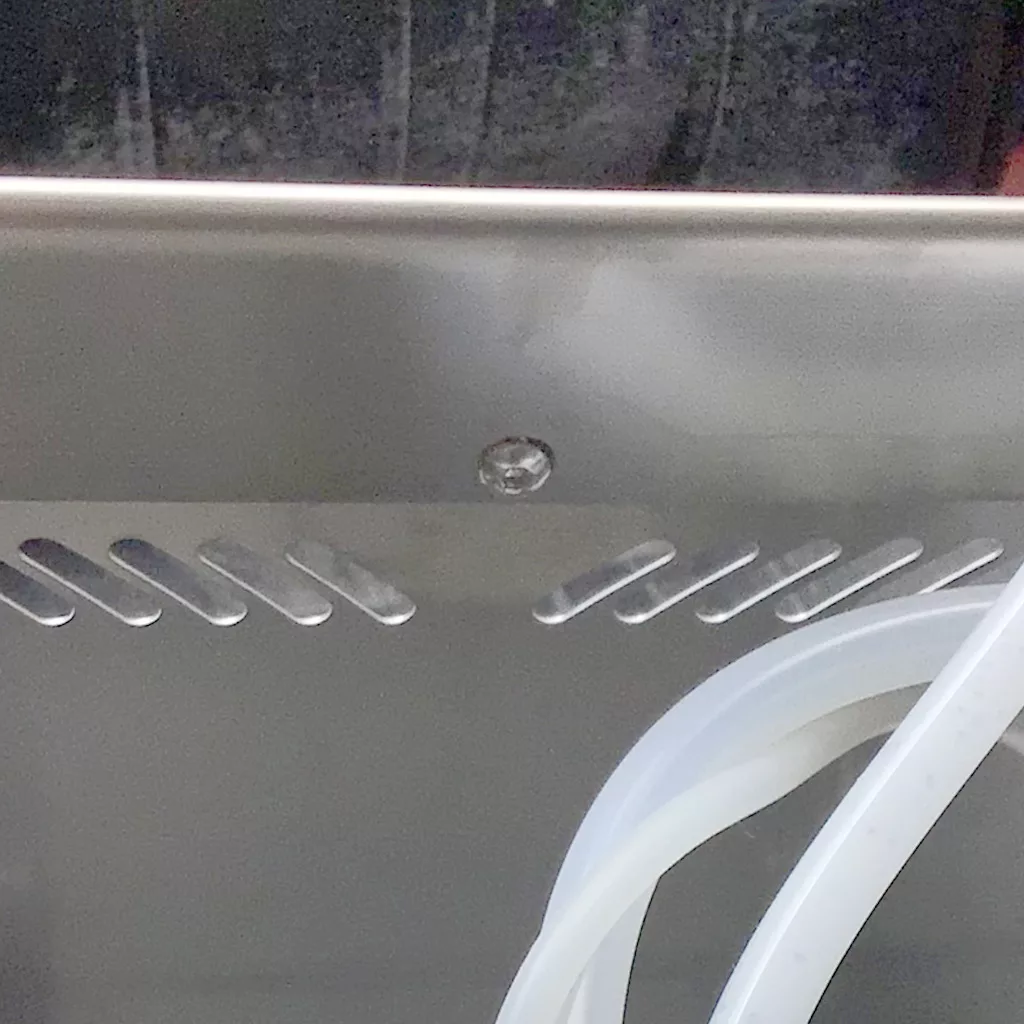
A close-up of a Cuadra metallic surface with diagonal slits, a small screw, and translucent flexible tubing coiled at the bottom right corner, hinting at accessing the inside. The background appears slightly blurry and dark. © 2025 1st-line.com

To remove the back panel, there are 2 screws to remove. One is near the top of where the water tank sits.

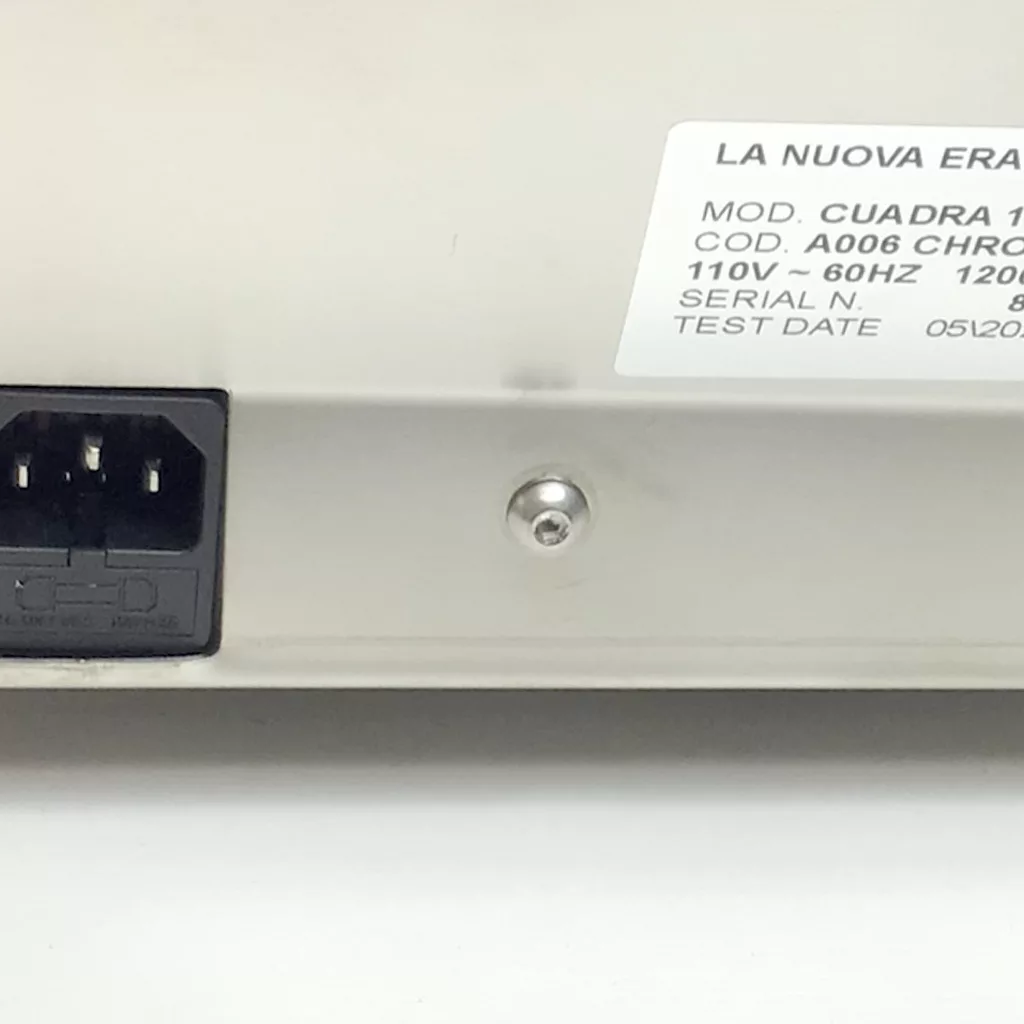
Close-up of a Cuadra device’s back panel, highlighting access points for accessing the inside, including a power connector, metal screw, and a white label with LA NUOVA ERA CUADRA 1 model information such as voltage and serial number. © 2025 1st-line.com

The other is near where the power cord is plugged in.

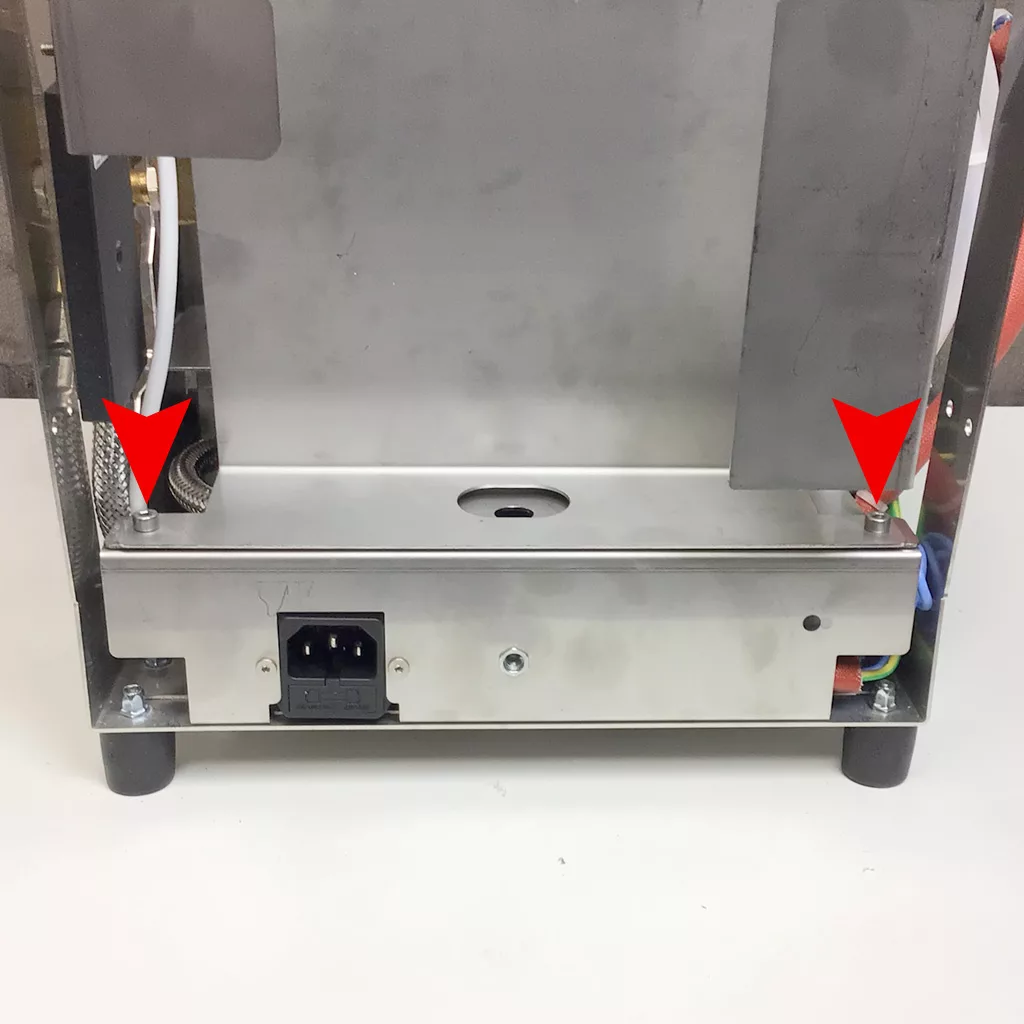
Rear view of a Cuadra metal appliance with two red arrows pointing to screws on either side of a panel, indicating where to unscrew for accessing the inside. An electrical socket and cables are visible at the bottom. © 2025 1st-line.com

To remove the inside back panel, there are 2 Allen key screws on the bottom inside.

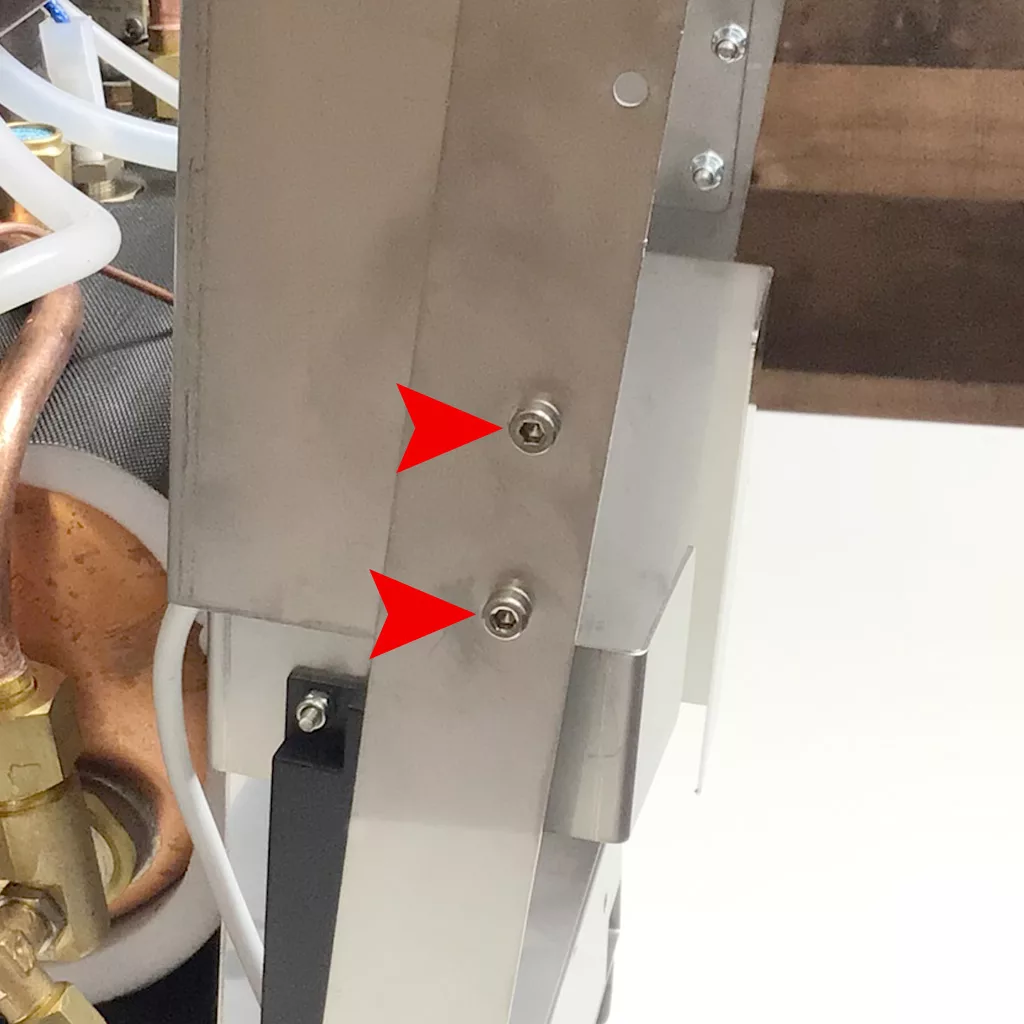
Close-up of a Cuadra metal panel with two red arrows pointing at screws, indicating points for accessing the inside. Copper and plastic tubing, along with other mechanical components, are partially visible in the background. © 2025 1st-line.com

There are also 2 Allen key screws on each side of the inside frame.

The image shows the inner components of a Cuadra espresso machine with exposed pipes, wires, and a large insulated metal boiler. A red arrow points to a panel near the bottom center, highlighting where accessing the inside is possible. © 2025 1st-line.com

This will give you back access to the boiler. To remove the inside bottom plate there are 2 more screws to remove.

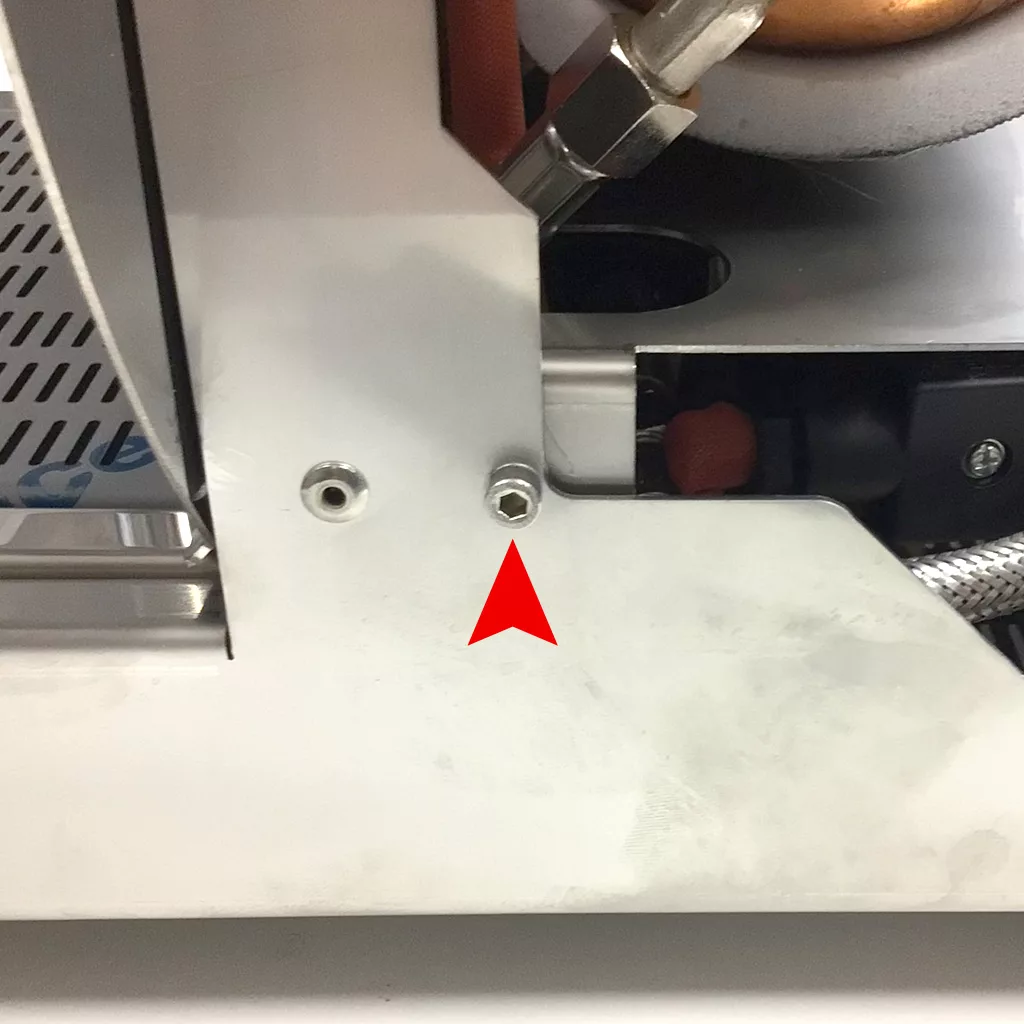
A red arrow points to a hexagonal bolt on a metallic Cuadra machine surface, indicating the part for accessing the inside. © 2025 1st-line.com

This is the screw on the right side.

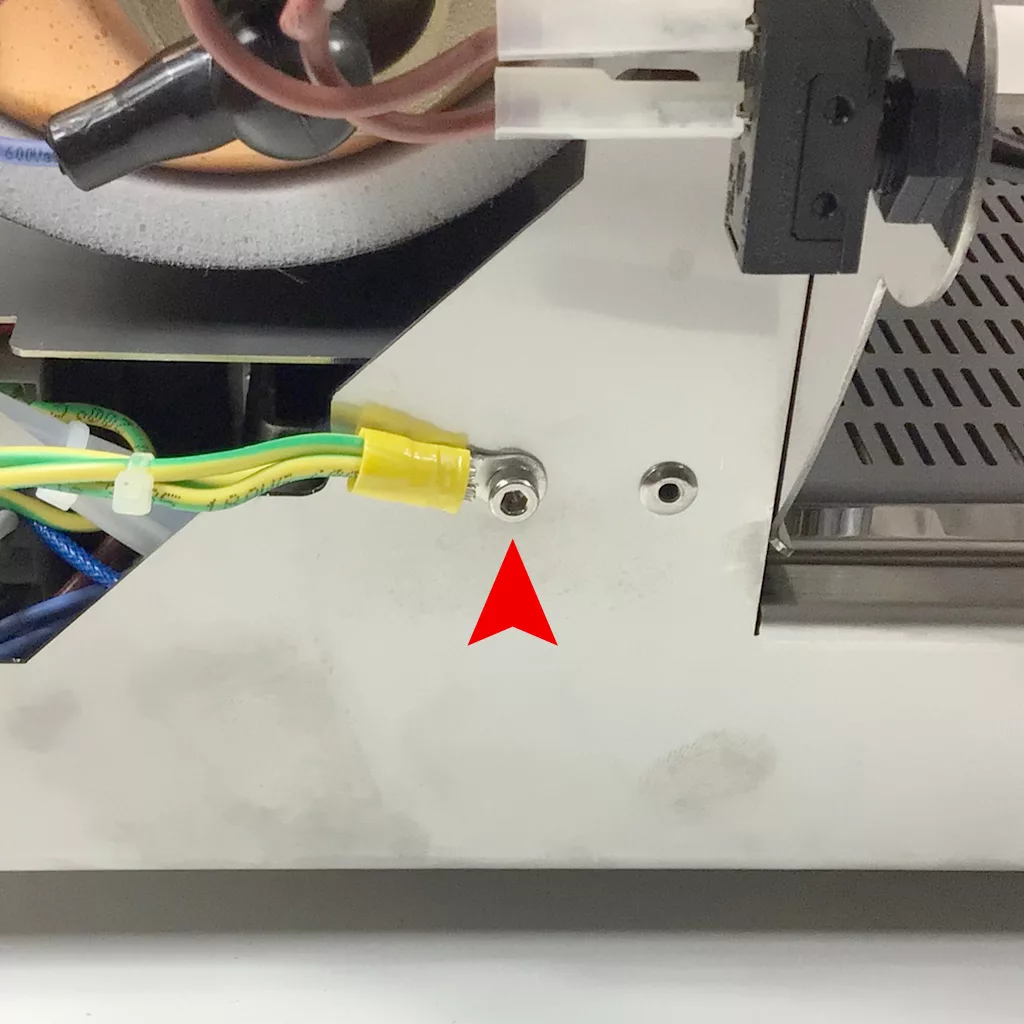
Close-up of a Cuadra metal device with wires attached and a red arrow pointing to a small metal screw or connector on a white panel, indicating where accessing the inside may be required. © 2025 1st-line.com

The screw on the left side is connected to a wire.

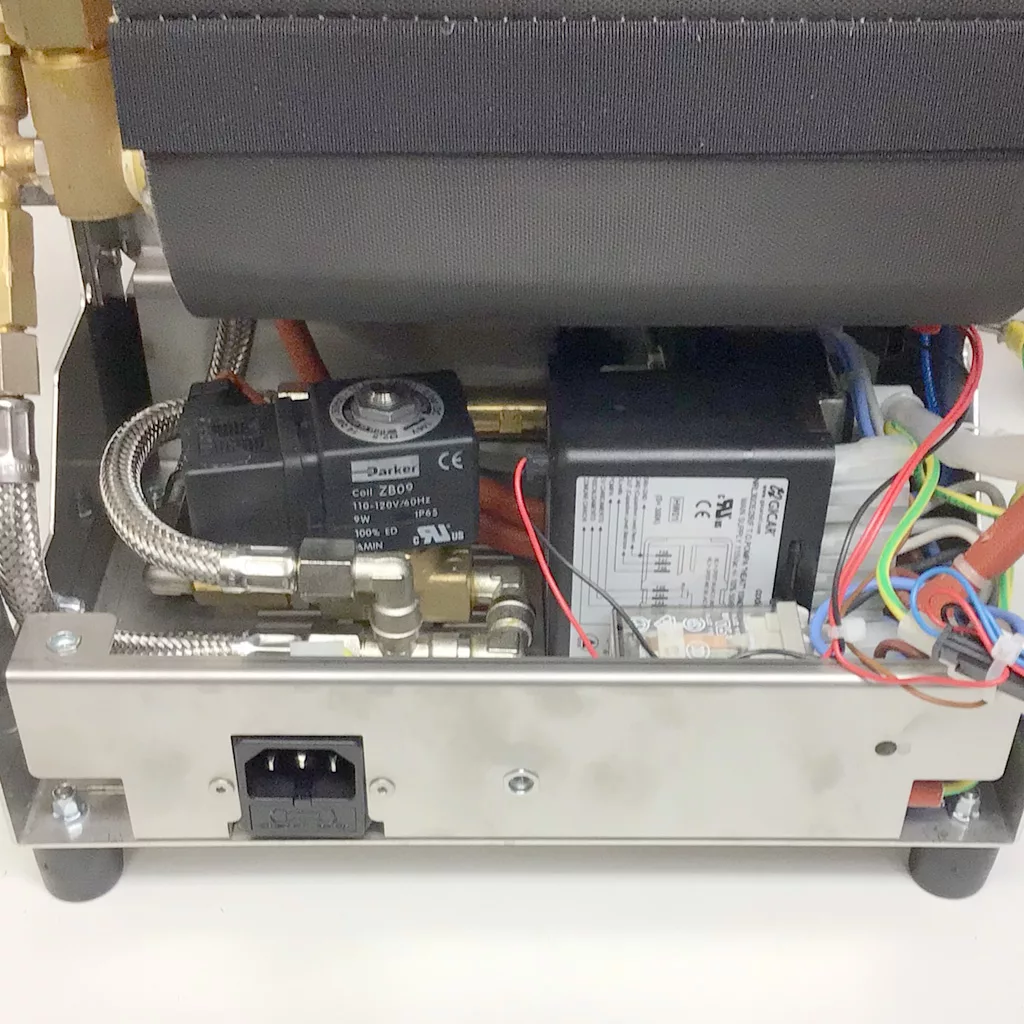
Accessing the inside of the Cuadra, the image reveals internal components such as electrical wiring, switches, a solenoid valve, metal pipes, and a visible power input socket on a metallic base. © 2025 1st-line.com

Once the inside bottom plate is removed, you will have access to the pump, brain unit, solenoid valve, & relay.

Please note the above information is subject to copyright. It cannot be published by any means without the expressed written consent of 1st-line Equipment, LLC.