Steam Valve Fix – Ascaso Steel Uno PID Version 4 With Wood Handle

Disclaimer: The technical statements, support, information and recommendations contained herein are believed to be accurate as of the date hereof, but 1st-line Equipment, LLC does not make representations or warranties, express or implied, as to its accuracy, its completeness, or the results to be obtained. The information is being provided for informational purposes only and is intended for use by persons having adequate skill and expertise regarding the proper selection, use and application of the products and recommendations and at their own risk and discretion.

1st-line Equipment, LLC is not responsible for any injury or damages from such information. Please note that parts are available for purchase from 1st-line Equipment, LLC self service parts portal. These parts do not include any technical support. If you're unfamiliar with the technical aspects of repairing equipment, please contact a professional for proper evaluation.

By continuing to read further, you agree to abide by all the terms and conditions on this website. If you disagree, please leave our website.
To make repairs on the steam valve or on the new 2017 Ascaso Steel Uno Professional espresso machines, it is easier to remove the entire assembly.

Please make sure the unit is cold and unplugged from the electrical outlet.

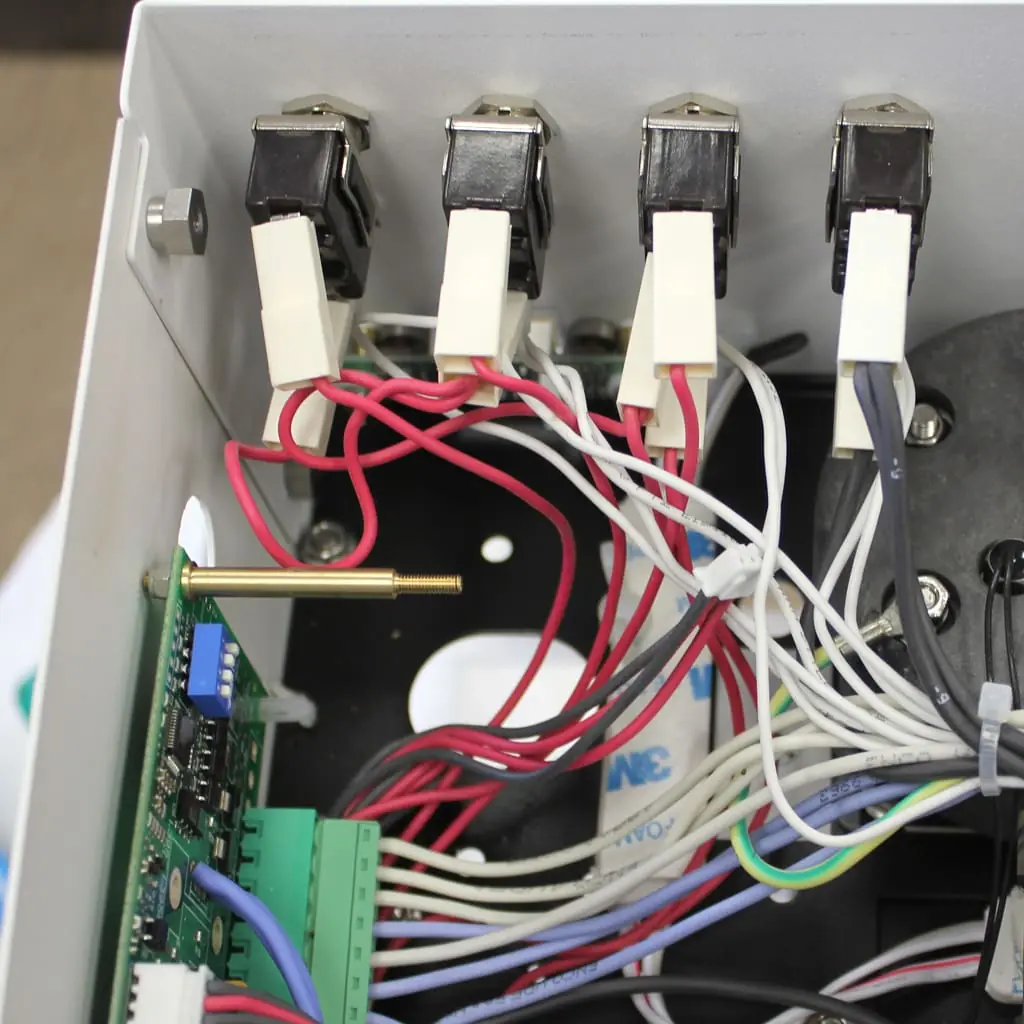
The top cover can be removed by removing the two top Phillips screws on the top rear corners facing forward. Lift the back up and pull out towards the rear. You will see two hooks on the top cover and two bolts that it latches onto on the inside body. There can be 2 wires attached for the active cup warmer. Just note a number on each set of connections 1 and 1/2 and 2, so you know how they go back together.

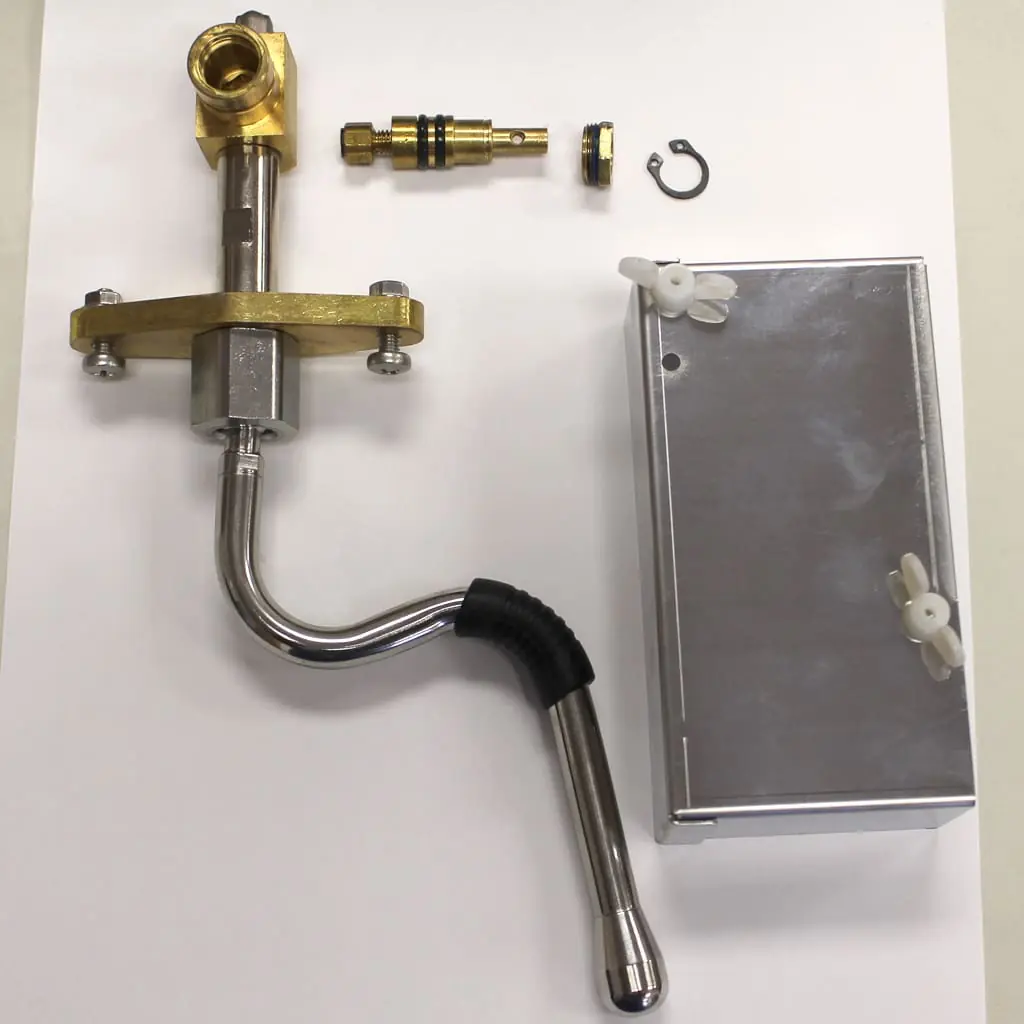
Various metal plumbing components, including a faucet, valve parts, a curved pipe, a metal box, and small hardware pieces, arranged neatly on a white background.

Rotate the steam knob until you see the Allen key screw. Remove the Allen key screw and make sure not to lose it because these are not easy replacements. Once removed, the wooden knob will need some force to be pulled out. A big flathead screwdriver , BUT very careful, as usually the wood will chip or damage. After removing the wood knob,

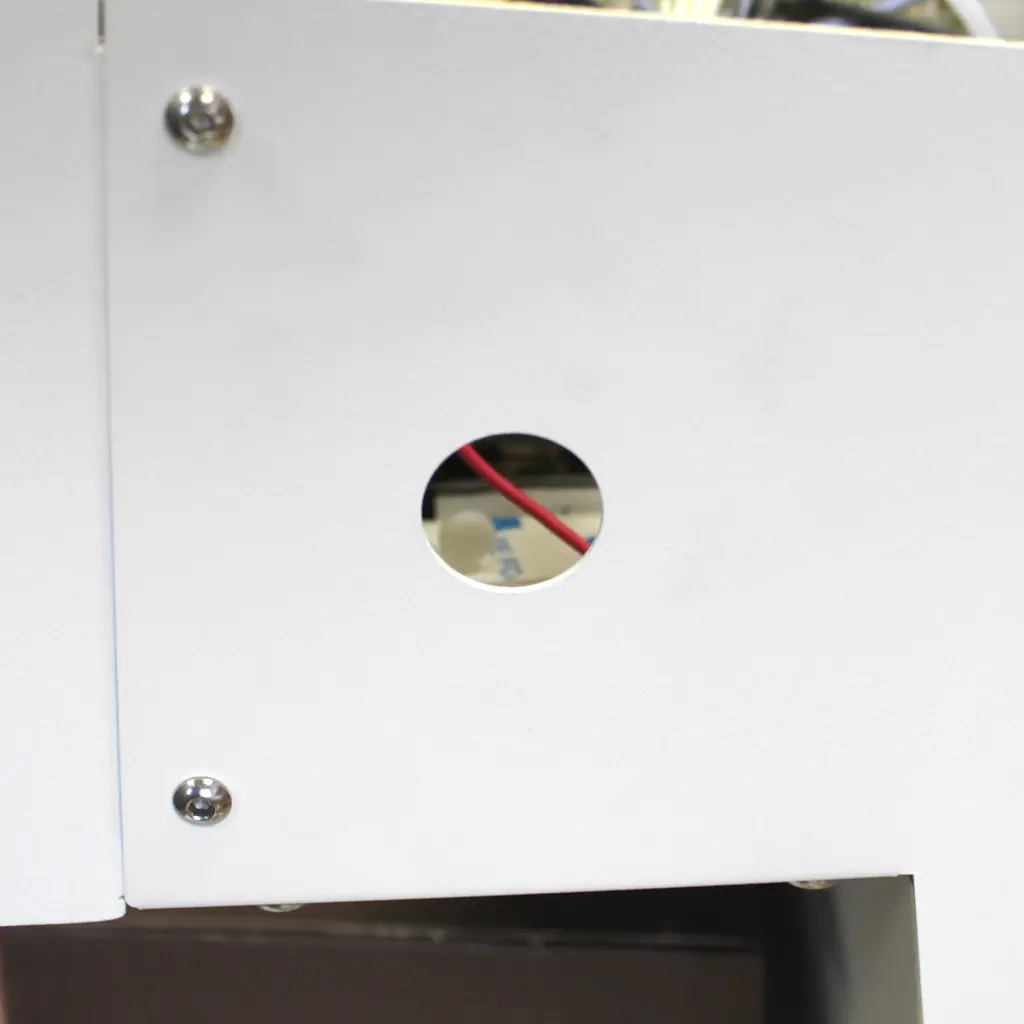
Close-up of a white metal surface with a circular hole in the center, revealing red wires and internal components inside. Four screws secure the metal panels at the corners.

The stainless cover for the electronics can be removed by hand-twisting the plastic wing nuts.

Where the above steam valve assembly sits in the base, there are two screws facing out towards the drip tray. The screws will need to be removed while holding each nut with your finger.

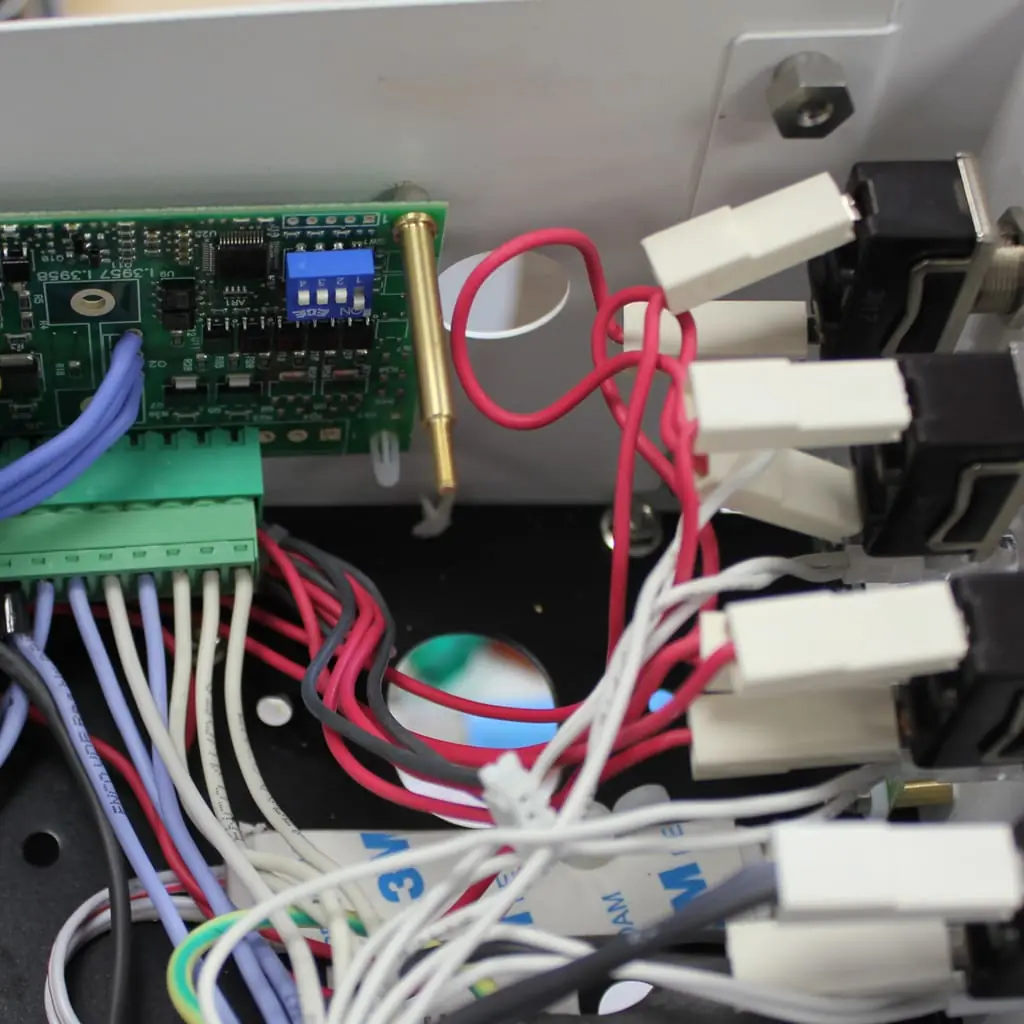
Close-up of an electronic circuit board with various colored wires connected to terminals and connectors inside a metal enclosure. Some wires are red, white, blue, and gray, and a green component is visible.

The get out the above steam valve assembly, the one connection to the front board needs to be removed, and then the assembly can be wiggled out.

In the first picture above, we have disassembled the valve from the stem and showed its components.

If the leak is through the knob stem, the 2 orings on the stem need to be changed.

If the leak is from the holes in the steam tip occurs, then the gasket at the end of the stem dislodged and needs to be reinserted or the gasket repalced on an older machine. The gasket can also be turned around into the stem. In addition, the stem has two components with threads. Sometimes, the one side loosens and it needs to be threaded back.

If the leak happens between the steam wand and bottom of the valve, then a gasket needs to be replaced.

Close-up of an open electronic device showing multiple red and white wires connected to four switches, a circuit board with green terminals, and various internal components.

Please note the above information is subject to copyright. It cannot be published by any means without the expressed written consent of 1st-line Equipment, LLC.