

Posts
Best Water for Espresso Machines: Complete Guide to Water Quality
Feb
Best Water for Espresso Machines: Complete Guide to Water Quality
Water quality is a crucial factor in brewing the perfect espresso, as it directly influences both the flavor and the longevity of espresso machines. Understanding the characteristics of water, such as hardness and mineral content, can help coffee enthusiasts make informed choices about their brewing process. This guide will explore the best water for espresso machines, focusing on the importance of water quality, how to choose the right water filter, and best practices for maintaining optimal water conditions. By addressing common issues related to water quality, this article aims to provide solutions that enhance espresso flavor and machine performance.
What Is Water Hardness and How Does It Affect Espresso Machines?
Water hardness refers to the concentration of dissolved minerals, primarily calcium and magnesium, in water. Hard water can lead to scale buildup in espresso machines, which can negatively impact their performance and lifespan. Understanding water hardness is essential for espresso preparation, as it affects not only the extraction process but also the overall taste of the coffee. Using water with the right hardness level can enhance the extraction of flavors, resulting in a more balanced and enjoyable espresso.
Which Minerals Contribute to Water Hardness in Espresso Preparation?
The primary minerals that contribute to water hardness are calcium and magnesium. These minerals play a vital role in the extraction process, as they help to stabilize the coffee’s flavor compounds. Calcium enhances the extraction of essential oils, while magnesium contributes to the overall mouthfeel of the espresso. However, excessive levels of these minerals can lead to undesirable flavors and scale buildup in the machine.
How Does Hard Water Cause Scale Buildup and Machine Damage?
Hard water causes scale buildup through the precipitation of calcium and magnesium salts when heated. This buildup can clog the internal components of espresso machines, leading to reduced efficiency and potential damage over time. Regular maintenance, including descaling, is necessary to prevent these issues and ensure the machine operates optimally. Understanding the impact of hard water on espresso machines is crucial for maintaining their longevity and performance.
This phenomenon of scale buildup is further detailed by research highlighting the chemical processes involved and common methods for mitigation.
Preventing Calcium Deposits & Softening Water for Espresso Machines
The first is the precipitation of calcium carbonate once its solubility limit is exceeded, and home Espresso machines produces intolerable deposits in the boiler and pipes. The second is the replacement of calcium and magnesium ions with sodium ions, which is the most common method for water softening.
Water quality for Espresso coffee, 2010
How to Choose the Right Water Filter for Your Espresso Machine
Selecting the appropriate water filter for your espresso machine is essential for maintaining water quality. Different filtration systems can effectively reduce hardness and improve the overall taste of the water used in espresso preparation. When choosing a filter, consider factors such as compatibility with your machine, the type of filtration technology, and the specific water quality issues you aim to address.
What Types of Water Filtration Are Effective for Espresso Machines?
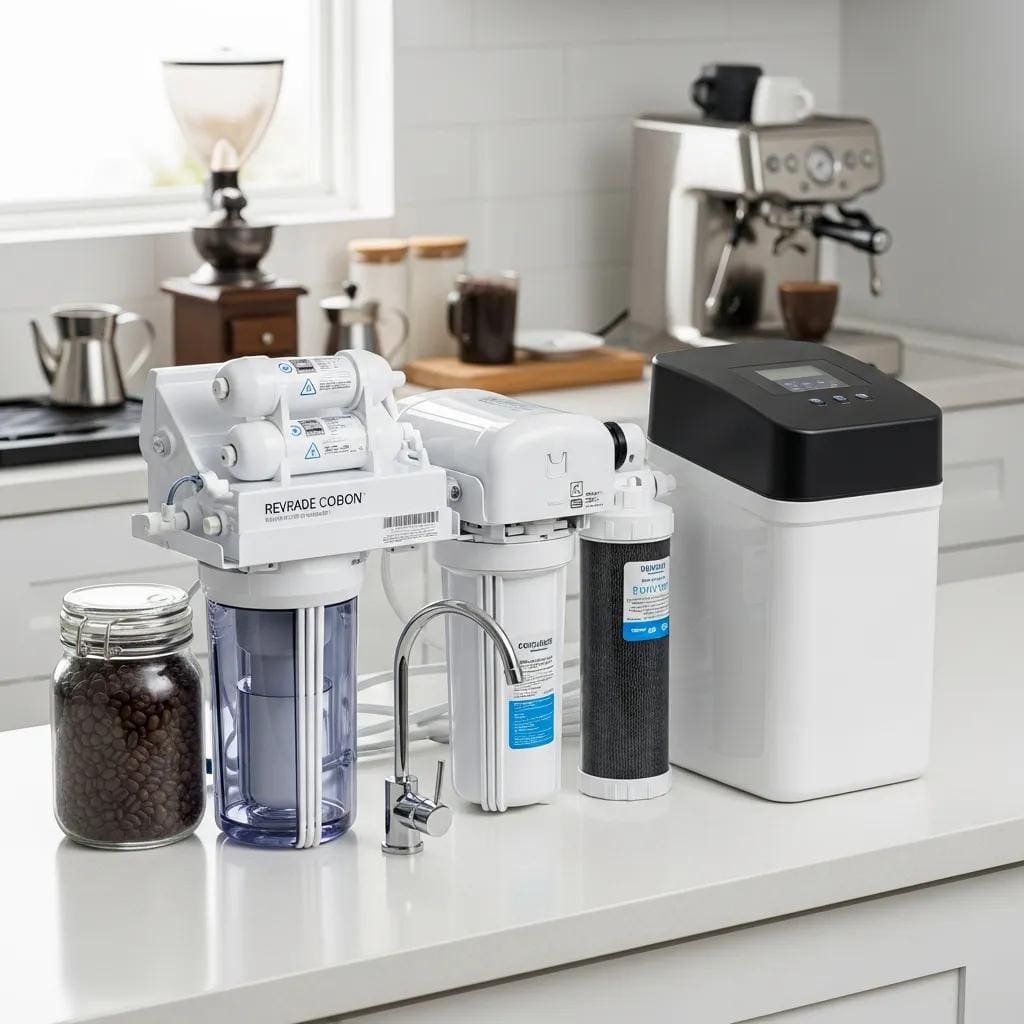
Several types of water filtration systems are effective for espresso machines, including:
- Reverse Osmosis (RO) Systems: These systems remove a wide range of impurities, including minerals, providing pure water that can be adjusted to the desired hardness level.
- Activated Carbon Filters: These filters effectively remove chlorine and other contaminants, improving the taste of the water without significantly altering its mineral content.
- Water Softener Systems: These systems specifically target hardness by exchanging calcium and magnesium ions with sodium ions, reducing scale buildup in machines.
For optimal results, consider using a combination of these filtration methods to achieve the best water quality for your espresso.
The effectiveness and performance of these various water filter technologies have been a subject of extensive evaluation and research.
Evaluating Espresso Water Filter Technologies
This thesis evaluates water filters in the Indian marketplace as part of a larger research and technology evaluation to investigate the utilization and performances of different water filter technologies, including an Expresso water filter.
Adapting Consumer Report’s product evaluation methods for particle removal, gravity non-electric and reverse osmosis water filters in the Indian marketplace, 2015
How to Assess Filter Compatibility and Lifespan for Espresso Equipment
When assessing filter compatibility, check the specifications of your espresso machine to ensure the filter fits properly. Additionally, consider the lifespan of the filter, which can vary based on water quality and usage frequency. Regularly monitoring the filter’s performance and replacing it as needed will help maintain optimal water quality and machine efficiency. Using high-quality filters, such as those offered by 1st-line Equipment, LLC, can significantly enhance your espresso experience.
What Are Best Practices for Maintaining Water Quality and Preventing Scale?
Maintaining water quality is essential for preventing scale buildup and ensuring the longevity of your espresso machine. Implementing best practices can help you achieve optimal water conditions for brewing.
How Often Should You Replace Water Filters and Perform Descaling?
It is recommended to replace water filters every 2-3 months, depending on usage and water quality. Regular descaling should be performed every 3-6 months to prevent scale buildup. Monitoring water hardness and adjusting your maintenance schedule accordingly can help prolong the life of your espresso machine.
What Testing Methods Monitor Water Hardness and pH Levels?
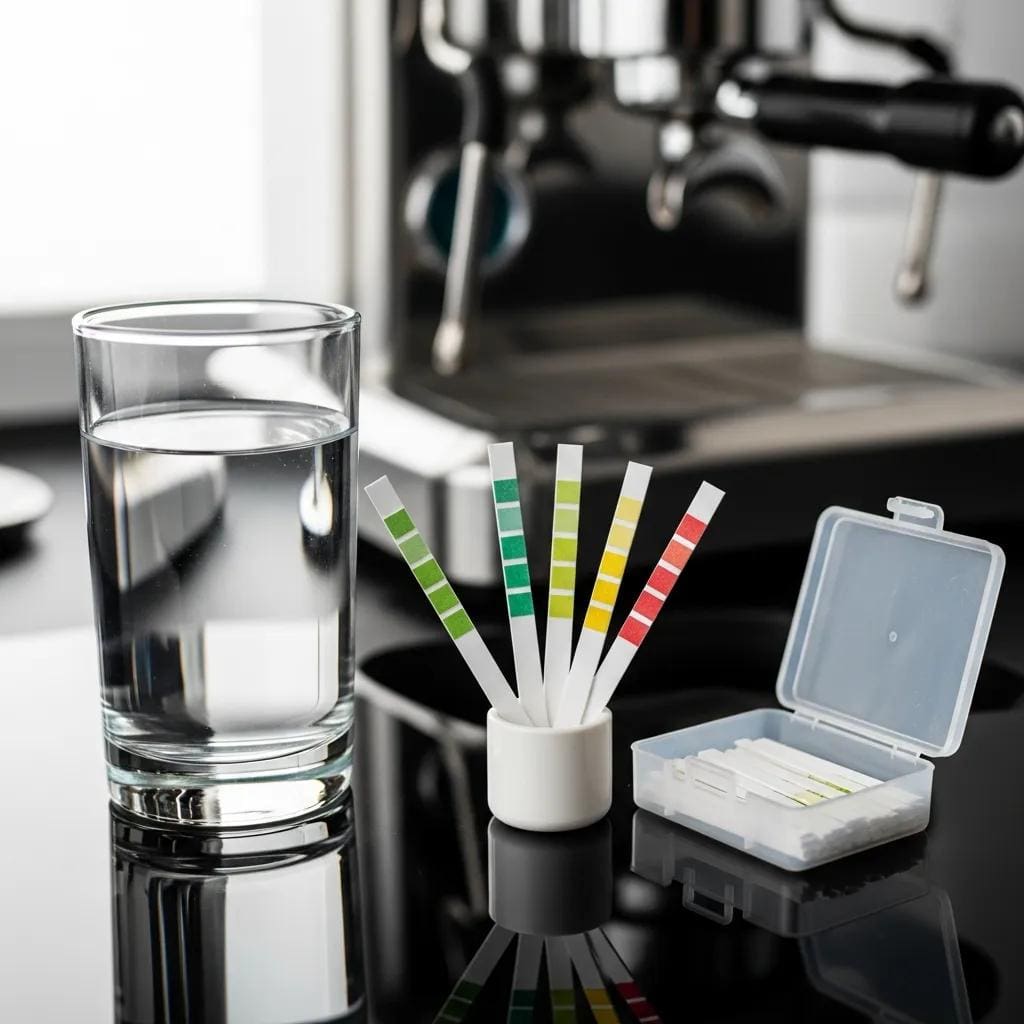
To monitor water hardness and pH levels, consider using test strips or digital testers. These tools provide quick and accurate readings, allowing you to adjust your water quality as needed. Regular testing ensures that your water remains within the ideal range for espresso preparation, enhancing both flavor and machine performance.
Why Is Water Quality Critical for Espresso Taste and Machine Longevity?
Water quality is a fundamental aspect of espresso preparation, as it directly influences the flavor profile and extraction efficiency. High-quality water enhances the overall taste of the espresso, while poor water quality can lead to undesirable flavors and machine issues.
How Does Mineral Balance Influence Espresso Flavor and Extraction?
The balance of minerals in water plays a crucial role in espresso extraction. An optimal mineral balance enhances the extraction of flavor compounds, resulting in a richer and more complex taste. Conversely, an imbalance can lead to over-extraction or under-extraction, negatively impacting the flavor profile. Understanding the ideal mineral composition for espresso can help you achieve the best results.
What Are Industry Standards for Ideal Water Composition in Espresso Machines?
Industry standards recommend a specific range of mineral content for optimal espresso preparation. Ideally, water should have a hardness level of 3-4 grains per gallon (approximately 50-70 ppm as calcium carbonate), with balanced levels of calcium and magnesium. Avoiding distilled water is also crucial, as it lacks essential minerals that contribute to flavor and extraction. By adhering to these standards, you can ensure that your espresso machine operates efficiently and produces high-quality coffee.
Further research and industry standards, such as those from the SCAA, underscore the critical role of water quality in achieving optimal espresso flavor and extraction.
SCAA Water Quality Standards for Espresso Flavor
The impact of different water compositions in a cupping experiment and espresso extraction. A standard in the coffee industry with respect to sensory properties is the “SCAA Standard: Water Quality for Brewing Specialty Coffee”.
Water for extraction—Composition, recommendations, and treatment, S Smrke, 2017
