

Understanding Espresso Machine Grind Size Settings for Perfect Brews
Mastering Espresso Grind Settings
Grind size for espresso describes the particle-size distribution after grinding and is one of the primary factors controlling water flow, extraction rate, and the balance of flavors in a shot. Getting grind settings right turns bean solubility into predictable extraction yield and consistent crema, body, and taste. This guide works for any equipment: it walks you through reliable dialing-in procedures, clear diagnostic cues for common faults, and how grinder features affect your ability to make precise micro-adjustments. Whether you’re a home barista or a cafe operator struggling with shifting shot times, sour or bitter notes, or variable crema, fine control of grind and distribution solves most issues. Inside this guide you’ll find a brief explanation with micron references, a step‑by‑step dialing workflow and action matrix, a troubleshooting table mapping symptoms to prioritized fixes, and buyer-focused guidance on grinder features. When useful we reference practical resources and curated equipment categories from 1st-line Equipment, LLC so you can match gear to skill level without drowning in technical details.
What Is Espresso Grind Size and Why Does It Matter?
Espresso grind size is the average particle diameter produced by a grinder. Particle surface area governs how quickly water extracts soluble compounds: finer particles expose more surface, increase puck resistance, slow extraction, and pull more dissolved solids; coarser particles do the opposite. Both a stable mean diameter and a narrow particle distribution (uniformity) are essential because they shape flow profile, crema, and the balance of acidity, sweetness, and bitterness. Burr grinders—flat or conical—deliver the repeatable distributions needed for espresso; blade grinders create a wide spread of sizes that make extraction unpredictable. Knowing these mechanics helps you read shot time and sensory cues and guides the most effective adjustments during dialing-in.
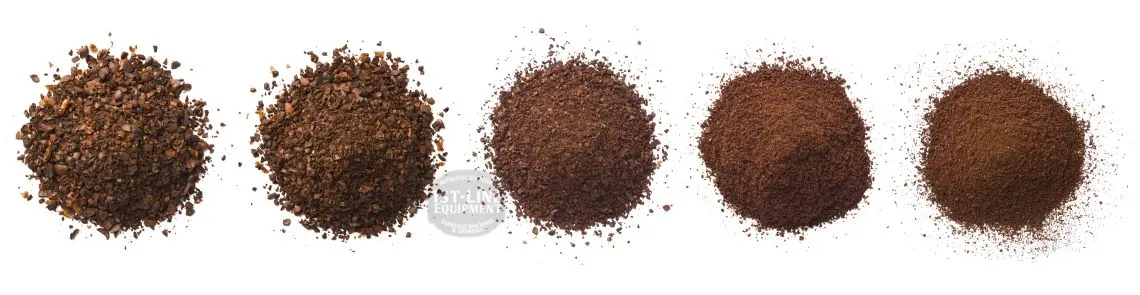
This table is a quick reference for common espresso textures and approximate micron ranges when you can measure particle size.
These micron ranges are approximate—few grinders report microns—so combine visual checks and tasting cues with any available measurements. When micrometer data isn’t available, use the visual descriptors together with extraction time and flavor to find consistent settings.
How Do Grind Size Variations Affect Espresso Extraction?
Changing grind size alters resistance and the contact area between water and coffee particles, which shifts the amount of coffee extracted into the cup and flavor balance. Finer grinds increase surface area and slow flow, raising extraction yield and often intensifying bitterness if pushed too far. Coarser grinds speed flow and can produce under-extracted, sour, or thin shots. A single micro-adjustment—one click on a stepped grinder or a small collar turn on a stepless—typically changes extraction time by a few seconds and, as a result, changes the espresso shot sweetness and acidity. Watch flow profile (for example, a thin, fast stream versus a syrupy, slow stream) alongside extraction time to decide whether to go finer or coarser. Small, repeatable changes are more reliable than large shifts that introduce new variables.
That direct link between particle size and extraction is the foundation for the practical dialing steps that follow.
What Are the Visual and Micron-Based Standards for Espresso Grind?
Visual standards let you approximate micron ranges without lab tools: powdered sugar to fine salt for classic espresso, fine sand for slightly coarser settings, and beach-sand granularity for alternative brews. Uniformity matters as much as mean particle size—a narrow distribution reduces channeling and uneven extraction. Use manufacturer micron specs as a starting point, then refine by taste and timing. Photograph grind samples against a white background and keep extraction logs to build a visual library for each bean and roast. These practical techniques help lab metrics meet real-world dialing in.
Use these visual checks alongside time and taste logging to create consistent, reusable grind baselines for each bean.
How to Dial In Your Espresso Grind for Optimal Extraction
Dialing in is a methodical loop: set a baseline, pull a test shot, record time and sensory notes, make a small grind change, and repeat until you reach a stable 25–30 second extraction for a 1:2 yield—or the sensory profile you want. Start with fresh beans with 5-7 day degassing from the roast date, a clean grinder, consistent dose and tamp, and a warmed machine to reduce noise so grind changes produce predictable results. Log each trial—dose, time, puck and cup weights, and tasting notes—so you can compare across roasts and batches. Use a scale, timer, and consistent tamp pressure; these simple tools amplify the effect of micro-adjustments. Iteration—small change → measure → taste → repeat—converges on consistent espresso that shows the bean’s strengths. Machine warm up times and grouphead flushes need to be consistent.
Use the matrix below as a quick reference during testing; it pairs actions with expected changes to time and taste.
Always change one variable at a time so results are attributable to that adjustment. Consistent logging speeds future dialing in by building reproducible baselines for each bean and roast. Remember, the process restarts with different beans.
What Is the Step-by-Step Process to Adjust Espresso Grinder Settings?
- Prepare a baseline: choose a consistent dose (for example, 18 g), level the basket, use a standard tamp, and make sure the machine is warmed with the portafilter in place and the portafilter is hot.
- Pull a test shot: Record the time, flow, and cup weight; taste for sourness, sweetness, or bitterness.
- Interpret results: if extraction is <25 s and tastes sour, move finer; if >35 s and tastes bitter, move coarser.
- Make a micro-adjustment: change the grinder by the smallest reliable increment.
- Re-test immediately: pull another shot and compare logs to confirm the shot profile is moving in the desired direction.
- Iterate until stable: when consecutive shots match your time and taste targets, record the setting and run a short quality check across several pulls.
Following these steps helps ensure changes are due to grind and not dose, tamp, or temperature—and it builds a habit of controlled experimentation that yields consistent espresso.
Remember, as the batch of beans age from day 7, they oxidize and lose freshness. The coffee oils move to the middle of the bean and my require a slightly finer grind.
How Can You Analyze Espresso Extraction Time and Taste to Refine Grind Size?
Pairing extraction time with sensory cues creates a reliable diagnostic loop: time shows overall extraction rate while flavor notes indicate where solubles sit on the spectrum. If shots pour too fast and taste sour or thin, grind finer or increase dose. If shots pour very slowly and taste bitter, grind coarser or reduce dose. Log extraction time, yield ratio, and tasting descriptors for each bag to spot patterns across roasts and origins. Simple charts—time vs. yield and a short sensory vocabulary—help track changes over days and cut re-dial time after bean swaps. Regular calibration and small, consistent adjustments based on logged data turn subjective tasting into repeatable technique.
Documenting each adjustment and its outcome creates a feedback loop that shortens future dialing sessions and improves consistency across operators.
Troubleshooting Grind-Related Espresso Extraction Issues
Most espresso faults trace back to grind. Use a prioritized fix sequence—grind → dose → distribution/tamp → equipment—to isolate causes quickly. Taste and flow cues usually tell you whether an issue is under- or over-extraction, while puck defects point to distribution or wear. Regular burr cleaning and inspection prevent variable grind retention and preserve particle uniformity; worn burrs produce more fines and change distribution. A troubleshooting hierarchy focused on least-invasive fixes first will restore shots faster and avoid unnecessary repairs. Consistent puck prep and routine maintenance remove many confounding variables that mask grind effects.
The table below maps common symptoms to likely causes and recommended first steps.
Use this table as your first-pass diagnostic. If symptoms persist after prioritized fixes, move to deeper machine servicing or burr replacement to address mechanical causes.
How to Identify and Correct Under-Extraction and Sour Taste?
Under-extraction reads as fast flow, thin body, and pronounced acidity or sourness—often from a grind that’s too coarse or an insufficient dose. First confirm dose and tamp consistency, then make a finer grinder adjustment and pull another shot to observe changes. If shots stay fast, even after finer settings, check the basket fill and distribution to prevent shortcuts in the puck. Small dose increases can slow flow and add body when grind changes alone aren’t enough. Record every change and its effect so you can backtrack if the shot shifts toward over-extraction.
Methodical grind and dose tuning will usually bring acidity into balance and let sweetness and complexity emerge.
How to Troubleshoot Over-Extraction, Bitter Taste, and Channeling Issues?
Over-extraction shows as long draw times, hollow or bitterness, and a sluggish stream. Start by coarsening the grind slightly or reducing dose. If bitterness continues after coarsening, examine tamp and distribution—dense plugs or uneven puck surfaces can concentrate over-extraction in spots. Channeling—irregular streams and uneven puck appearance—often improves with better distribution (WDT, tapping, or distribution tools) and consistent tamp pressure. If mechanical causes are suspected, inspect burr sharpness and grouphead flow; worn burrs increase fines and can mimic over-extraction. Work from least invasive fixes (grind) to most (service), logging results at each step.
Clear priorities make it easier to tell whether the issue is technique, grind, or equipment and prevent needless interventions.
Which Espresso Grinders Offer the Best Grind Size Control?
Control comes from burr geometry, adjustment mechanism, motor stability, and dosing method. No single feature guarantees ideal shots, but certain combinations make dialing and maintaining settings far easier. Stepless adjustment offers infinite micro-tuning for experienced baristas; stepped systems give repeatable catch settings that simplify consistency across the adjustments. Flat burrs tend to produce a tighter particle distribution favored in specialty cafes; conical burrs provide robustness and lower heat build-up for high-throughput work. Weight-based dosing and low retention support consistent single-dose workflows. Match features of your espresso grinder to your workflow: home users often value compact, low-retention grinders; cafes need durable, cooled motors and high throughput.
Here’s a quick checklist of critical grinder features to evaluate.
- Burr Type and Size: Choose larger, quality burrs for uniformity and throughput.
- Adjustment System: Stepless for micro-tuning; stepped for reproducibility across operators.
- Dosing Method: Weight-based dosing reduces dose variability and improves repeatability.
- Retention and Cleaning: Low retention and easy access for cleaning reduce setting drift and cross-contamination.
- Motor Cooling and Power: Stable torque and cooling protect temperature-sensitive oils and keep extraction consistent.
Picking grinders that combine these features reduces grind variability and shortens dialing-in cycles so you reach target extraction faster.
What Features Should You Look for in a Quality Burr Grinder?
A dependable espresso grinder prioritizes consistent particle distribution, precise adjustment range, and reliability under load. Must-haves include a durable burr set (flat or conical), fine and stable adjustment control (stepped or stepless to match your preference), and a motor that holds torque at low RPM to avoid overheating grounds. Nice-to-haves are weight-based dosing, anti-static design, and easily removable burrs for cleaning. Match grinder class to need: single-dose, low-retention models for home users; commercial grinders with cooling and high throughput for busy cafes. Choosing the right feature set gives you the tool to control grind and extraction repeatably.
Align grinder capability with your workflow to cut time spent troubleshooting and dialing-in.
What Are 1st-line Equipment’s Recommended Espresso Grinders for Precision?
1st-line Equipment, LLC curates premium Italian grinders and machines across categories for different users: semi-automatic and on-demand grinders for cafes and homes, flat and conical burr options for specialty work, weight-based dosing models for precision, and commercial-grade equipment for high throughput. As a curator, importer, distributor, and retailer, 1st-line pairs product selection with expert guidance, technical support, and resources. If you need reliable micro-adjustments, focus on weight-based and low-retention single-dose or multi-purpose grinders. 1st-line also maintains a parts portal and technical support to help keep grinders performing as intended.
This approach helps you match equipment class—home, prosumer, commercial—to your needs while preserving dialing-in capability.
How Do Advanced Factors Influence Espresso Grind Settings?
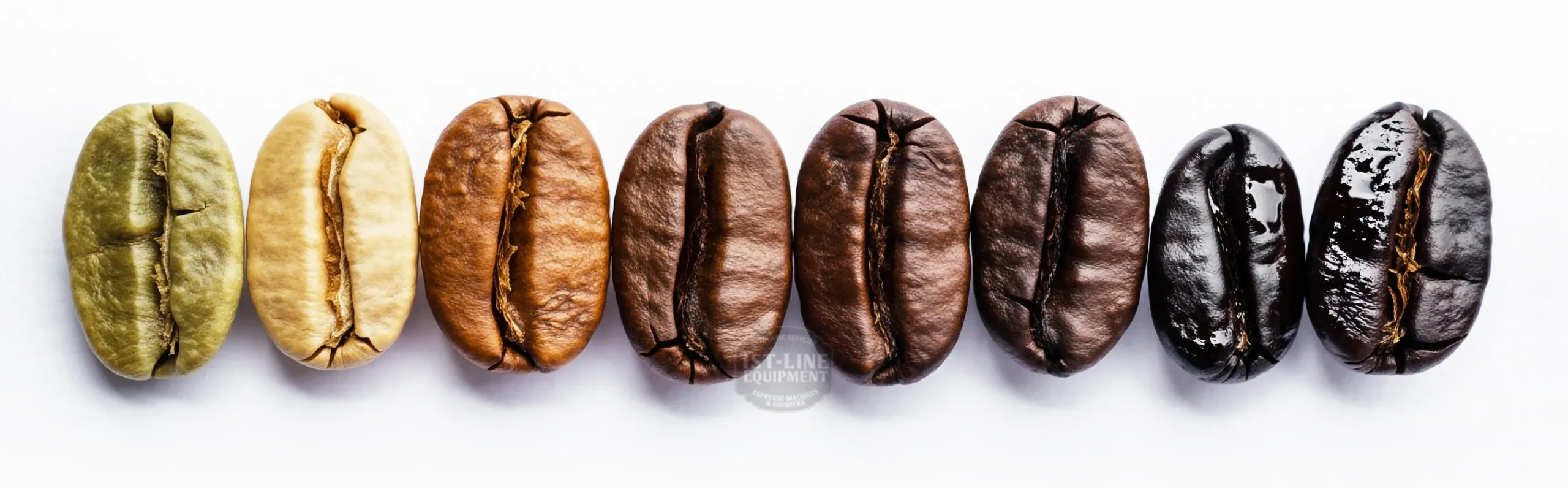
Advanced variables—roast level, bean freshness, humidity, and altitude—change how beans release solubles and therefore the ideal grind. Lighter roasts are denser and often need slightly finer grinding for comparable yield; darker roasts are more brittle and usually require coarser settings. Freshness affects degassing and solubility: the first days after roast can favor slightly coarser settings as CO₂ off-gassing speeds flow, then stabilize after several days. Humidity increases clumping and effective fines, often calling for a slightly coarser baseline. Track these variables with per-bag logs and re-check grind settings when conditions or beans change.
Understanding these factors helps you anticipate when re-dialing is necessary and reduces surprises in shot consistency as conditions shift.
How Do Roast Level and Bean Freshness Affect Grind Size Adjustments?
Roast level changes bean structure and solubility: lighter roasts are denser and typically need finer grinds to expose more surface area, while darker roasts extract faster and usually sit better with coarser grinds. Freshly roasted beans degas for days; in that window, flow can be faster, so you may start slightly coarser and re-evaluate after 5-7 days as degassing settles. As a rule, expect small adjustments when switching roast levels or batches, and log grind settings and sensory results per bag. Consistent logging minimizes full re-dials and helps maintain a steady espresso profile.
Logging by roast date and grind setting turns roast variability into predictable adjustment patterns.
What Role Do Environmental Conditions Like Humidity Play in Grind Consistency?
Humidity raises moisture in beans and increases clumping, which effectively raises fines and slows flow—usually requiring a slightly coarser setting to keep extraction time steady. Store beans in dry, airtight containers and clean grinder burrs and dosing chambers regularly to limit humidity-driven variability. Monitor local humidity and make small, documented adjustments rather than sweeping changes—over time you can build a seasonal adjustment map for your setup. Simple mitigations like desiccant packs for storage and more frequent cleaning during humid periods reduce setting drift and preserve extraction predictability.
Proactive monitoring and incremental, recorded adjustments preserve shot consistency across changing conditions and cut troubleshooting time.
For help selecting grinders or machines that support fine micro-adjustments—or for technical support and parts—1st-line Equipment, LLC offers curated Italian equipment categories, expert guidance, and a technical support and parts portal to keep your gear at peak performance. Their Espresso Grinder Selection guide and Customer Espresso Education resources shorten the learning curve for dialing in and maintaining equipment.
Frequently Asked Questions
What is the importance of grind size consistency in espresso preparation?
Consistent grind size is essential for balanced extraction. Uniform particles allow water to flow evenly through the puck, preventing channeling and uneven extraction. When grind size varies, some particles over-extract while others under-extract, producing off flavors. A stable grind boosts sweetness and reduces bitterness. High-quality burr grinders produce a tighter particle distribution than blade grinders and are the best way to achieve that consistency.
How can I tell if my espresso is under-extracted or over-extracted?
Under-extracted shots pour fast, have a thin body, and taste acidic or sour. Over-extracted shots pull slowly and taste bitter or astringent. Diagnose by observing extraction time and tasting the shot: quick and sour points to under-extraction; slow and bitter points to over-extraction. Keep a log of extraction times and tasting notes to identify patterns and guide adjustments to grind size or dose.
What adjustments should I make for different roast levels?
Roast level affects optimal grind size. Lighter roasts are denser and often need a finer grind to reach proper extraction; darker roasts are more porous and usually require coarser settings. When switching roasts, make small incremental adjustments and log results. This practice helps maintain a consistent flavor profile and minimizes full re-dials.
How does humidity affect espresso grind settings?
Humidity increases moisture in beans, which causes clumping and raises the percentage of fines. That usually slows extraction and can require a coarser grind to maintain target time. Store beans airtight, clean the grinder regularly, and monitor local humidity. Make small adjustments based on conditions to preserve shot consistency and reduce troubleshooting.
What are the best practices for logging espresso adjustments?
Record key variables: grind setting, dose, extraction time, yield, roast date, and concise sensory notes for each shot. Use a structured log with date, bean type, and any changes made. Consistent documentation helps you spot trends, replicate successful shots, and troubleshoot faster—especially when switching beans or working across shifts.
What features should I prioritize when selecting an espresso grinder?
Prioritize features that improve consistency and control. Look for high-quality burrs (flat or conical), a precise adjustment system (stepless or stepped to match your preference), and options like weight-based dosing, low retention, and easy cleaning. Consider your environment—home, prosumer, or commercial—so the grinder aligns with your workflow and extraction goals.
Conclusion
Control of grind size is one of the most direct ways to improve espresso quality. By understanding how particle size affects extraction time and flavor, and by using systematic dialing, logging, and maintenance, you can produce consistent shots that showcase a bean’s best qualities. For hands-on guidance and to explore grinders engineered for precise micro-adjustments, visit 1st-line Equipment, LLC. The right equipment and a disciplined approach will elevate your espresso and reveal the nuanced flavors every roast has to offer.
One thought on “Understanding Espresso Machine Grind Size Settings for Perfect Brews”
Leave a Reply
You must be logged in to post a comment.
Mind the temperature, especially at high altitude.