Pump & Air Release Valve Repair

Disclaimer: The technical statements, support, information and recommendations contained herein are believed to be accurate as of the date hereof, but 1st-line Equipment, LLC does not make representations or warranties, express or implied, as to its accuracy, its completeness, or the results to be obtained. The information is being provided for informational purposes only and is intended for use by persons having adequate skill and expertise regarding the proper selection, use and application of the products and recommendations and at their own risk and discretion.

1st-line Equipment, LLC is not responsible for any injury or damages from such information. Please note that parts are available for purchase from 1st-line Equipment, LLC self service parts portal. These parts do not include any technical support. If you're unfamiliar with the technical aspects of repairing equipment, please contact a professional for proper evaluation.

By continuing to read further, you agree to abide by all the terms and conditions on this website. If you disagree, please leave our website.
Please note the above information is subject to copyright. It cannot be published by any means without the expressed written consent of 1st-line Equipment, LLC.

Tools needed: 13mm open ended wrench, 7mm open ended wrench, pliers, teflon tape.

  1. Remove rear wrap-around body panel by removing the three screws on each side. When using a flathead screwdriver, use the index finger and thumb of one hand to keep the screwdriver steady on the screw head. This will avoid any slippage and scratches to the body.
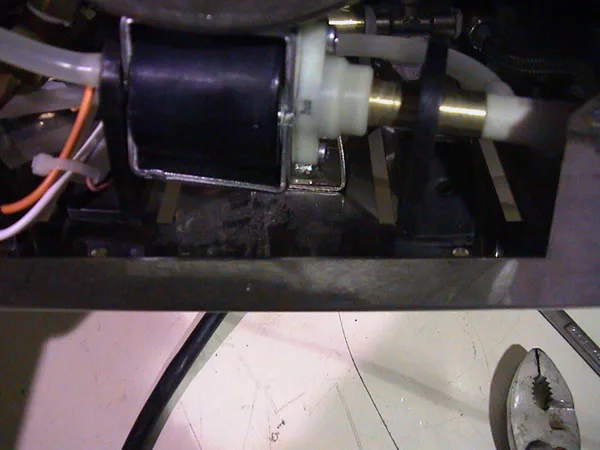
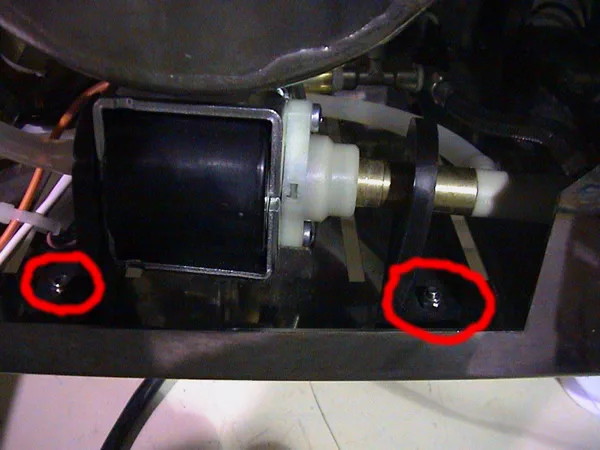
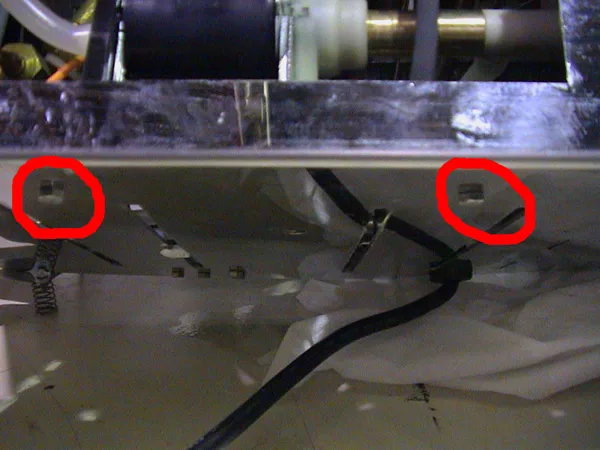
  2. Using a 7mm open ended wrench hold one end with pliers and turn bolt until its off.
Close-up of a mechanical component, possibly for pump repair, featuring a black cylindrical part and two screws circled in red on a metal base. Some wires and tubes are visible on the left side. © 2025 1st-line.com
Close-up of a metallic surface with two screws circled in red, black wires running across the bottom, and reflection of machine parts at the top—typical details seen during valve repair or pump repair procedures. © 2025 1st-line.com
Close-up of a mechanical component with wires attached, possibly part of a machine or appliance. A pair of pliers and a black cable lie on the white surface below, suggesting ongoing pump repair or air release valve repair work. © 2025 1st-line.com
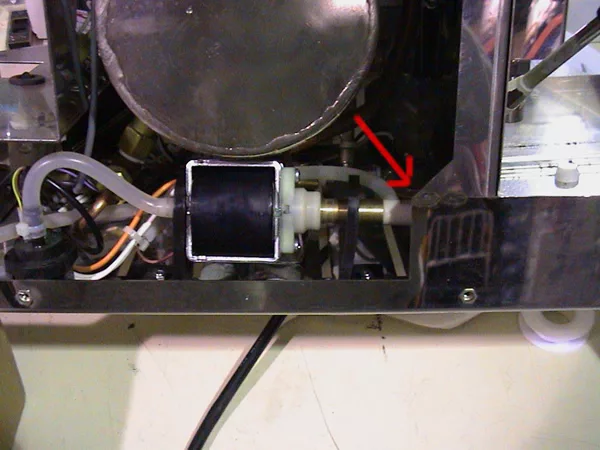
  1. Using a 13mm open ended wrench and pliers hold copper elbow with pliers and take off stainless braded hose with 13mm wrench. (Caution: plastic piece is weak and will break off)
Close-up of the inner components of a machine, featuring a solenoid valve connected to clear tubing, ideal for valve repair. A red arrow points to a white plastic fitting on the right. Various wires and metal parts are visible. © 2025 1st-line.com
  1. Pull off plastic hose of plastic air release valve (it snaps on and off).
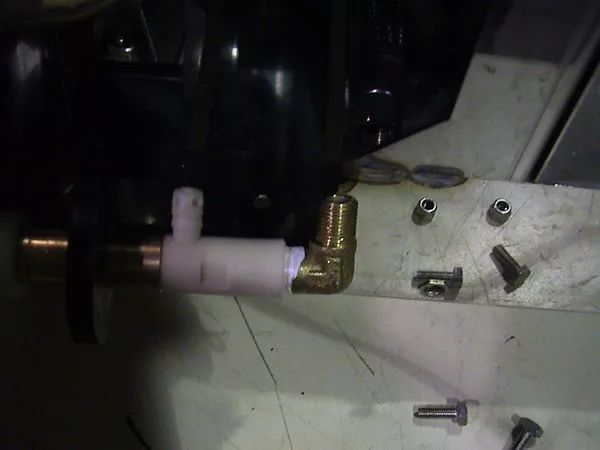
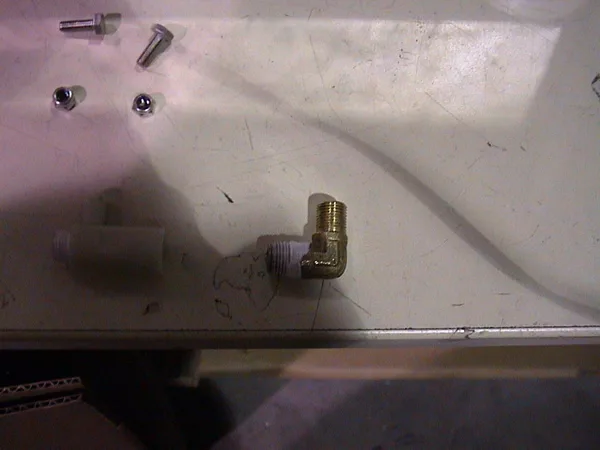
A close-up of a mechanical assembly featuring a brass elbow fitting connected to a white plastic pipe, with several loose screws and metal parts scattered on a white surface nearby, typically seen during valve repair. © 2025 1st-line.com
  1. Unscrew plastic piece counter clockwise off of brass output on pump.
A metal and plastic plumbing fitting, bolts, and washers—used for valve repair—are lying on a scratched white surface beside a black plastic component. © 2025 1st-line.com
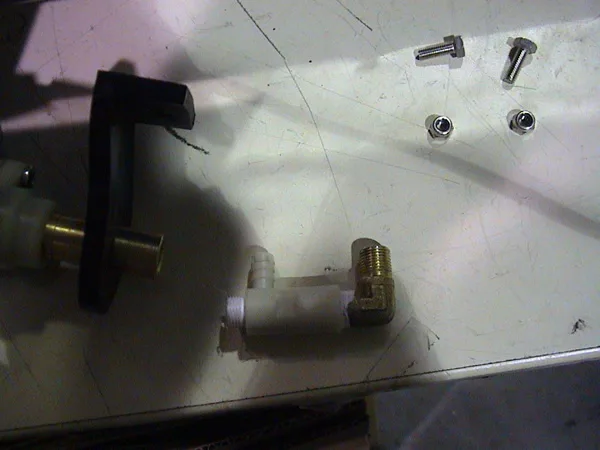
  1. Unscrew elbow from plastic piece (teflon not normally on these pieces)
A brass elbow pipe fitting, often used in valve repair or pump repair, is connected to a white plastic threaded pipe on a scratched beige surface, with metal screws and another small white part nearby. © 2025 1st-line.com
  1. When you reassemble elbow to pump air release valve, use Teflon tape on one end of elbow that goes into the pump air release and on the end of the pump air release that goes into the pump brass output.
A metal and plastic plumbing fitting, bolts, and washers—used for valve repair—are lying on a scratched white surface beside a black plastic component. © 2025 1st-line.com
  1. Reattach plastic hose and braided hose. (remember plastic piece is weak use pliers to hold elbow when you tighten the braided hose)
Close-up of the inner components of a machine, featuring a solenoid valve connected to clear tubing, ideal for valve repair. A red arrow points to a white plastic fitting on the right. Various wires and metal parts are visible. © 2025 1st-line.com
  1. Insert bolts thru the machine and rubber and tighten nut to bolt.
Close-up of a mechanical component, possibly for pump repair, featuring a black cylindrical part and two screws circled in red on a metal base. Some wires and tubes are visible on the left side. © 2025 1st-line.com
Close-up of a metallic surface with two screws circled in red, black wires running across the bottom, and reflection of machine parts at the top—typical details seen during valve repair or pump repair procedures. © 2025 1st-line.com